Read More
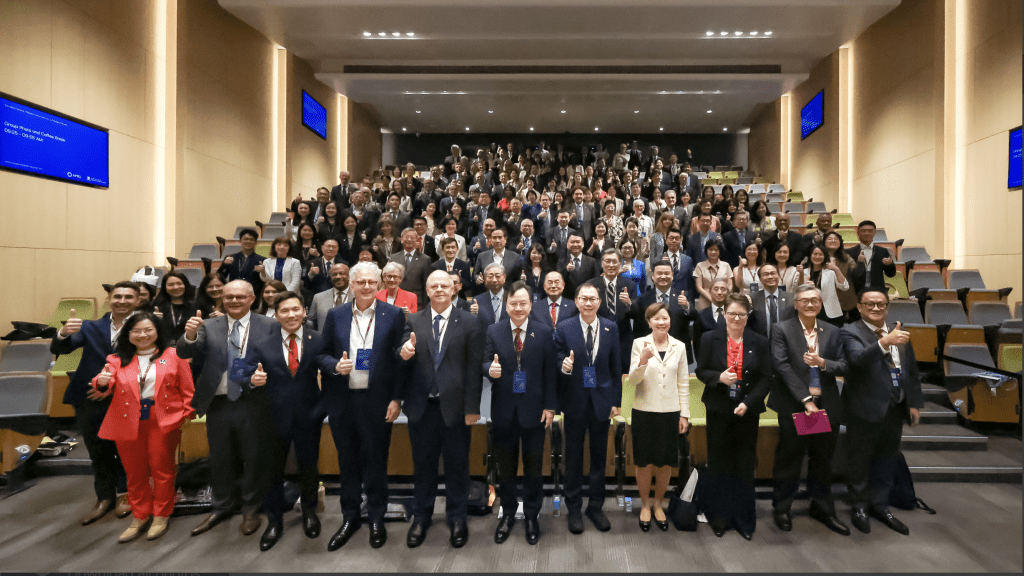
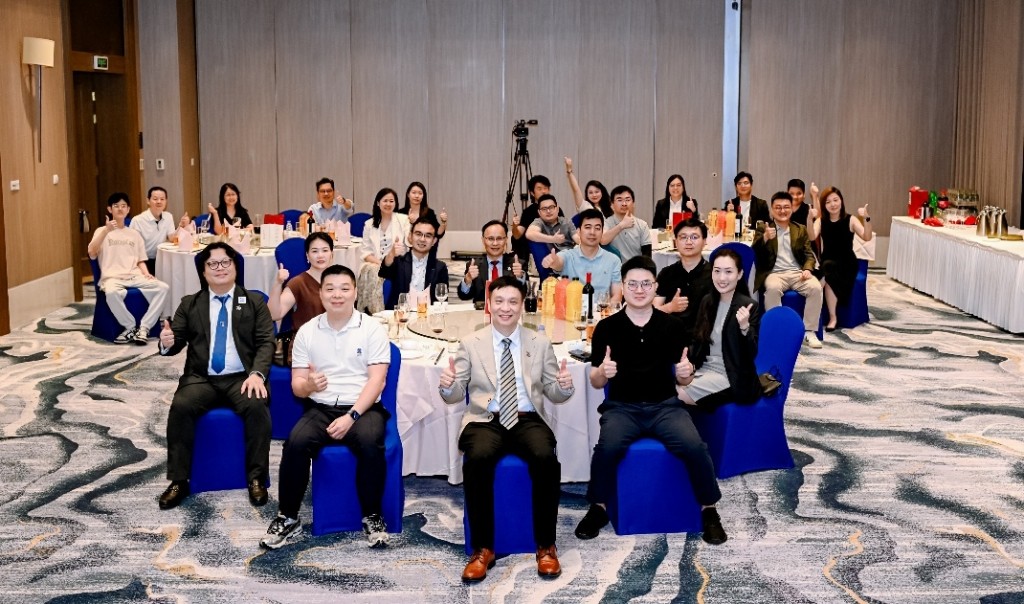
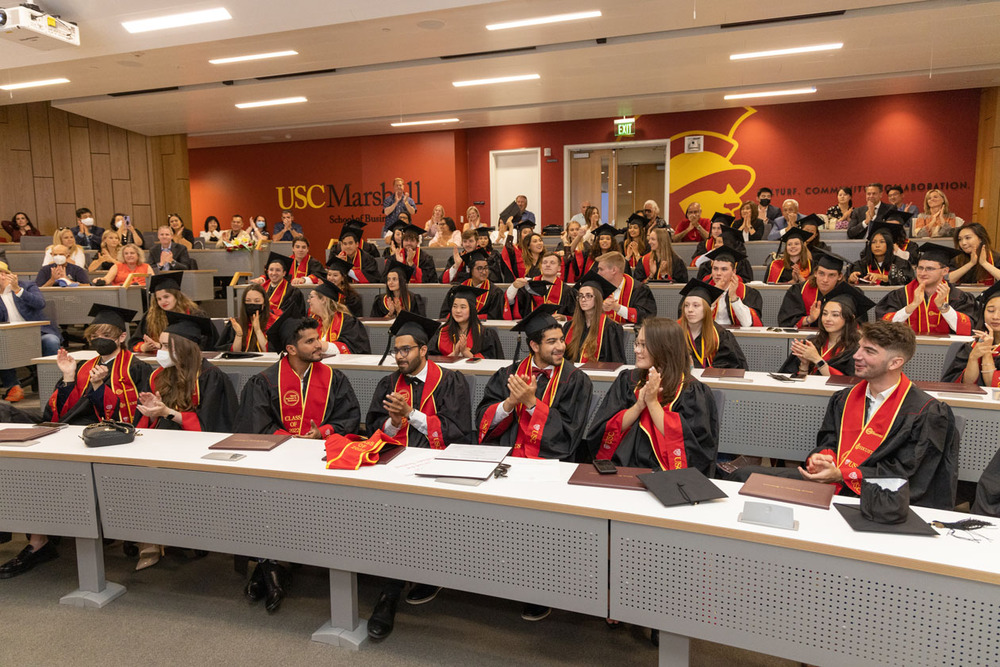
The world bachelor in business program, a multinational business program established by three universities from three continents that offers graduates three diplomas celebrates its 10th year this year.
ADVERTISEMENT
SCROLL TO CONTINUE WITH CONTENT
Launched by the University of Southern California's Marshall School of Business, Hong Kong University of Science and Technology and Bocconi University, it is a four-year program.
"The program aims to establish an unprecedented model to train students with global critical thinking in business education," said Stephen Nason, a professor of business practice and the program director at HKUST. "It will help students to develop critical thinking and globalization skills. Also, the experience in three universities will provide students with an incredible diversity of educational and life experiences to the students."
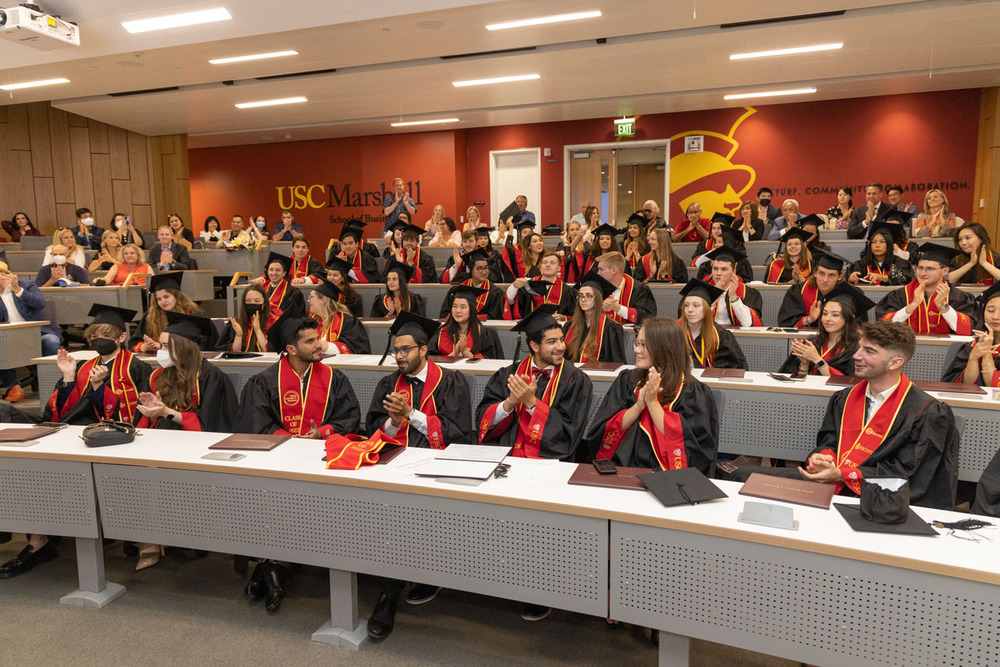
As part of the program, students will study at USC's Marshall School in Los Angeles in the first year, transfer to HKUST in their second, then depart to Bocconi University in Milan for the third.
They can choose any one of the three universities to complete their fourth year.
Tuition fee and living expenses for the four years will be around HK$1.15 million to HK$1.45 million, depending on the university chosen for the final year.
Upon completion, they will be awarded three bachelor's degrees and diplomas from each university.
But as each one will be awarding degrees separately, students will have to fulfill the admission and graduation requirements of all three, said Gerald Giaquinta, a professor of clinical business communication and the academic director for the program at USC Marshall.
Curriculum setting
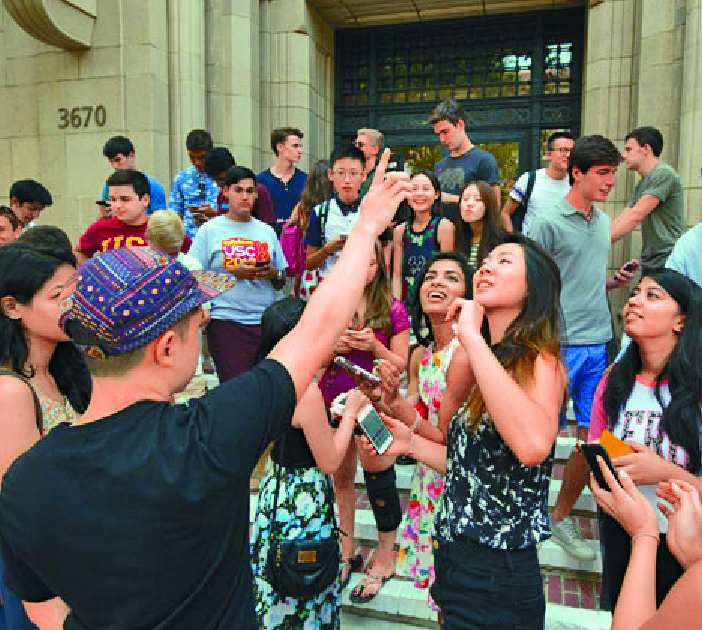
The program was initiated by USC Marshall and Bocconi University to provide students with a global perspective and HKUST was invited to join the program, said Nason. It receives about 600 applications a year from students around the world - about 50 of which are selected to form a class.
This year, there are 58 students from 19 countries and regions, including eight from Hong Kong.
Giaquinta said that although the program takes English as the common language, students will be exposed to different languages in each place. For example, students studying at Bocconi will need to pass a language exam given by the Italian government. The curriculum for the program is also extensive.
Said Giaquinta: "The first year, all the students who come to USC take introductory courses in business. But they also take general courses (such as history, arts or anthropology). They must also take writing courses."
In their second year, students will take more indepth professional business and finance core courses.
A tempting element of the program lies in its multiple internship opportunities.
USC's Global Social Impact course will allow first-year students to travel to Latin America to be consultants for local small entrepreneurs and social enterprises.
Students have helped companies in poor areas in Brazil to develop a program to recycle and use solar panels for energy, as well as helped women in Peru to run clothing businesses.
During the second year, there will be two overseas study trips to Japan and Shenzhen, Nason said.
He added: "This year, we're creating a program with a Japanese organization. Students will take some courses and learn from experts about the business environment there. We will then pair the students into teams with other Japanese students for local research."
In the past 10 years, 320 students have graduated from the program. They interned with Google, SpaceX, Goldman Sachs, BCG and Disney, with three graduates having been recognized by 30 Under 30 Italia over the past three years.
Students' experience
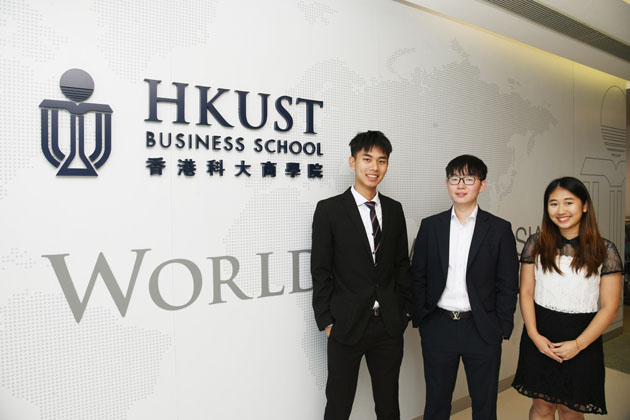
Three local students - who achieved the full score of 45 points from the IB diploma program and are now in their second year at HKUST - said they enjoyed the multinational aspect of the program.
"I was always keen to pursue an overseas education, and I had looked at opportunities in the United States and United Kingdom. I realized that you can't just study business in the classroom and from textbooks, but you need to have different practical experience," said St Paul's Co-educational College alumna Justina Chou Yong-jie.
The challenge was in coming back. She missed the friends she made in the United States when she came back to Hong Kong. "The 50 students in our class have developed a deep connection and become very close friends," she said.
Justin Tang Kit-hang, also a graduate of St Paul's Co-educational College, said the ever-changing design of the program was an attraction to him. "If you are curious and have an open mindset when facing different cultures, you will be able to take all the differences naturally and not be overwhelmed," he added.
This helped Joson Suen, a graduate from Chinese International School, during the Global Social Impact course. "I was very worried because I didn't think I had the skills and the background to be able to help them because I was just a kid from Asia," he said.
"But by staying open-minded, and working hard to get to know the people involved, we were ultimately able to help them out a lot, using our skills as international students to apply that to their project."
Dillon Hunter, a graduate from the program graduate who's now working in HSBC in Hong Kong, said it opened his eyes to many cultures.
He's worked as a consultant in Brazil for a women's fashion startup, in mergers and acquisitions for the San Antonio Spurs, in a Singapore macroeconomic research firm and a venture capital firm in Hong Kong.
"I grew up in a small, relatively quiet town in the United States but by the time I was 22, due to the program, I had worked on four different continents: north America, south America, Asia and Europe."
Admission criteria
"We're still completely different but we're much more well known. And we have a strong academic and career track record. Our students get great jobs, and great starting salaries. And so now it's much easier to attract really high-quality students," said Nason.
Sudents applying to the program need to complete two rounds of interviews, both individual and group.
"We don't ask detailed questions like 'who is the head of the European Central Bank,' but questions where we can get ideas on students about their critical thinking, their presentation skills, and how passionate they are about WBB," Nason said. "We are not looking for just the top IB score. That's not enough. You can be very smart. But if you're abrasive to others, then you may not be the best fit for our program."
Said Giaquinta: "We want people who are curious and really good at adapting - because if they're going to be global business leaders, that's the skill."
The application deadline for next year's admission is November 1.
Website: wbb.hkust.edu.hk
roxanne.li@singtaonewscorp.com