
Read More
In the suburbs of Hefei, the flagship city of China's high-tech ambitions, factory assembly lines churn out electric vehicles, display panels and semiconductors and engineers plot the next technological breakthroughs from shiny glass towers.
ADVERTISEMENT
SCROLL TO CONTINUE WITH CONTENT
But the picture is less rosy in the city centre, where merchants sit in near-empty shops watching crowds pass by as sign-waving sales assistants shout out the latest promotions.
"Hefei is booming, but we don't feel it," said Sarah Meng, who runs a jewellery store in the main shopping district. She said she expected sales of her silver necklaces, bracelets and pendants to fall 10% to 20% this year.
Hefei has become a tale of two economies — on one side a high-tech manufacturing boom that has propelled it into the ranks of China's fastest-growing cities, and on the other consumers tightening their belts.
"Business is clearly worse than a few years ago. People feel less confident about the economy, and their spending power has weakened," said Yu Yucan, 37, who runs a city restaurant. "A few firms are thriving, but most are struggling."
Hefei, about three hours by high-speed train west of Shanghai, is emblematic of China's effort to build national champions through lavish state investment.
The city is home to high-profile companies like ChangXin Memory Technologies (CXMT), the maker of DRAM chips crucial for AI that had Asia's largest IPO this year, BOE Technology Group, a display manufacturer, and NIO 9866.HK, which develops electric vehicles.
But Hefei's success also underlines a widening divide in the world's second-biggest economy. As Beijing steers credit and fiscal resources into advanced manufacturing to reduce the economy's reliance on property and bolster technological self-sufficiency, consumers are not buying enough of the goods the firms produce.
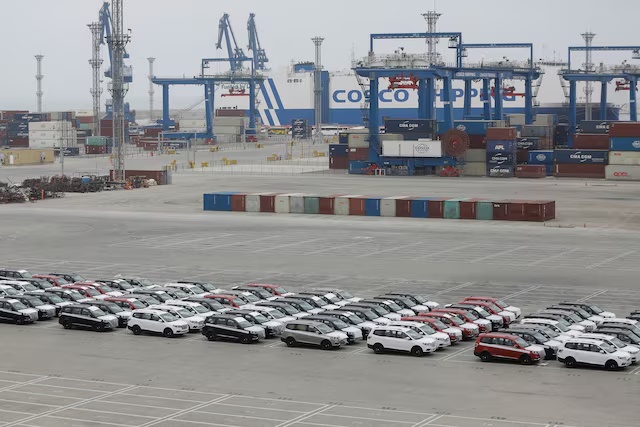
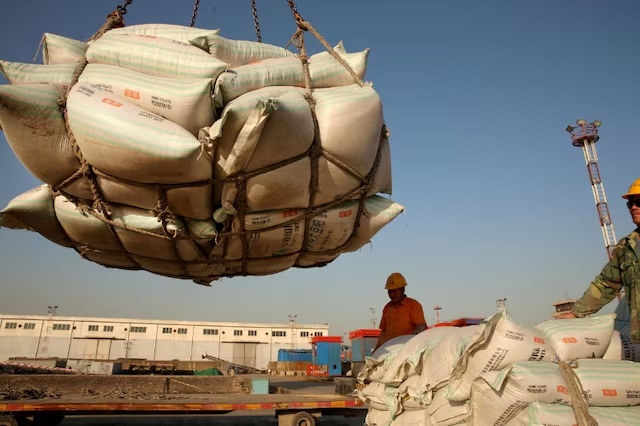
That is driving up exports, and raising tensions with China's trading partners. China's surging exports are likely to form a backdrop to this month'sexpected summit between President Xi Jinping and President Donald Trump in Washington.
The divide highlights both the power and limits of China's state-led industrial policy. While it can rapidly channel capital and resources into strategic sectors, it also fosters overcapacity that weighs on incomes and consumption, analysts say.
Hefei's economy grew 6.8% year-on-year in the first half of 2026, the fastest among major Chinese cities and well above the national pace, as factory output jumped 25.6% and exports surged 51.9%. But retail sales rose just 0.6%, producing a record 25-percentage-point gap between production and consumption, about six times the difference nationally.
"Hefei's economy suffers from an affliction that many other places in China and beyond are grappling with: the lack of transmission of high-tech success into the broader economy, especially consumption," said Fred Neumann, HSBC's chief Asia economist.
RAPID RISE, DEEPENING IMBALANCES
The "Hefei model" has become shorthand in China for how to build a high-tech manufacturing powerhouse.
Under the model, Hefei started rescuing promising but loss-making firms in 2008 while investing in strategic industries and offering incentives to lure high-tech companies to the city.
Its economy has more than doubled in a decade, drawing workers and graduates as the population topped 10 million. Last year, Hefei produced about 1.37 million electric vehicles — roughly one in every 12 cars made nationwide, official data show.
CXMT's blockbuster July listing was the model's biggest payoff yet, lifting the value of stakes held by Hefei-linked state investors more than fivefold to over 1 trillion yuan ($148.9 billion).
Hefei's location in the Yangtze River Delta, deep university talent pool and ample labour supply gave it a strong base. Its defining feature has been a willingness to deploy state capital early — often before commercial investors.
But Hefei's success also points to a broader risk. China has launched an "anti-involution" campaign to curb price wars and excess capacity, as falling corporate profits and deflationary pressure expose the risk of local governments favouring the same sectors.
"There may be useful lessons to be learned from China's successful regions. But it would not be a good idea to try to copy and roll out the strategy of one specific local government or region more broadly," said Louis Kuijs, chief Asia Pacific economist at S&P Global Ratings. "It would mean risking duplication, involution and further encouragement of supply-demand imbalances in China."
For now, the success of Hefei's companies has made the city a magnet for job-seekers.
Average annual pay at urban non-private firms like CXMT rose 3.4% to 126,259 yuan in 2025, following a 2.5% increase in 2024, official data show.
"Hefei offers plenty of opportunities in high-tech manufacturing," said Frank Kong, 27, who landed an R&D job at a local technology company after graduating from university and now earns about 250,000 yuan a year.
"In similar-sized cities, opportunities like this are rare."
But for Xia, a taxi driver earning less than 5,000 yuan a month, the benefits are harder to see. "Hefei is a place where talented and capable people can make a fortune," said Xia, who gave only his family name. "For ordinary workers, it's a different story."
Reuters