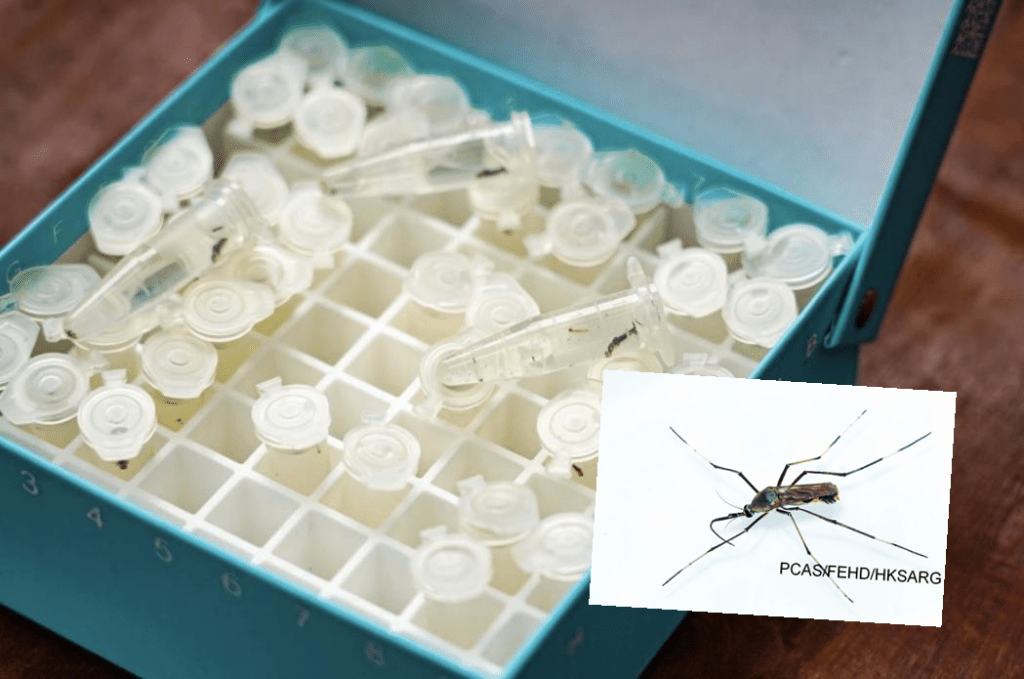
As Chikungunya fever cases surge in Guangdong province, Chinese authorities are waging an unconventional war against disease-carrying mosquitoes—by releasing larger, predatory mosquitoes to eat them.
Foshan has activated a Level III public health emergency response, implementing a multi-pronged strategy that includes “biological warfare,” fish stocking, and drone surveillance to combat the mosquito-borne illness.
Residents also faced nucleic acid PCR testing for chikungunya, while the city expanded the number of hospitals offering the test to 40. Citizens were seen lining up to undergo testing as the city logged over 4,000 cases during the outbreak.
Predator mosquitoes unleashed
A team from Sun Yat-sen University's Zhongshan School of Medicine has begun releasing Toxorhynchites splendens, one of the largest mosquito species in the world, into breeding grounds of disease-carrying Aedes mosquitoes in Foshan's Sanshui District.
"These predator mosquitoes are natural enemies of Aedes," explained Associate Professor Zhang Dongjing from the Department of Pathogen Biology and Biosafety. "Their larvae can consume 80 to 100 Aedes larvae during their development."
Unlike their dangerous “cousins,” adult Toxorhynchites mosquitoes feed only on plant nectar and don't bite humans.
Fish join the fight
Meanwhile, Foshan's Chancheng District has enlisted aquatic allies—releasing over 5,000 fish, including silver carp and pearl gouramis, into urban water bodies.
"These fish help eliminate mosquito larvae before they can mature," said Zhang Huabin, deputy director of the district’s urban management and comprehensive law enforcement bureau.
High-tech mosquito hunt
Authorities are complementing biological controls with drone technology. In Shunde District, drones conduct aerial photography of 170 potential breeding sites, while Sanshui District deploys vehicle-mounted and fixed drones to inspect construction sites and residential areas for hidden water accumulations.
The measures follow a national teleconference on Chikungunya prevention convened by Beijing on May 29, emphasizing aggressive mosquito control.
With the outbreak concentrated in Foshan's Shunde area—accounting for 90 percent of Guangdong's 6,100 cases—the city's innovative approach may offer lessons for other regions battling mosquito-borne diseases.
(Marco Lam)