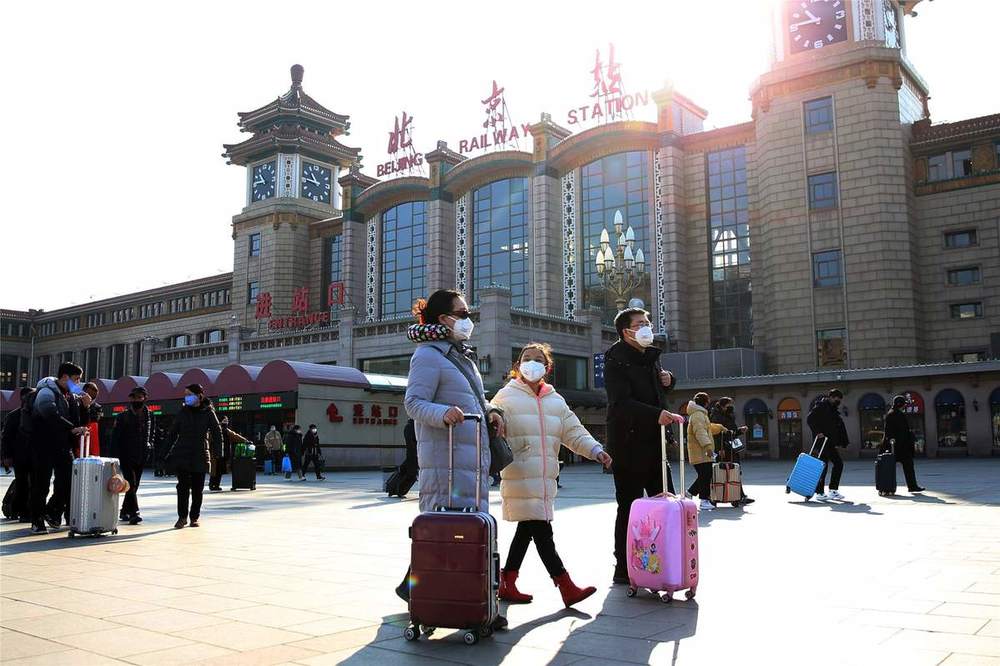
In an effort to minimize the risk of community spread of the Wuhan coronavirus, new visitors with recent travel history to mainland China will not be allowed to enter Singapore from midnight tomorrow.
The Minister for National Development Lawrence Wong said such visitors will also not be allowed to transit in Singapore. These restrictions will come into effect at 11:59pm on Saturday, the island's state network Channel News Asia reports.
Aso, today Prime Minister Lee Hsien Loong said during a visit to the National Centre for Infectious Diseases that Singapore has done well so far in handling the Wuhan coronavirus situation.
"But we have to continue to be vigilant, because the outbreak is far from over. In fact, it may still be accelerating in China," he said.
Earlier this week in Singapore, the visit restrictions only applied to new visitors who had recently travelled to Hubei province.
However, China recently announced that the number of reported infections in the country had doubled since Jan 28 to more than 9,000 and that the likelihood of widespread community transmission in other parts of China is now high.
"As a result, we are likely to see a sharper rise in the local transmission of the virus in Chinese cities beyond the Hubei province in the coming days," the ministry said in a press release.
Wong also said that returning Singaporeans will be issued a travel advisory and asked to take a 14-day leave of absence.
The Immigration and Checkpoints Authority will also, with immediate effect, suspend the issuance of all forms of new visas to those with Chinese passports. Singapore's status as a visa-free transit facility will be suspended for Chinese passport holders.
Previously issued short-term and multiple-visit visas for those with Chinese passports will also be suspended. Thus those who hold such visas will not be allowed into Singapore during this period. -Photo: CNA
Chinese passport holders will not be allowed in to Singapore and visa-free transit facility will be suspended.
Prime Minister lee Hsien Loong at the National Centre for Infectious Diseases.