Read More

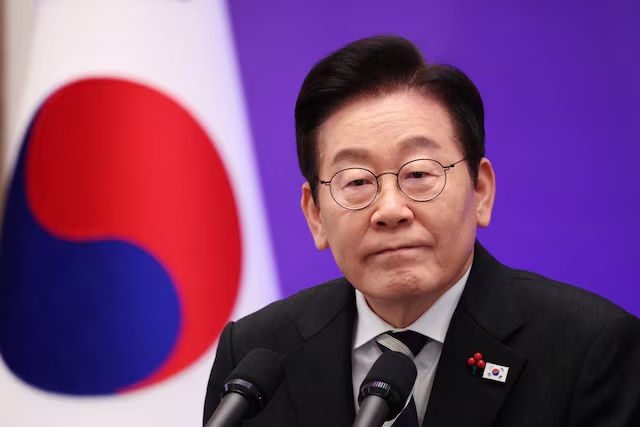

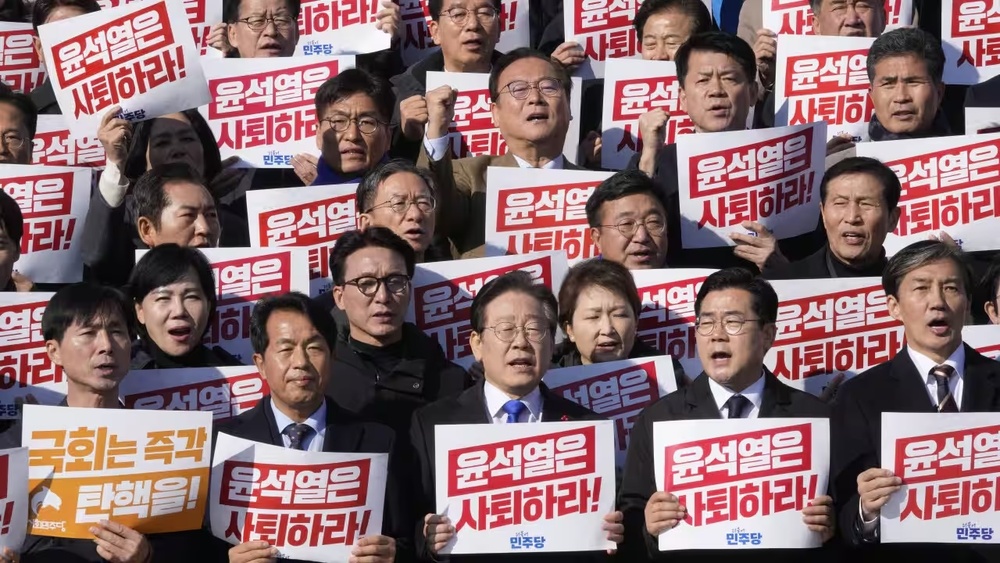
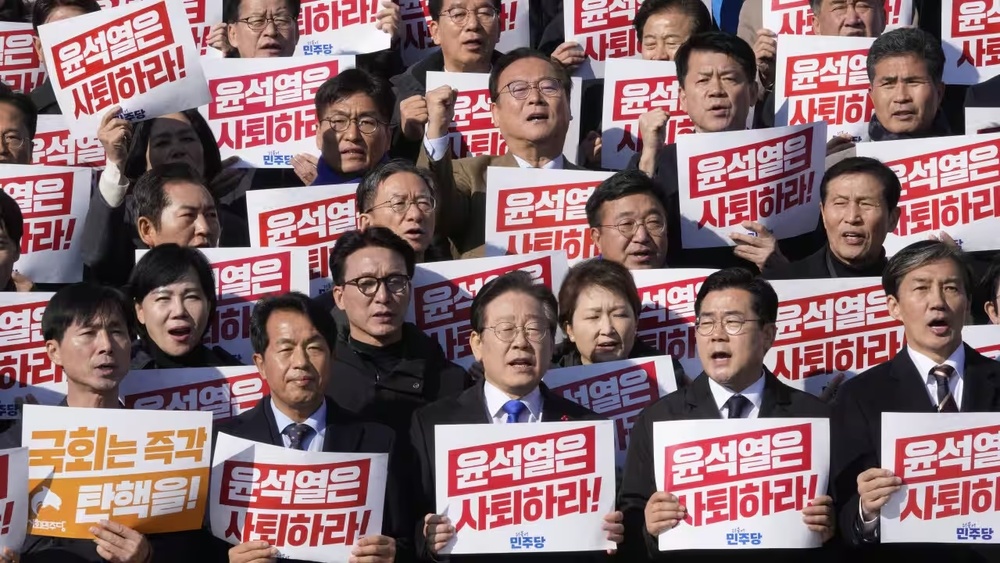
South Korea has endured a month of political turmoil since President Yoon Suk Yeol declared martial law and sent soldiers and helicopters to parliament.
Forced to rescind the decree, Yoon has since been impeached -- pending a court ruling -- and authorities this week issued a warrant for his arrest that expires on Monday.
Here is a recap of events:
- December 3: martial law -
On December 3 after a budget tussle with the opposition, Yoon takes to television to declare martial law in a flashback to Korea's authoritarian past.
He wants to protect the country against "threats posed by North Korea's communist forces and to eliminate anti-state elements plundering people's freedom and happiness".
Armed troops head to parliament, scaling fences, smashing windows and landing by helicopter in an apparent bid to stop lawmakers overturning the decree.
As thousands of protesters gather outside, lawmakers vote 190-0 to nullify Yoon's declaration in the early hours of December 4.
Soldiers begin withdrawing and Yoon re-appears on television and lifts martial law. Protesters celebrate. Yoon goes to ground.
- December 4: impeachment plan -
The opposition immediately vows on December 4 to push for impeachment and file an official motion.
They file separate complaints of "insurrection" against Yoon, his defence and interior ministers, and "key military and police figures involved, such as the martial law commander and the police chief".
Police announce they are investigating Yoon and others for "insurrection".
- December 7: Yoon sorry -
Yoon reappears on December 7 and apologises in a televised address for the "anxiety and inconvenience".
Tens of thousands of anti-Yoon protesters rally outside parliament.
An impeachment motion is defeated several hours later and Yoon stays in power.
- December 9: Yoon travel ban -
On December 8, Kim Yong-hyun, who had resigned as defence minister days earlier, is arrested over his role in the martial law declaration. The interior minister resigns.
The main opposition party says it will try to impeach the president again on December 14.
The next day the justice ministry announces it has banned Yoon from travelling abroad.
On December 12, Yoon again defends his shock decision, saying the opposition pushed South Korea into a "national crisis".
- December 14: Yoon impeached -
Out of 300 lawmakers, 204 vote to impeach Yoon and 85 vote against the motion.
Yoon is suspended from office while South Korea's Constitutional Court has six months to deliberate on the vote.
Prime Minister Han Duck-soo becomes the nation's acting leader.
The vote is followed by scenes of jubilation among tens of thousands of demonstrators in front of the parliament building.
- December 27: second impeachment -
The Corruption Investigation Office sends a third summons to Yoon on December 26, after he defied investigators' demands twice in a week.
Yoon faces impeachment and criminal charges of insurrection, which could result in life imprisonment or even the death penalty.
On December 27, lawmakers impeach acting president Han over what the opposition calls his refusal to sign into law special bills to investigate Yoon.
Finance minister Choi Sang-mok takes over.
- December 30: arrest warrant -
Investigators apply for an arrest warrant for Yoon after he failed to report for questioning a third time.
This is the first attempt in the country's history to forcibly detain a president before an impeachment procedure is complete.
A court issues the warrant on Tuesday, valid until January 6. Yoon's lawyer calls it "illegal and invalid".
- January 1: Yoon defiant -
Investigators vow to execute the warrant before the deadline, saying coordination with police is underway to prepare for Yoon's arrest.
Hundreds of his supporters gather outside his compound in protest against his impeachment.
Yoon repeats in a statement a pledge to fight alongside them "until the very end to protect this nation".
AFP