Read More
One of the most urgent questions heading into a virtual convention was whether the format could generate enthusiasm. The first impression, charitably, is that it remains a tall order.
ADVERTISEMENT
SCROLL TO CONTINUE WITH CONTENT
Actress Eva Longoria emceed the night’s programming, a combination of prerecorded and live material, from a studio. On one hand, Longoria’s video interactions with everyday Americans — a farmer, a student, a small business owner, among others — offered a better look at their lives than having them on a traditional convention stage in front of thousands of delegates.
But there’s also something lost when the headliners — well-known politicians who are used to much different environs — can’t feed off the crowd. You can take the same zinger against Trump or a wrenching personal biographical pitch about Biden, and it just won’t land the same way when delivered straight to a camera.
Democrats are clearly aware that they also lost the camera shots that at a normal convention would capture the party’s racial, ethnic and gender diversity — that much is assured by party rules on state delegations. They tried to make up for it from the start, with an invocation delivered in Spanish and English and a national anthem sung by children and adults from all over the country, representing a range of races and ethnicities.
Conventions have long been derided in some circles as infomercials. Now the evolution is complete.-AP
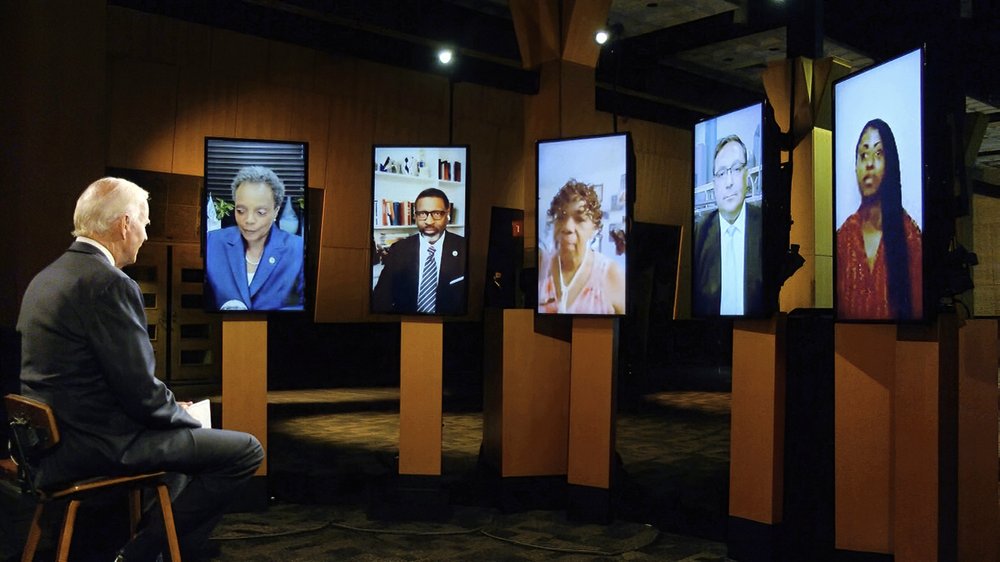
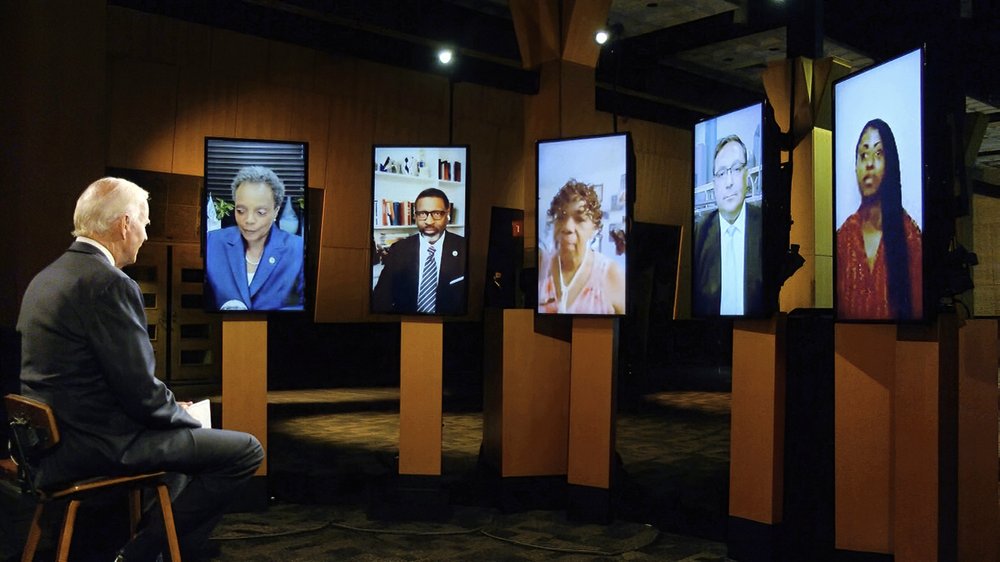
Democratic presidential candidate Joe Biden leads a conversation on racial justice with Art Acevedo, Jamira Burley, Gwen Carr, Derrick Johnson and Lori Lightfoot during the first night of the Democratic National Convention on Monday, August 17.