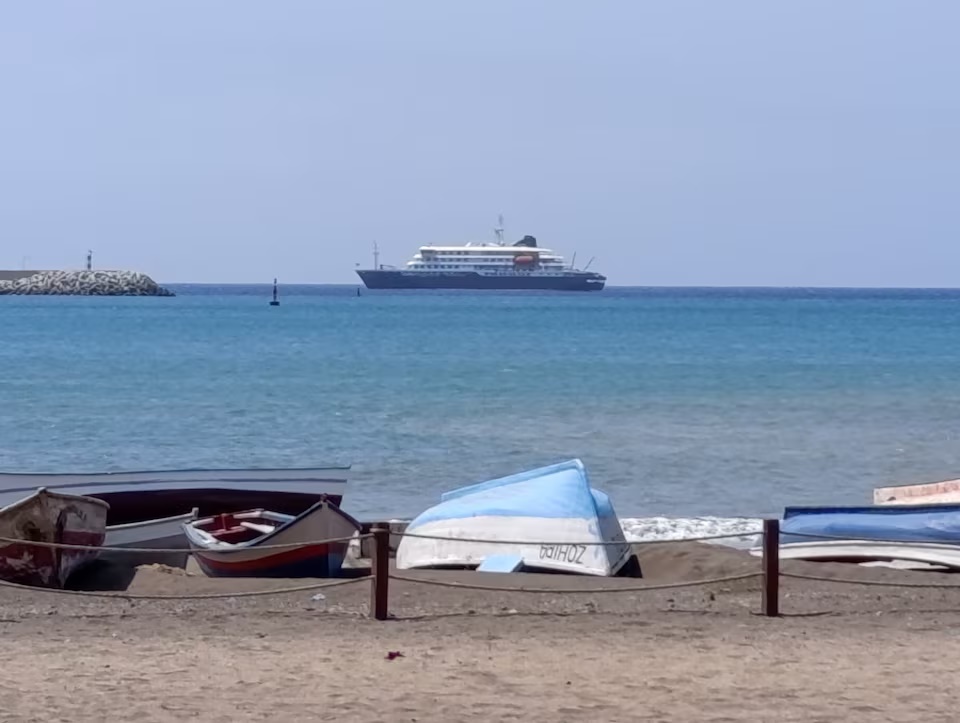
A luxury cruise ship that has been hit by an outbreak of the deadly hantavirus was preparing to travel from Cape Verde towards Europe on Wednesday after the Spanish government gave permission for it to dock in the Canary Islands.
The Spanish Health Ministry said it had been asked by the World Health Organisation and the European Union to take the MV Hondius "in accordance with international law and humanitarian principles".
It said it would also on Tuesday evening receive a medical flight carrying the ship's doctor, a Dutch national who it said was gravely ill, following a formal request from the Dutch government.
A Dutch couple and a German national have died since the outbreak manifested in early April, while a British national was evacuated from the ship and is in intensive care in South Africa, officials said.
Two crew members require urgent medical care, the Dutch-flagged MV Hondius ship's operator, Oceanwide Expeditions, said. Another person on board with a suspected case has only reported a mild fever.
Cape Verde was meant to be the ship's final destination but the nation off West Africa has not allowed the vessel to put passengers ashore.
Once in the Canary Islands, at a port yet to be determined, the Spanish health ministry said crew and passengers would be examined, treated and repatriated to their respective countries, in coordination with the European Centre for Disease Prevention and Control and the WHO.
All necessary safety measures would be taken, the health ministry said, with medical care and transportation in special facilities and vehicles to avoid contact with the local population and protect health workers.
"The World Health Organization has explained that Cape Verde is unable to carry out this operation," the statement added. "The Canary Islands are the closest location with the necessary capabilities.
"Spain has a moral and legal obligation to assist these people, among whom are also several Spanish citizens."
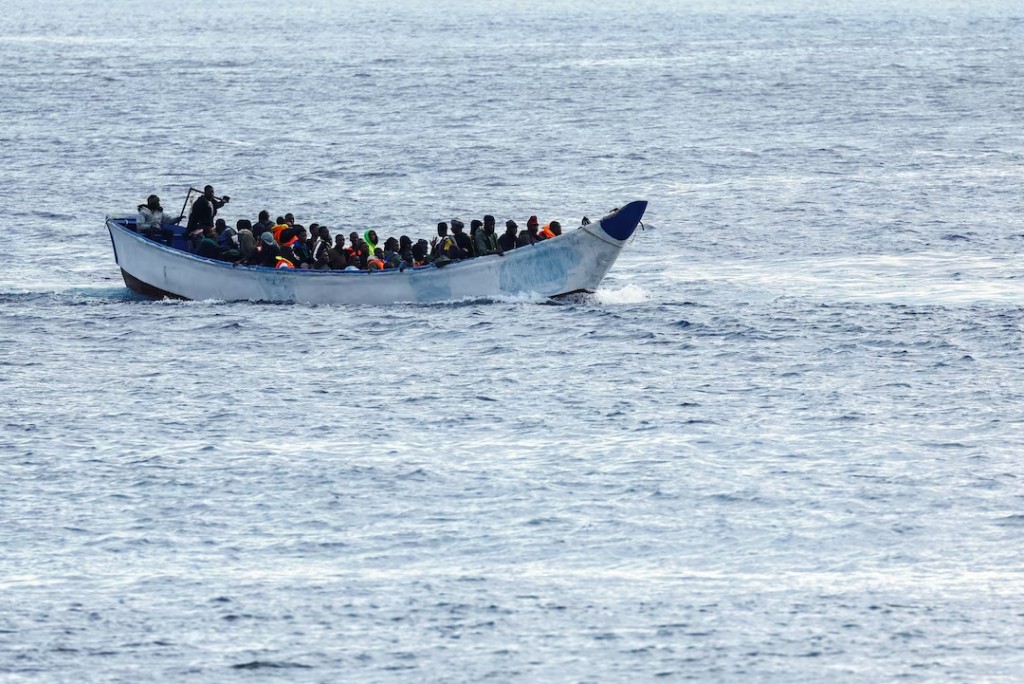
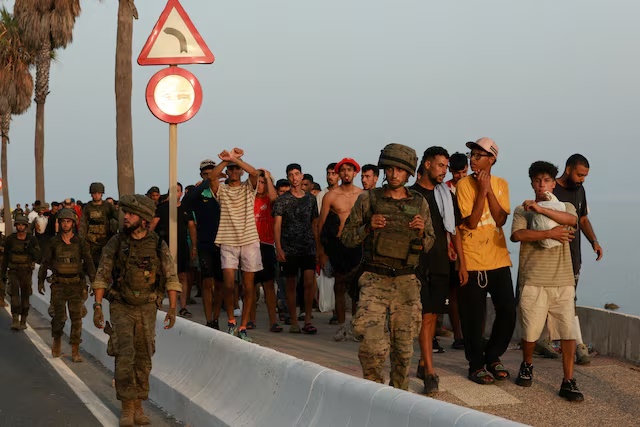
The Canary Islands is one of Europe's main arrival points for migrants from West Africa, with tens of thousands of people arriving in rubber dinghies and rickety fishing boats each year.
The MV Hondius would moor either in Gran Canaria or Tenerife, which were three or four days of sailing away from Cape Verde, Oceanwide and the Spanish health ministry said.
Health authorities say about 150 people from 23 countries are on board the ship.
At a press conference that began shortly after 6 p.m. Local time (1900 GMT), Cape Verde's National Director of Health Angela Gomes said evacuations would happen "in the coming hours". The Dutch foreign ministry said earlier on Tuesday it was preparing the medical evacuation of three people to the Netherlands from the ship.
HUMAN TO HUMAN
People are usually infected by hantavirus through contact with infected rodents or their urine, their droppings or their saliva.
But the World Health Organization said on Tuesday that it suspects some rare human-to-human transmission took place between very close contacts on board the Hondius.
"We do believe that there may be some human-to-human transmission that's happening among the really close contacts, the husband and wife, people who have shared cabins," Maria Van Kerkhove, the director of epidemic and pandemic preparedness and prevention at the WHO, told reporters in Geneva.
Van Kerkhove also sent a direct message to people on board.
"We just want you to know we are working with the ship's operators," she said. "We are working with the countries where you are from. We hear you, we know that you are scared."
Human-to-human transmission is not common, and the U.N. health agency reiterated that the risk to the wider public was low from a disease typically spread from contact with infected rodents.
A limited spread among close contacts has been observed in some previous outbreaks of the Andes strain, which spreads in South America, including Argentina, and which the WHO believes could be involved in this instance. Testing is under way.
The Hondius left Ushuaia in southern Argentina in March. The WHO said it had been told there were no rats on board.
The U.N. health body said its working assumption was that the Dutch couple, who joined the ship in Argentina after travelling in the country, were infected before boarding the cruise.
Other cases may also have been infected while on bird-watching trips to islands where birds and rodents live, it said. Such trips are part of the cruise.
VOYAGE STARTED IN SOUTHERN ARGENTINA
The Hondius is carrying mostly British, American and Spanish passengers on a luxury cruise that set off from the southern tip of Argentina in late March. The cruise visited the Antarctic peninsula and South Georgia and Tristan da Cunha - some of the remotest islands on the planet.
The voyage was marketed as an Antarctic nature expedition, with berth prices ranging from 14,000 to 22,000 euros ($16,000 to $25,000).
The first stricken passenger, the Dutch man, died on April 11. His body remained on board until April 24, when it "was disembarked on St Helena, with his wife accompanying the repatriation", Oceanwide Expeditions said.
His wife had gastrointestinal symptoms when she was disembarked and deteriorated during a flight to Johannesburg. She died upon arrival at the emergency department on April 26, the WHO said, adding that contact tracing was under way for passengers on that flight.
South African authorities have confirmed that the British patient, who is being treated in a Johannesburg hospital, tested positive for the hantavirus. The Netherlands has confirmed the virus in the Dutch woman who died.
Reuters