
Read More

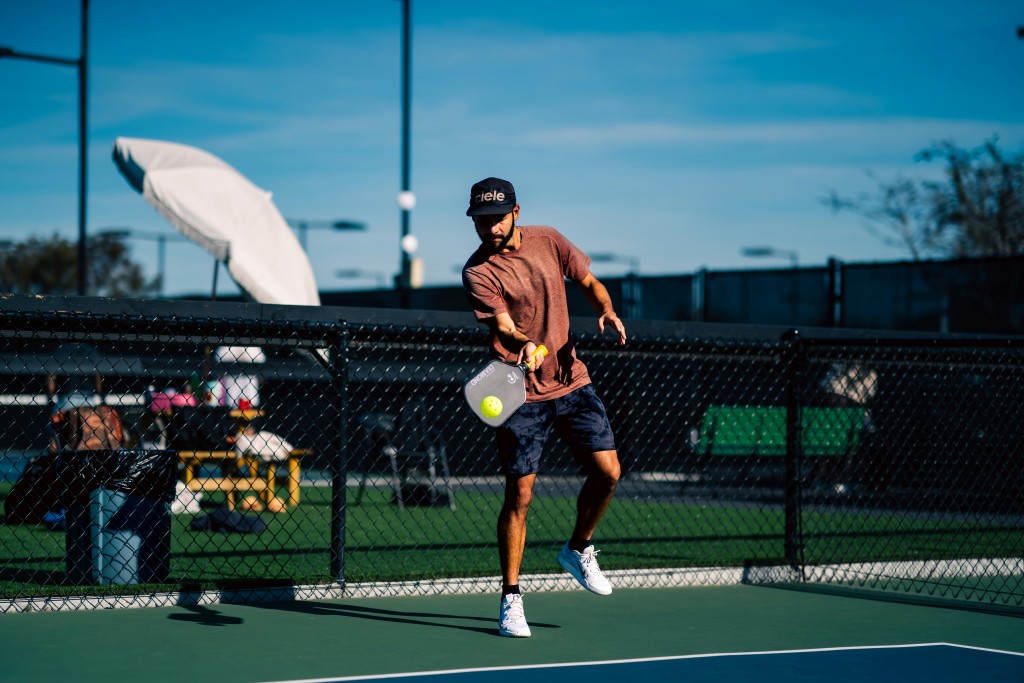
Pickleball has surged in popularity across Hong Kong, loved by people of all ages for its simple rules, flexible court requirements, and high social engagement. Orthopaedic surgeon Dr. Li Cheung-hong notes that many beginners mistakenly assume the sport is low-impact and easy for anyone—including those who are usually inactive or elderly. This complacency, combined with poor technique or insufficient warm-ups, often leads to shoulder strain and acute injuries. He analyses common pickleball injuries seen clinically, their treatment, and offers advice on preventing sports trauma.
Many believe pickleball is less physically demanding and carries a lower injury risk than tennis or badminton. Li explains that while all three are racket sports, tennis and badminton involve frequent jumping overhead smashes with high impact, making acute tendon tears more common. Pickleball, played with an underhand serve, is faster-paced with short-distance reactions and net play. The highly repetitive movements often result in chronic overuse injuries like tendonitis and shoulder impingement syndrome.
Despite being easy to learn, improper form can still cause acute injuries. Li highlights that the biceps tendon and rotator cuff are most commonly affected. Many beginners overstretch their arms backward when reaching for a shot, without proper muscle engagement, leading to biceps tendon strains. Frequent smashes or overhead lifts overuse the rotator cuff. If power is generated incorrectly or muscles are fatigued, inflammation develops—potentially affecting daily activities.
Muscle soreness and shoulder warmth after playing usually subside within 2–3 days of rest. Li warns that if pain persists and affects simple actions like washing the face, combing hair, raising the arm, or scratching the back, tendon tears may have occurred. If pain lasts 1–2 weeks without improvement, accompanied by numbness, or if sleeping on the affected side wakes you up, these are serious signs of shoulder joint inflammation or damage requiring prompt medical attention.
Different tendon injuries have specific symptoms. Li notes that raising the arm (e.g., hanging laundry) involves the supraspinatus, scratching the back involves the subscapularis, while pain during pushing movements is often linked to the biceps tendon.
Treatment depends on severity. Most cases can be managed non-surgically: rest, ice, anti-inflammatory medication, and physiotherapy. If conservative treatment fails after 1–2 months, corticosteroid injections may be used. In recent years, PRP (platelet-rich plasma) injections have also been used to relieve symptoms. If imaging shows significant tendon tears affecting function, arthroscopic surgery may be needed. For patients with frozen shoulder (adhesive capsulitis) from chronic inflammation, shoulder release surgery—injecting saline under anaesthesia to stretch the joint—can restore mobility.
Prevention is better than cure. Li stresses a 5–10 minute dynamic warm-up: arm circles, shoulder rotations, lunges, and torso twists—not just static stretching. Keep the ball in front of your body to avoid overextending the shoulder. Use your core and torso rotation to generate power, rather than relying on wrist or forearm muscles.
Choosing the right equipment matters. Rackets that are too heavy strain the arm; too light and they lack feel. Grip thickness is also important. A grip that's too thin forces you to grip tightly, straining forearm and shoulder muscles over time. Li recommends adding extra grip tape to adjust thickness for comfort. Only then can you truly enjoy pickleball and stay injury-free.