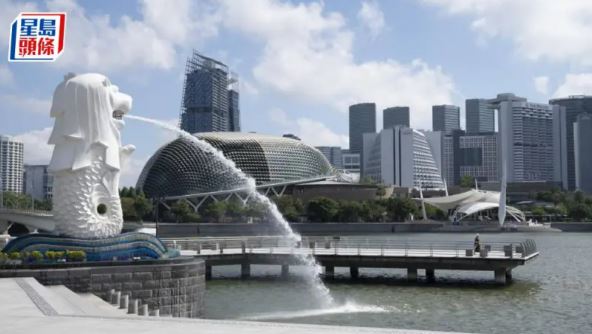
Singapore's economy grew slightly faster than initially estimated, prompting the government to upgrade the city state's growth forecast for this year even as it warned of downside risks.
Gross domestic product rose by 4.4 percent year-on-year in the April-June quarter, government data showed on Tuesday, just ahead of an advance estimate of a 4.3 percent gain released last month.
The trade ministry raised its GDP growth forecast for 2025 to 1.5 percent to 2.5 percent from 0.0 percent to 2.0 percent, saying it largely reflected a better-than-expected first half performance. In April, the ministry had cut its forecast from 1.0 percent to 3.0 percent after the United States announced its plans for global tariffs.
"However, the economic outlook for the rest of the year remains clouded by uncertainty, with the risks tilted to the downside," it said in a statement.
On a quarter-on-quarter, seasonally-adjusted basis, gross domestic product rose by 1.4 percent in the April-June period, in line with the advance estimate and following a 0.5 percent contraction in the first quarter.
At a press briefing on Tuesday, Monetary Authority of Singapore chief economist Edward Robinson said the central bank's monetary policy stance remains appropriate after accounting for factors that affect Singapore's domestic growth and inflation outcomes.
"I would also add that a gradualist approach under conditions of uncertainty is useful as we update our assessment in a timely manner at our quarterly reviews," he said.
In a separate statement, Enterprise Singapore said it was keeping its forecast for non-oil exports at growth of 1 percent to 3 percent this year, saying it expected some weakness in the second half after a stronger-than-expected start to 2025.
"In general, as frontloading activities taper and reciprocal tariffs resume from 7 August 2025, these could weigh on global economic activity and trade," it said in a statement.
Despite having a free-trade agreement and running a trade deficit with the US, the wealthy financial hub has still been slapped with a 10 percent tariff rate by Washington.
President Donald Trump has also said he would impose a tariff of about 100 percent on imports of semiconductors, with an exemption for companies that are manufacturing in the US or have committed to do so, and a tariff on pharmaceutical imports that would rise to 150 percent within 18 months and eventually to 250 percent.
Figures from a central bank report show pharmaceuticals made up 12.3 percent of the city-state's exports to the US in 2024, while semiconductors accounted for 1.6 percent of shipments and other electronics and semiconductor equipment made up 15.0 percent of exports to the United States.
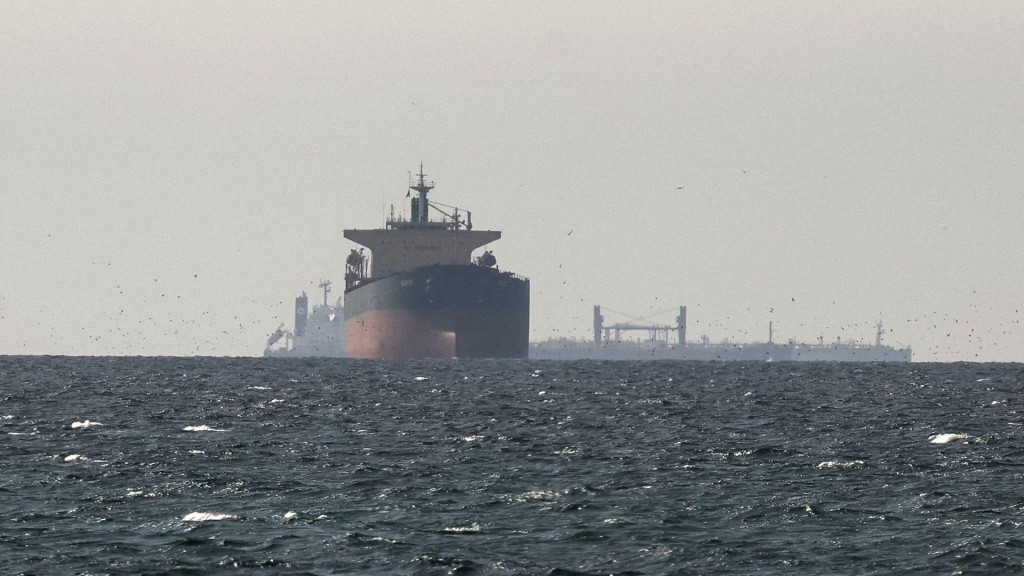
There will also be indirect impacts on Singapore, a global shipping hub where trade is three times the size of its GDP, if the US tariffs constrict global trade.
Imports from other Southeast Asian countries have been slapped with much higher tariffs of between 19 percent and 40 percent.
REUTERS