Read More
The government will establish a Hong Kong Microelectronics Research and Development Institute (HKMSRDI) this year to capture the microelectronics market with such huge potential and to dovetail with the national strategy for technological development, finance minister Paul Chan Mo-po said.
ADVERTISEMENT
SCROLL TO CONTINUE WITH CONTENT
Making the announcement on Wednesday, Chan acknowledged the increasing demand for semiconductors worldwide and pointed out that scale of related industries is expected to grow continuously and exceed US$1 trillion by 2030.
The institute will spearhead and facilitate research collaboration on the third-generation semiconductors among universities, R&D centers and the industry, and to realize R&D outcomes by making use of the comprehensive manufacturing industry chain in the Greater Bay Area.
Chan also said Cyberport is expediting the establishment of an AI Supercomputing Centre to meet the demand of research institutes and the industry for computing power.
The first phase of the facility is expected to start operating within this year at the earliest.
By early 2026 at the soonest, the computing power of the supercomputing facility is expected to reach 3,000 petaFLOPS (1,000 trillion operations per second). The scale of such power is equivalent to the capacity of processing nearly 10 billion images in one hour.
The government will allocate HK$3 billion to Cyberport for the launch of a three-year AI Subsidy Scheme to support local universities, research institutes and enterprises to leverage the Centre’s computing power and achieve scientific breakthroughs.
The subsidy will also be used to strengthen the cyber security and data protection of the Centre, and launch promotional and educational activities, etc. to encourage mainland and overseas AI experts, enterprises and R&D projects to come to Hong Kong.
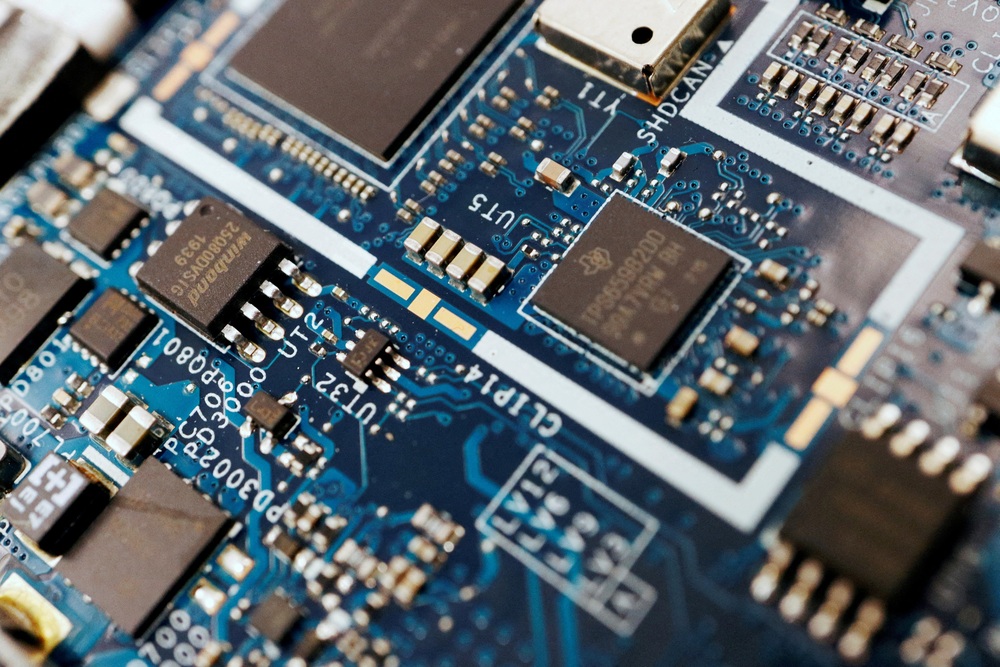
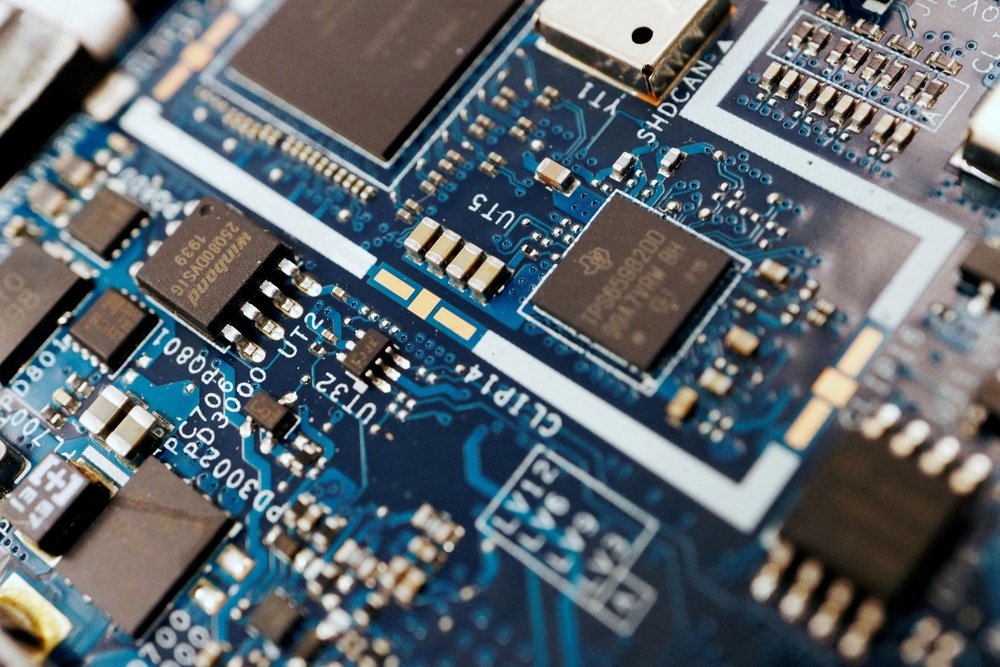
Semiconductor chips are seen on a circuit board of a computer in this illustration picture taken February 25, 2022. (Reuters)