By John Gandolfo and Eddie Yue
Asia Pacific captured half the world’s investment in the energy transition last year, surpassing US$1 trillion for the first time, according to BloombergNEF. Still, annual investment in the region’s key markets must more than double over the next five years to get on track to achieving carbon neutrality and it must rise even more in emerging and developing markets. This creates a huge opportunity for banks and investors, particularly those in Hong Kong and other major financial hubs, which have a crucial role to play in financing the region’s climate ambitions. And with estimates of millions of jobs being created by the region’s transition between now and 2050, governments, too, have a major stake in fueling investment.
As leaders in climate business and finance gather for the Climate Business Forum: Asia Pacific 2025 as part of Hong Kong Green Week, conversations will center on how private investment can be mobilized at scale to finance crucial yet underfunded areas of the transition, from investing in adaptation and biodiversity conservation to decarbonizing hard-to-abate sectors and creating sustainable supply chains.
Across Asia Pacific, energy transition investment grew 21 percent year-on-year in 2024, double the global average growth rate, according to BloombergNEF. A staggering US$435 billion was invested in electric vehicles and associated infrastructure, and much of the growth in renewables came from newer and emerging markets. In more nascent areas, investment in clean hydrogen more than doubled, and the region led global growth in energy storage, with funding rising 38 percent to US$24 billion. Policies are also promoting new advances in sustainable aviation fuel, with blending mandates passed in key markets—such as Indonesia—set to take effect soon.
Emerging economies across the region have come a long way, but they still face a steep climb to achieve net-zero emissions. According to BloombergNEFestimates, achieving net-zero emissions in India, for example, requires more than quadrupling the record US$47 billion it invested in 2024 each year to 2030, while investment in Vietnam would need to rise nine times the US$6 billion invested last year. Investment needs to span electric arc furnaces to decarbonize steel production in India to protecting agriculture and aquaculture from environmental degradation in the Mekong Delta in Vietnam.
Now is the time to pursue concrete steps to convert transition challenges into opportunities.
A key part will be to transfer the capital, standards, knowledge, and successful business models that companies and financial institutions in well-established markets such as Hong Kong offer to emerging markets in the broader region. In 2024, the city arranged 45 percent of Asia’s international green and sustainable bonds, leading regional issuance for the seventh consecutive year. It also has one of the world’s most active asset management markets — a wealth management business amounted to US$3.5 trillion at the end of 2024, with US$229 billion contributed by private equity alone, making the city the second-largest private equity center in Asia. Levering this platform, in 2024, the Hong Kong Monetary Authority(HKMA) and the International Finance Corporation (IFC), together with other multilateral organizations, formed a strategic partnership to deploy at least US$500 million to sectors that contribute to reducing greenhouse gases in Asia. The partnership aims to demonstrate that achieving both financial returns and sustainable development is feasible, setting an example to encourage more collaboration in addressing sustainability challenges in the region.
Hong Kong, moreover, is a technology and innovation hub that can support the energy transition globally. It has issued the first tokenized government green bond and the first multi-currency digital bond in the world, and the adoption of cutting-edge technology goes beyond capital markets, too. We have a lot to learn from MTR, the city’s railway operator, widely regarded as one of the world’s most resource-efficient and ecologically sustainable mass transit operators. Hong Kong is also pioneering the production of sustainable aviation fuel, which is lowering airline emissions by up to 90 percent and creating jobs in emerging markets. And companies such as Li & Fung are supporting small and medium enterprises in emerging markets in the broader region with environmental and social best practices and financing, ensuring a more sustainable supply chain for brands and retailers around the world.
Another important area for action is finding better ways to channel capital to the countries and projects that need it most. To achieve this, data availability must be improved, using tools such as the Global Emerging Markets Risk Database, which pools credit risk data from multilateral development banks. Local banks must also be equipped with the expertise and skills needed to steer their business and investments towards low-carbon activities, through initiatives such as the Alliance for Green Commercial Banks. Projects must also be de-risked to attract capital through solutions such as blended finance, particularly in emerging areas like adaptation and nature-based solutions.
Equally important is to showcase that sustainable development and job creation can go hand in hand, especially when the right soft infrastructure is in place. Efforts to rapidly decarbonize could create 180 million “green-collar jobs” for the region by 2050, according to Deloitte. These jobs can stabilize communities, lift people out of poverty, and drive economic growth. For example, IFC recently partnered with Meghna Group to develop Bangladesh’s first climate-smart steel plant, which could result in 20,000jobs in the country.
With strong, country-designed and led climate action, Asia Pacific could deliver US$47 trillion in new economic opportunities by 2070, according to Deloitte. This makes climate business not just a timely investment, but also a smart development choice that will improve lives and livelihoods, both now and for generations to come.
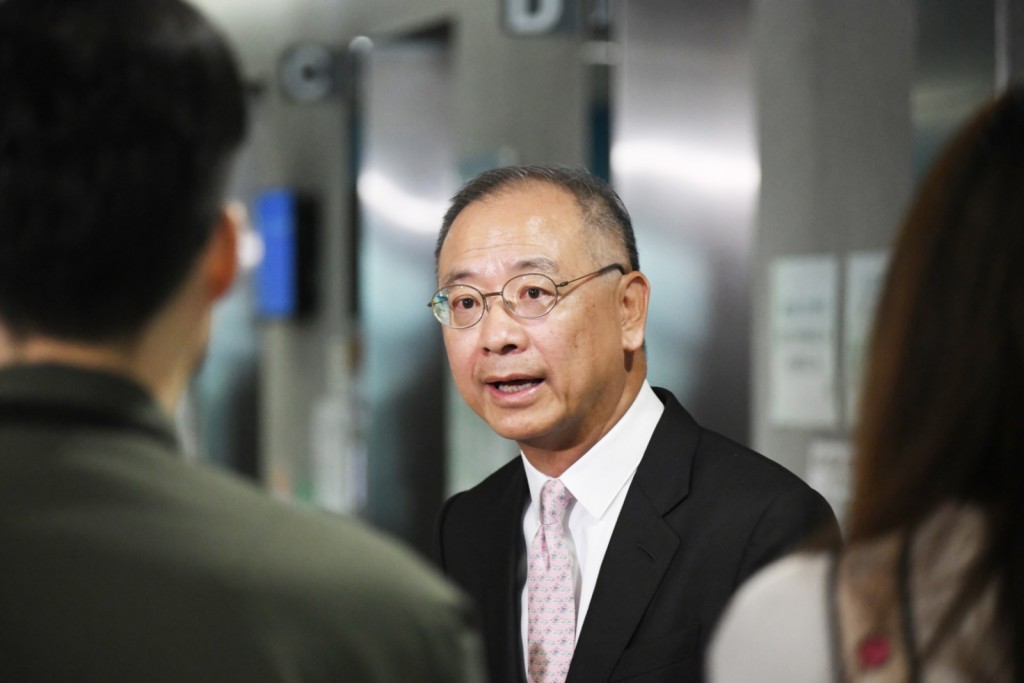
John Gandolfo is Vice President and Treasurer, Treasury and Mobilization, at the International Finance Corporation. Eddie Yue is Chief Executive of the Hong Kong Monetary Authority.