Worried about climate change? Then buy only secondhand stuff. Not only is it easy on the pocket, it also means that no extra resources are used to create new products - meaning a smaller carbon footprint.
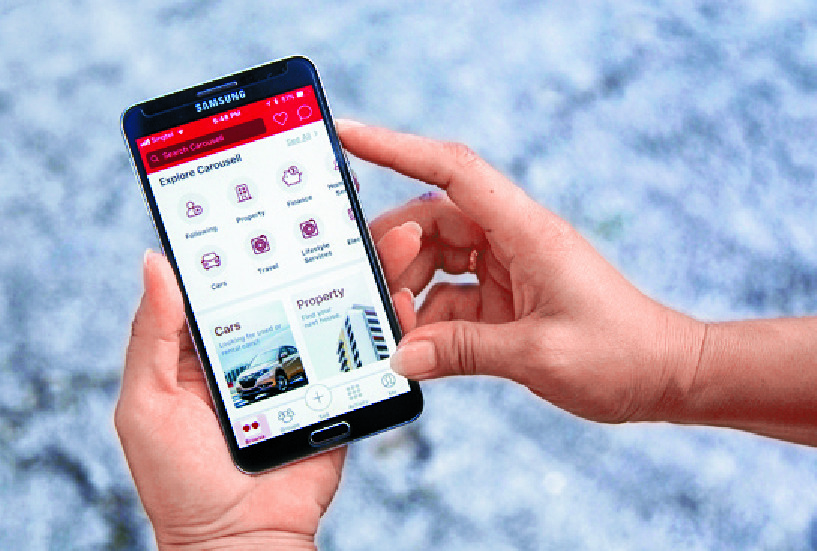
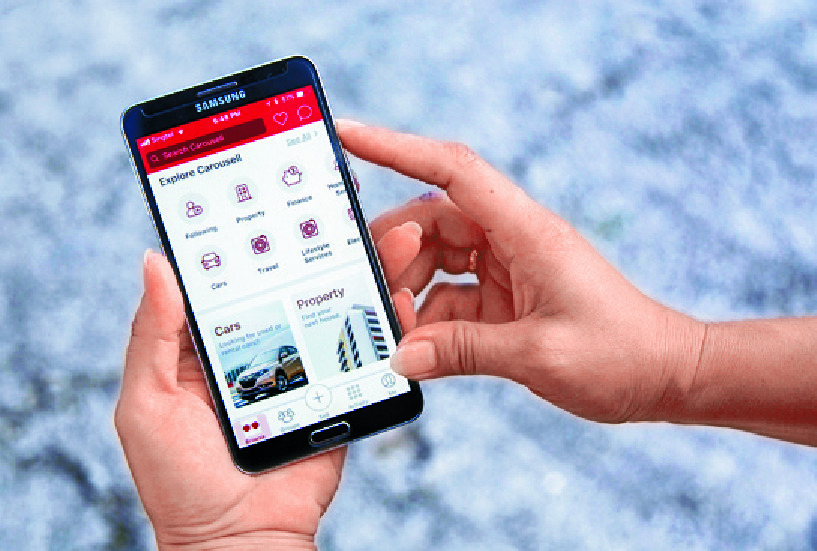
Carousell Group recently released its Circular Economy Impact Report, showing that buying and selling secondhand items is better for the planet compared to traditional retail of buying new items.
The report, a first-of-its kind for e-commerce and recommerce marketplaces in Southeast Asia, quantifies the Avoided Carbon Emissions due to users purchasing secondhand items on three of the group's marketplaces, in place of a new item.
It calculated that the Carousell community avoided 116,577 tonnes of carbon emissions in four goods categories (fashion and luxury, electronics, furniture and home living, and hobbies and toys) in 2022 - equivalent to 5.3 million trees absorbing carbon dioxide per year.
Almost 56 percent of purchases on the marketplace displaced the purchase of a new item. On average, 55 percent of those surveyed reported an increase in buying and selling of secondhand items in 2022 as compared to 2021.
"As a key enabler of the circular economy in our region, we have a responsibility to lead by example and measure the potential positive impact of choosing secondhand products over new ones in a trustworthy and transparent way," said the group's chief strategy officer Gaurav Bhasin. "In addition to the avoided emissions calculations, we have also taken the opportunity to calculate our group's carbon footprint. The robustness of our chosen methodology underscores our strong commitment to sustainability, and it forms the bedrock of our sustainability endeavors."
To quantify its impact, Carousell partnered with Vaayu, a European climate tech company using proprietary AI and machine learning technology.
"Retail is responsible for 25 percent of global carbon emissions and with research continuing to show we're not on track to keep global warming below 1.5 degrees Celsius, we're at a critical inflection point," said Vaayu cofounder and CEO Namrata Sandhu. "Circular business models, like recommerce, offer a clear path to reducing retail's impact on our planet."
Besides the quantification of Avoided Emissions, the report also underscores the significance of every individual transaction in contributing to the overall circular economy impact.
For instance, buying a secondhand sofa on Carousell can, on average, save up to 131 kilograms of carbon dioxide - the equivalent of almost six trees absorbing the greenhouse gas per year.
ivy.ong@singtaonewscorp.com