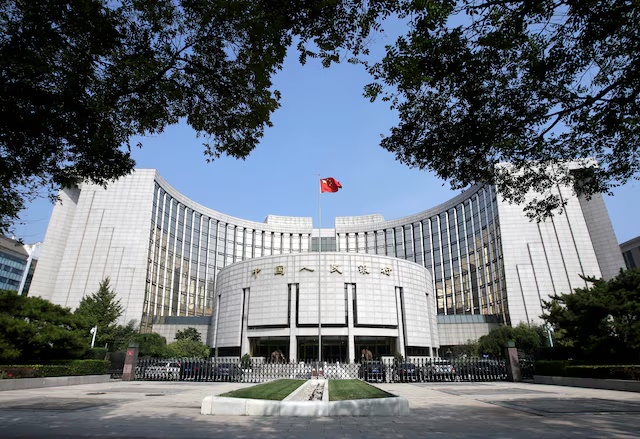
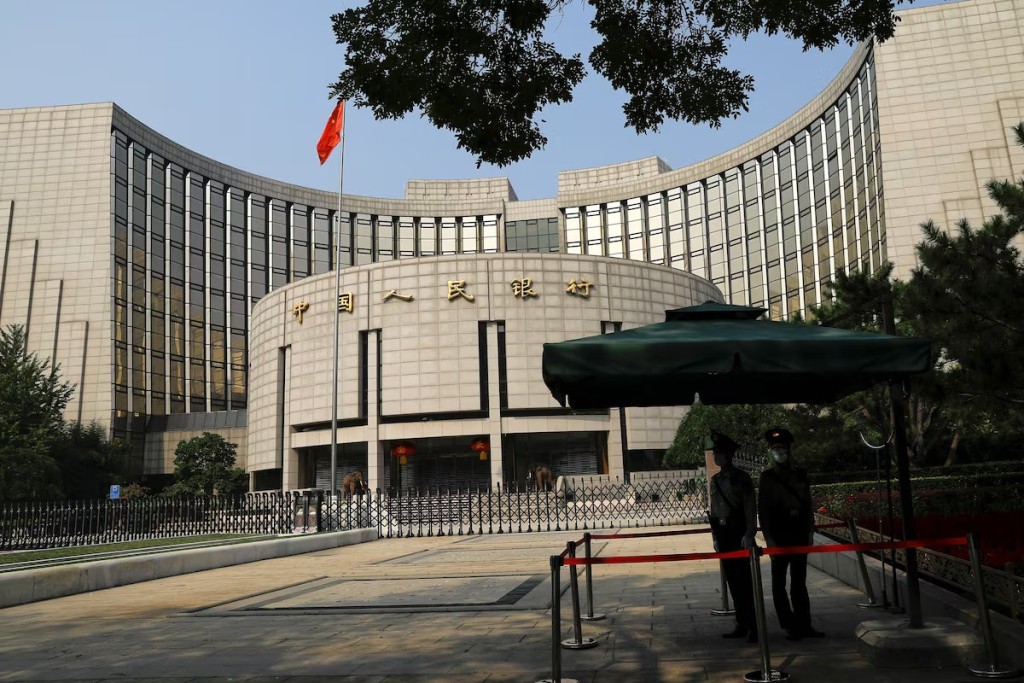
China's new bank loans returned to positive territory in August but fell well short of analysts' forecasts after a record contraction in July, as weak demand from the household and corporate sectors continued to weigh on credit growth.
Chinese banks extended 60 billion yuan (HK$70.16 billion) in new loans last month, bouncing back from a 340 billion yuan contraction in July, according to Reuters calculations based on data from the People's Bank of China (PBOC) on Monday.
Analysts polled by Reuters had expected new yuan loans in August to rebound to 400 billion yuan, still well off 590 billion yuan a year earlier.
New loans totalled 10.44 trillion yuan in January-August, down from 13.46 trillion yuan in the same period last year, highlighting tepid demand.
Outstanding yuan loans in August grew 4.9 percent from a year earlier, slowing from 5.1 percent in July to the weakest pace on record.
Weak loan demand remains a persistent drag on the world's second-largest economy even as Chinese authorities have sought to broaden financing channels beyond traditional bank lending, including through equity and bond markets.
China's economy lost momentum at the start of the second half, with industrial output and retail sales slowing as extreme weather disruptions and persistently weak domestic demand renewed pressure on policymakers to step up stimulus.
The disappointing data, following second-quarter growth that cooled to a three-and-a-half-year low, highlights China's continued dependence on exports to offset sluggish consumption and investment even as it confronts headwinds from US tariffs and the conflict in the Middle East.
To bolster consumption and investment, Beijing recently expanded loan interest subsidies for small private firms and consumers and announced an injection of US$54 billion (HK$421.2 billion) into eight state-owned financial institutions to shore up their core capital and sustain lending.
Policymakers last month also introduced new measures to stabilise China's property sector, including stronger financing support for developers and an extension of the maximum mortgage term from 30 to 40 years to ease homebuyers' repayment burdens, though analysts remain cautious about the pace of a broader recovery in housing demand.
Broad M2 money supply in August expanded 7.5 percent from a year earlier, the central bank data showed, a 17-month low, and below analysts' forecast of 7.6 percent in a Reuters poll. M2 expanded 7.7 percent in July.
The narrower M1 money supply climbed 4.1 percent year-on-year, compared with 4 percent in July.
Outstanding total social financing - a broad measure of credit and liquidity - rose 7.2 percent in August from a year earlier, down from 7.4 percent in July. Any acceleration in government bond issuance could boost such financing.
Reuters