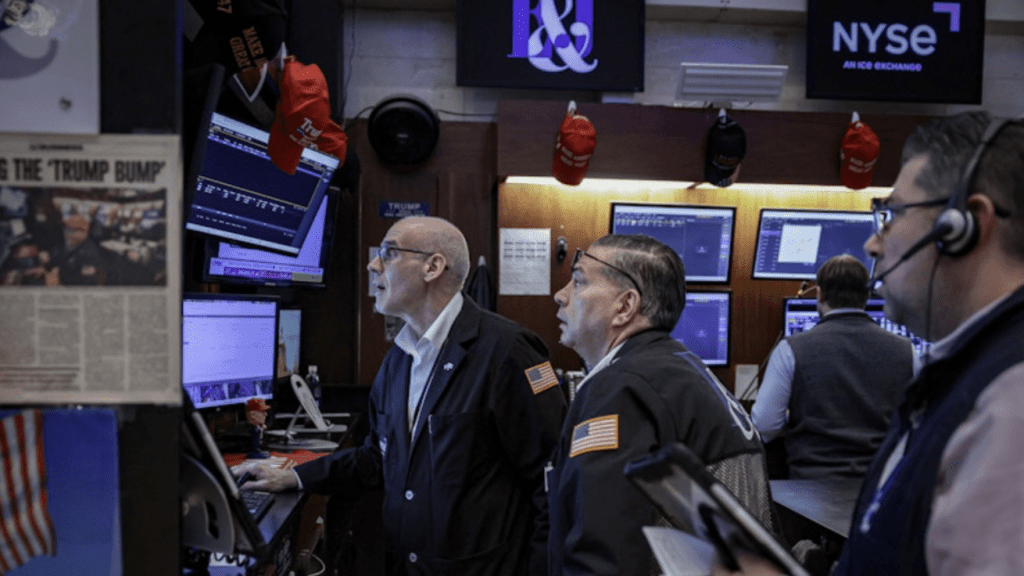
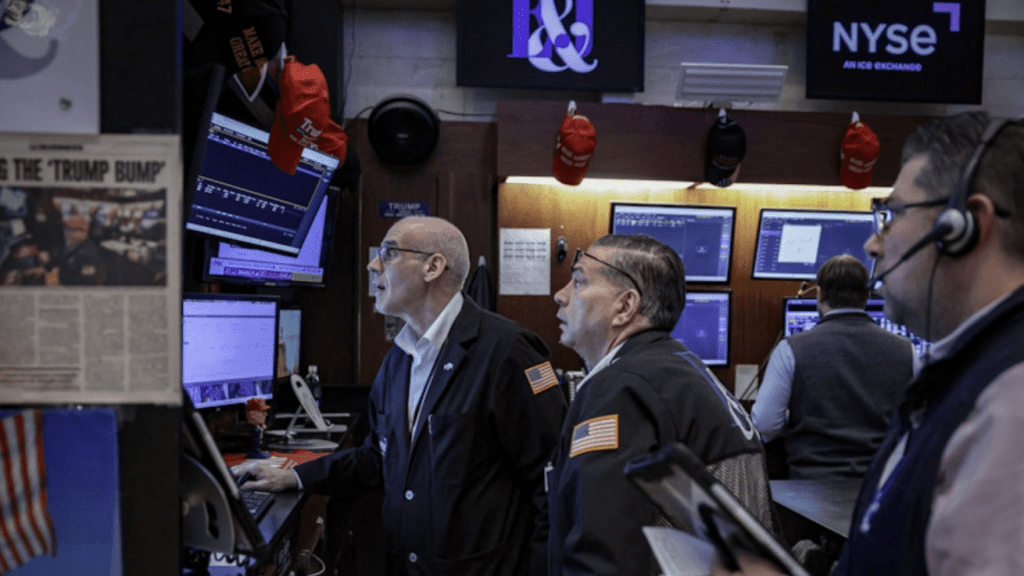
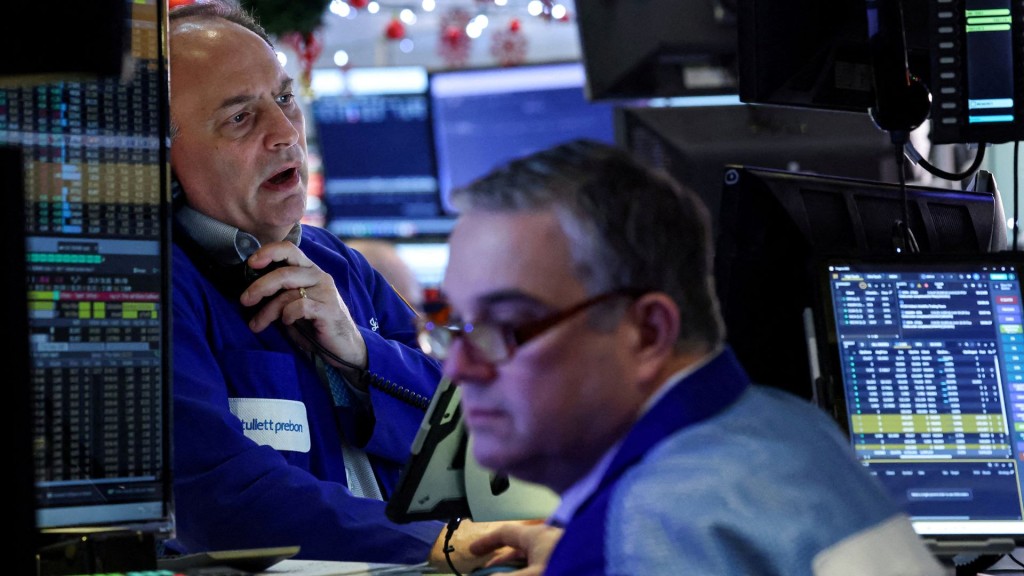
The Nasdaq Composite and the S&P 500 finished lower on Tuesday under pressure from technology stocks, while the Dow Jones Industrial Average marked its second straight record close.
After rallying sharply on Monday on optimism about a U.S.-Iran peace deal, investors in the S&P 500 and Nasdaq took a breather even as oil prices fell to their lowest levels since early March.
Shares of SpaceXSPCX.O rallied, but pared earlier gains. For much of the session, the rocket and AI company's market value was above that of Amazon AMZN.O and it briefly surpassed Microsoft's MSFT.O value.
While falling oil prices offered some support to equities, Mark Luschini, chief investment strategist at Janney Montgomery Scott in Philadelphia, said it was too difficult to build on recent steep gains in the heavyweight technology sector without a break. He noted some investor caution ahead of the U.S. Federal Reserve's policy update due on Wednesday afternoon.
"We had a big move yesterday in the market," said Luschini, alluding to the S&P 500's 1.65% rally on Monday and Nasdaq's advance of more than 3%. "We're just digesting some of those gains and the setup in anticipation of the Fed meeting is always a little tentative."
According to preliminary data, the S&P 500 .SPX lost 41.85 points, or 0.55%, to end at 7,512.44 points, while the Nasdaq Composite .IXIC lost 301.13 points, or 1.15%, to 26,382.81. The Dow Jones Industrial Average .DJI rose 345.54 points, or 0.67%, to 52,016.57.
TECHNOLOGY LAGS, FINANCIALS RISE
Investors rotated into economically sensitive sectors and sold richly valued technology stocks during the session with chip stocks falling sharply after soaring in the prior three sessions. Of the S&P 500's 11 major industry sectors, financials .SPSY and industrials .SPLRCI rose.
U.S. oil futures CLc1 settled down 5.8% as some details emerged about the U.S.-Iran interim deal, which is expected to extend a tenuous ceasefire announced in April by another 60 days and reopen the Strait of Hormuz, which Iran has effectively blocked since the U.S. and Israel attacked Iran in February.
U.S. President Donald Trump said the agreement would rule out a nuclear weapon for Tehran, while a U.S. official said that it allows Iran to sell oil upon signing.
The war had pushed up oil prices since it started in late February, and fanned worries about sticky inflation, which informs the U.S. central bank's policy on interest rates. Investors are widely expecting the Fed to hold interest rates at its current 3.50% to 3.75% range on Wednesday, though they will pay close attention to new Fed Chairman Kevin Warsh's comments on inflation, unemployment and the economic outlook.
Traders see the Fed holding rates through much of the year but have been betting on a roughly 42% chance of a 25-basis-point rate hike in December, according to CME Group's FedWatch tool.
In individual stocks, shares of Olin OLN.N sank after the chemical producer said it would acquire Huntsman HUN.N in an all-stock deal valued at $2.43 billion. Huntsman shares also fell as the offer stood at a discount to the stock's recent price.
Yum Brands YUM.N shares rose after the fast-food company said it would sell its Pizza Hut chain for $2.7 billion, as it struggles with stiff competition and cautious consumer spending.
Reuters