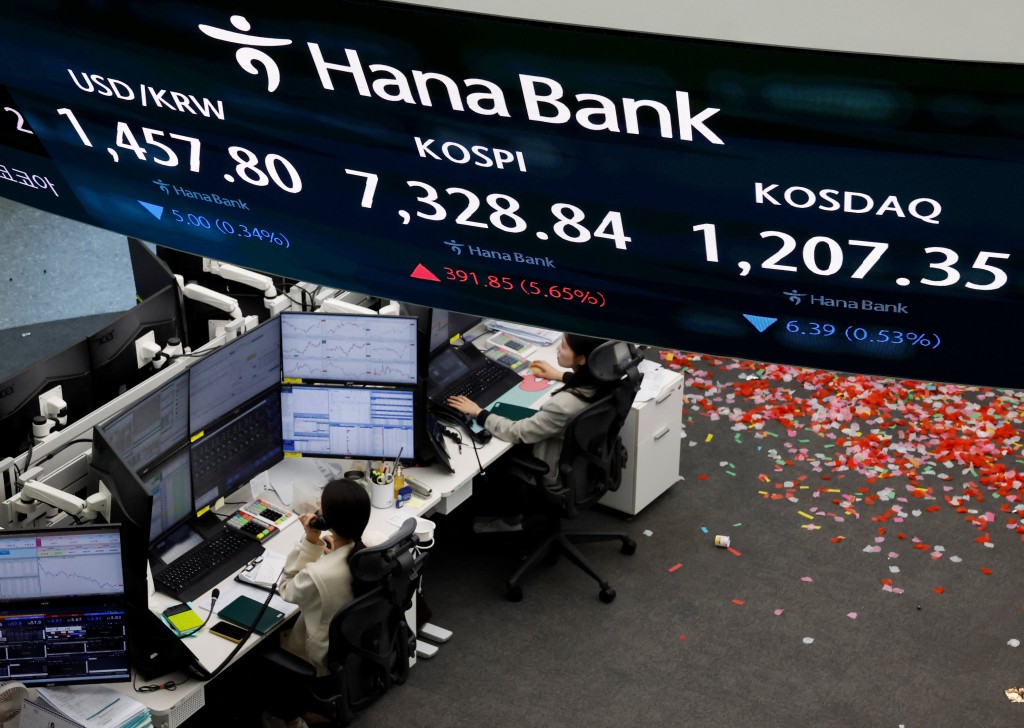
South Korea's KOSPI stock benchmark pulled back sharply after hitting an all-time high just below the 8,000 level on Tuesday, as investors took uncertainty over the Middle East conflict as a cue to book profits.
The KOSPI closed 2.3 percent lower at 7,643.15. Earlier in the session, it rose 2.3 percent to a record high of 7,999.67 but suddenly reversed course to fall as much as 5.1 percent intra-day.
Chipmaker Samsung Electronics fell 2.3 percent and peer SK Hynix skidded 2.4 percent. Earlier in the session, Samsung and SK Hynix gained 2.1 percent and 4.6 percent, respectively, to notch record levels.
"External uncertainty triggered underlying profit-taking pressure to explode. While there is little significance to the figure of 8,000 itself, it is up 60 percent from 5,000 in late March, which is not common," said Huh Jae-hwan, an analyst at Eugene Investment Securities.
The index rose 4.3 percent on Monday, reaching near 8,000 levels in less than a week after it breached 7,000, led by strong buyingby retail investors. This prompted authorities to issue a rare warning against taking too much risk on Monday.
US President Donald Trump said that a ceasefire with Iran was "on life support" after Tehran's response to a US proposal to end the war made clear the two sides were still far apart on a number of issues.
"The recent rally had been concentrated too much on the semiconductor sector," said Han Ji-young, an analyst at Kiwoom Securities.
The KOSPI has risen 16 percent this month, bringing its year-to-date gains to over 80 percent. In the entirety of 2025, it rose 76 percent, the biggest annual gain since 1999, emerging as the world's best performer in an artificial intelligence-driven rally.
Presidential policy adviser Kim Yong-beom floated an idea of "citizen dividends", as he argued in a social media post that excess earnings in the era of AI should be redistributed to all citizens and South Korea could be the first country to make that happen.
Foreign investors were net sellers of shares worth 5.6 trillion won (US$3.76 billion) on Tuesday, while retail investors bought 6.7 trillion won.
Most other index heavyweights also fell sharply. Of the total 899 traded issues, 146 shares advanced, while 733 declined.
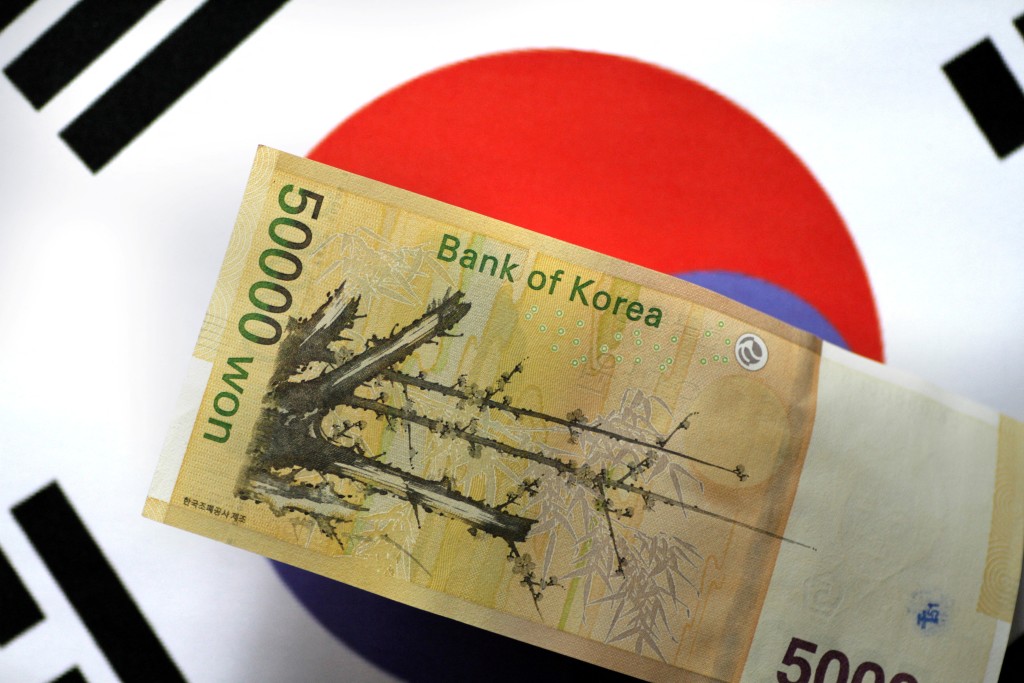
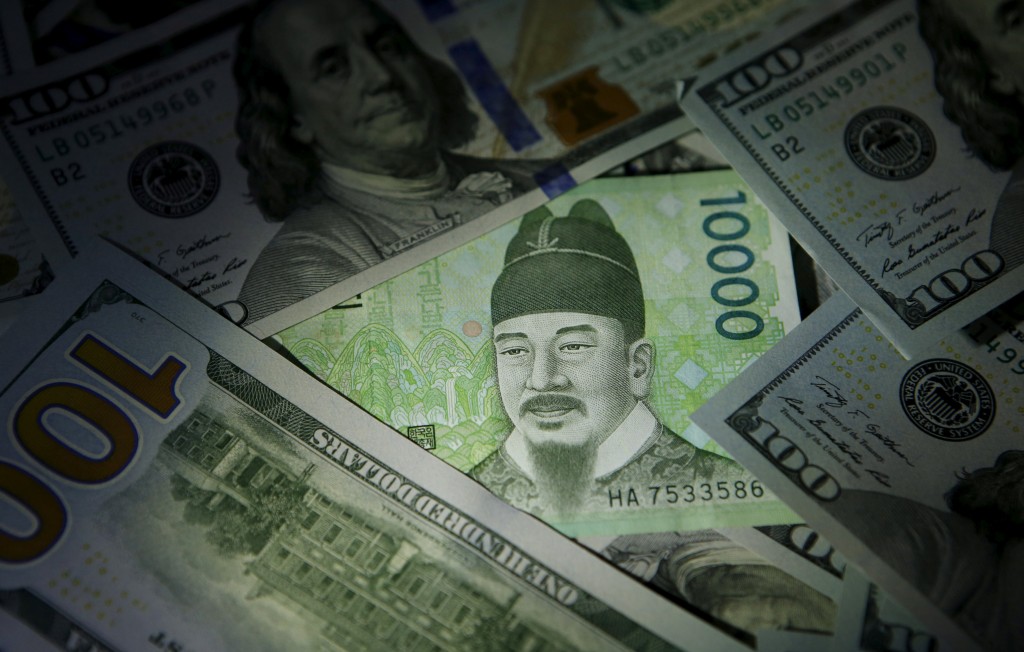
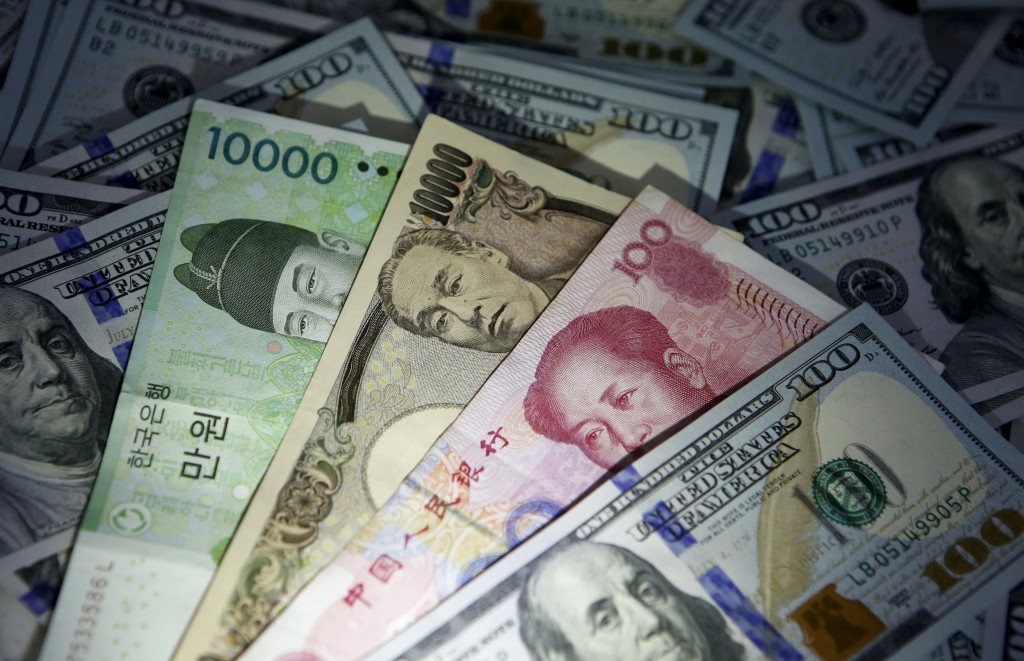
The won was quoted 1.1 percent lower at 1,489.0 per dollar on the onshore settlement platform, hitting its weakest level since April 13.
Reuters