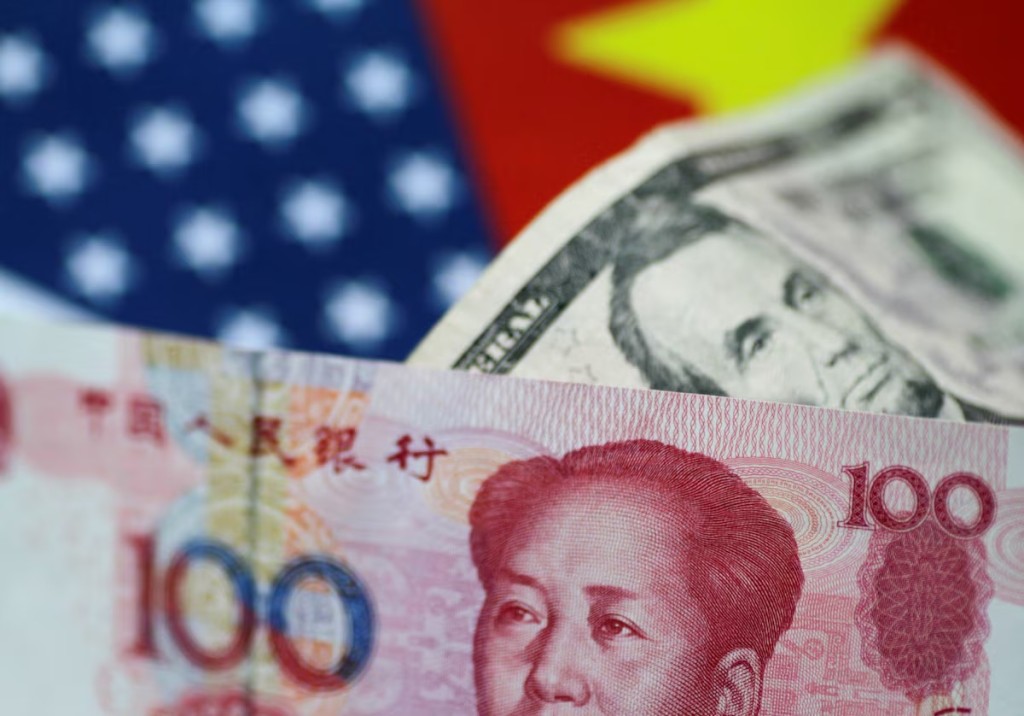
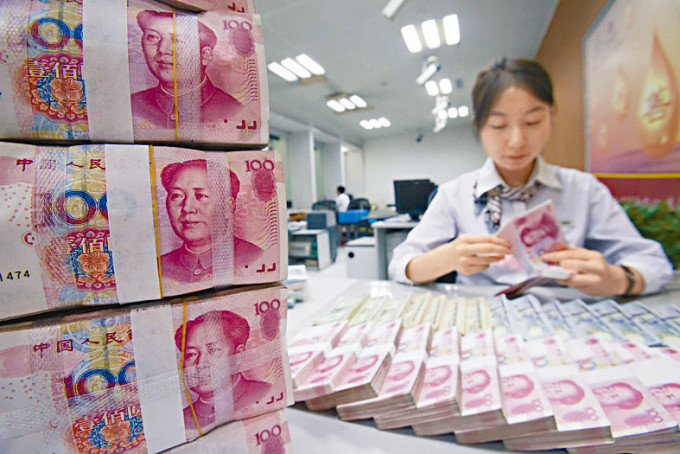
Yuan-denominated time deposits are becoming increasingly attractive to investors as major banks project further gains for the Chinese currency in the second half of the year.
BOC Hong Kong (2388) is offering 1.3 percent annual interest for 12-month yuan deposits for its private wealth clients, compared to just 0.9 percent for 6-month Hong Kong dollar deposits, with no 12-month Hong Kong dollar deposit option currently available.
Similarly, The Hongkong and Shanghai Banking Corporation offers 1.3 percent for 3, 6, and 12-month yuan deposits for its premium customers, while Hong Kong dollar deposits yield only 0.5 percent to 1.1 percent for 3- and 6-month deposits.
HSBC Global Research has upgraded its forecasts for the Chinese yuan, citing progress in US-China trade negotiations and expectations of a weaker US dollar.
Following negotiators from Washington and Beijing agreed on a framework covering tariff rates, HSBC now expects the yuan to strengthen to 7.1 per US dollar by the end of 2025, with a further appreciation to 7.05 by mid-2026. This suggests a potential upside of 1.8 percent from current levels.
The bank revised its forecasts for the yuan in the second, third, and fourth quarters of 2025 to 7.2, 7.15, and 7.1 respectively, from previous estimates of 7.25, 7.3, and 7.35, in the latest note.
The improved outlook is based on the assumption that the trade truce between the world’s two largest economies will hold, while the US dollar may continue to weaken as expectations build for Federal Reserve rate cuts in the second half of the year.
A more stable Chinese property sector, highlighted by signs of easing financing pressures with some private developers resuming offshore bond issuance, has also lifted market sentiment, according to DBS bank.
However, not all strategists share the upbeat view. Barclays sees room for the yuan to strengthen in the short term, but warns that several medium-term headwinds could push the currency lower again.
The bank cited persistent economic weakness, ongoing deflationary pressures, and China’s heavy reliance on exports. As Beijing continues to ease both fiscal and monetary policies, the bank believes further yuan depreciation may still be necessary to support growth.
STAFF REPORTER