Every year, the seminal scientific journal Nature produces the "Nature's 10" list, celebrating people involved in significant scientific discoveries and trends. On the list last year, alongside DeepSeek founder Liang Wenfeng is another Chinese name: Du Mengran.
Du, only 38 years old, is China's first female chief scientific officer on a manned deep-sea expedition, according to East Week magazine, a sister publication of The Standard. She was recognized by Nature for discovering the deepest-known animal ecosystem on the planet.
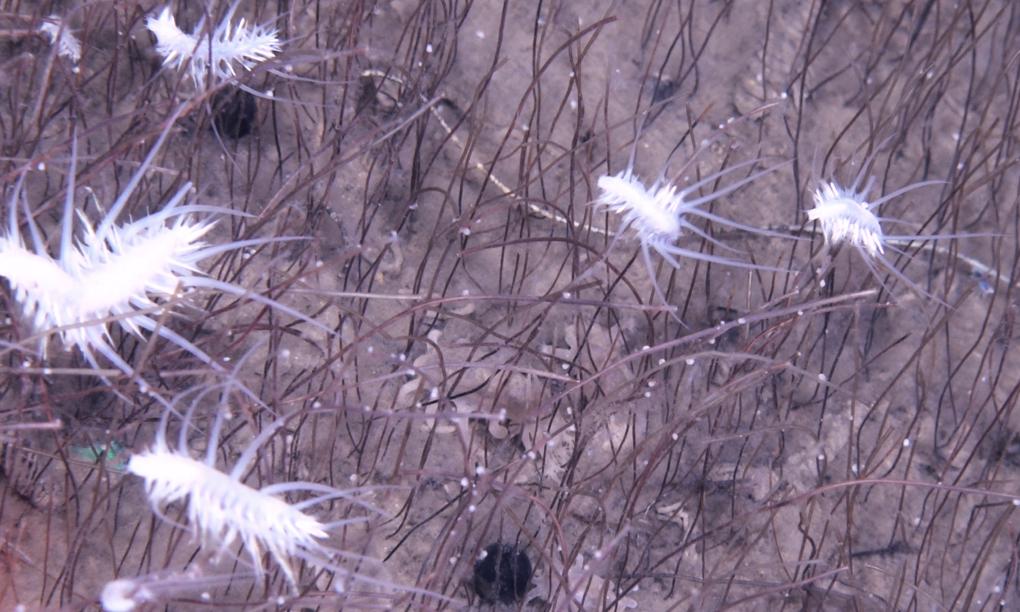
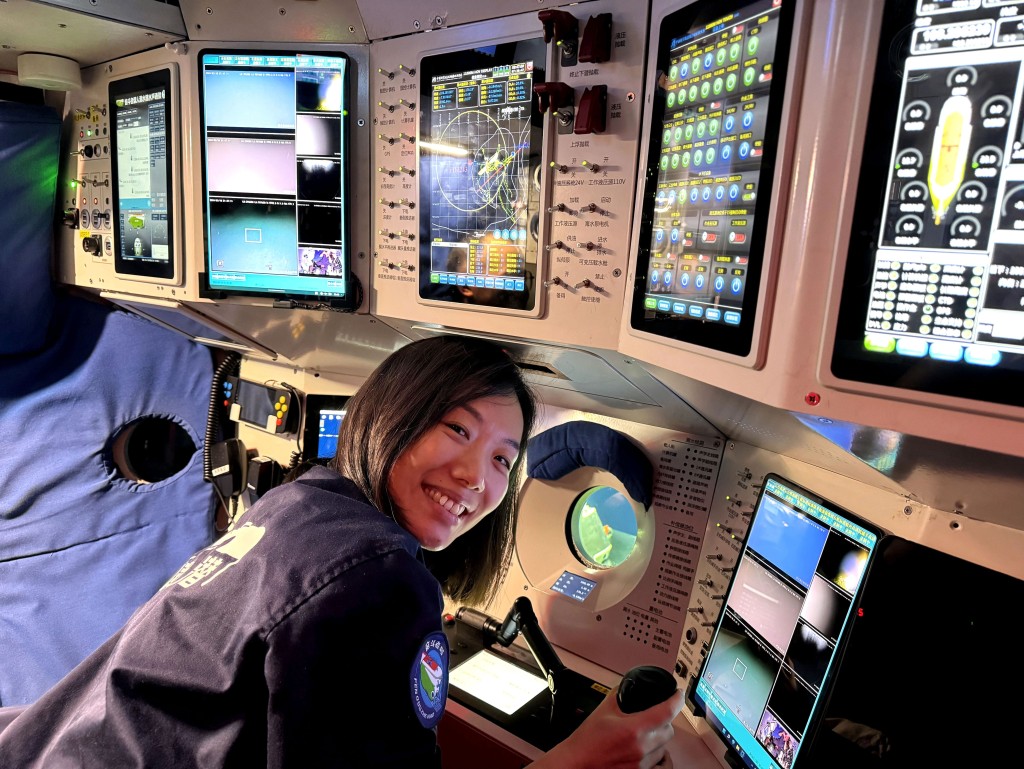
At 9,500 meters below the ocean surface, one is engulfed in complete darkness – save artificial lighting – and by water pressure roughly equivalent to being trampled by 2,000 elephants at the same time. It was at this depth that Du and her team, aboard the Fendouzhe submersible at the bottom of the Kuril-Kamchatka Trench in northwest Pacific Ocean, found a whole community of gastropods, tubeworms, clams, and other creatures.
The chemosynthetic ecosystem found at the Kuril-Kamchatka Trench. CHINESE ACADEMY OF SCIENCES
Du calls this a "chemosynthetic ecosystem," meaning organisms there absorb chemical energy seeping from the ocean floor, in order to survive a lifetime of darkness. "We originally thought that life could not be found in such extreme environments; but for chemosynthetic organisms, this is paradise!"
Du's discovery is likely to contribute new additions to the catalogue of known species on Earth; yet it finds its humble beginnings in a young girl's simple fascination with the sea. "I was only four or five years old," she said, recalling a family trip to the coastal Beidaihe district. Born in the inland Anhui province, she had never laid eyes on an ocean until then. "I was so happy that I wanted to stay by the sea forever."
This chance encounter with the sea set the stage for a life devoted to it. After studying marine chemistry at Ocean University of China and earning a doctorate from the United States, she joined the Chinese Academy of Sciences in 2014 and currently works at its Institute of Deep-sea Science and Engineering, specializing in deep-sea cold seeps.
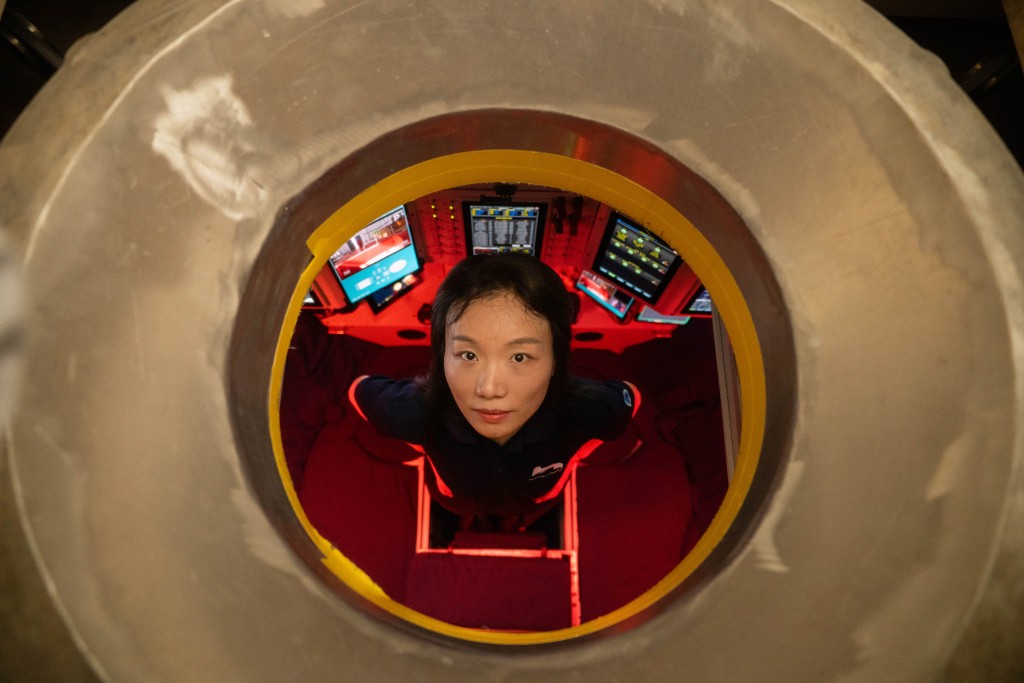
Du Mengran. ONLINE PHOTO
At the age of 25, Du became the youngest female scientist aboard the national manned submersible Jiaolong, and by 33 led a Chinese submersible to world-record-breaking depths. Over the past decade, she has conducted over 30 deep-dives in research submersibles, carving out for herself a prominent role in the marine sciences.
Following her Nature-recognized discovery made in 2024, Du and her team set sail last March to the Puysegur Trench near the southern tip of New Zealand – the so-called "Devil's West Wind Belt," as roaring westerly winds there make it one of the most dangerous waters. While publication of relevant research is pending, she disclosed that the trench is "even darker than legends describe it to be."