Read More






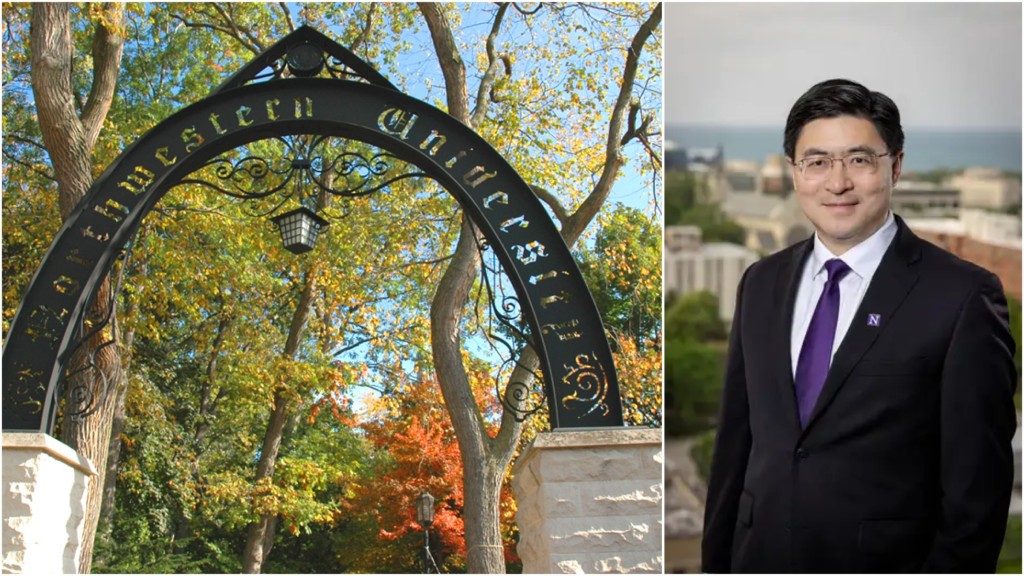
Northwestern University has named Mung Chiang as its 18th president, making him the first Chinese-American leader in the institution's history. Set to take office on July 1, Chiang succeeds Michael Schill, who resigned last September amid significant turmoil.
Schill’s departure followed a nearly US$800 million freeze in federal funding sparked by investigations into the university's handling of Gaza anti-war demonstrations, diversity (DEI) policies, and transgender medical care.
The frozen assets have led to the halt of over 100 federally funded research projects and the elimination of more than 400 jobs.
In the school announcement, the institution specifically highlighted Chiang’s focus on “championing free expression."
"I am honored and thrilled to be Northwestern's next president. I have long admired Northwestern for its dedication to interdisciplinary scholarship, artistic creation, impactful scholarship, its tremendous healthcare system, and its palpable school spirit,” he wrote.
Expressing confidence in Chiang, Peter Barris, chair of Northwestern’s Board of Trustees, said Mung's goal is to elevate Northwestern's position among the world's great research institutions.
Citing Chiang’s academic and administrative leadership at multiple universities, Barris believes Chiang's abilities to seize opportunities while embracing the breadth and depth of a university.
Born in Tianjin in 1976, Chiang moved to Hong Kong with his family at age 11, attending Queen's College and scoring the highest standing in the Hong Kong Certificate of Education Examination (HKCEE) exams.
At 18, he moved to the United States to attend Stanford University, where he earned his bachelor's, master's, and doctoral degrees in electrical engineering.
His academic research focuses on network optimization, fog computing, the Internet of Things, smart data pricing, network economics, social learning networks, and online social networks.
Chiang previously served at Princeton University before becoming Purdue's dean of the College of Engineering in 2017 and its president in 2023.
In addition to his academic roles, Chiang has held high-level federal positions, including serving as an advisor to the US Secretary of State and as a board member for the US Energy Security and Innovation Foundation.
Notably, he played a key role in formulating the 2022 federal CHIPS and Science Act and was instrumental in securing funding for a major AI storage chip packaging facility at Purdue.