Read More









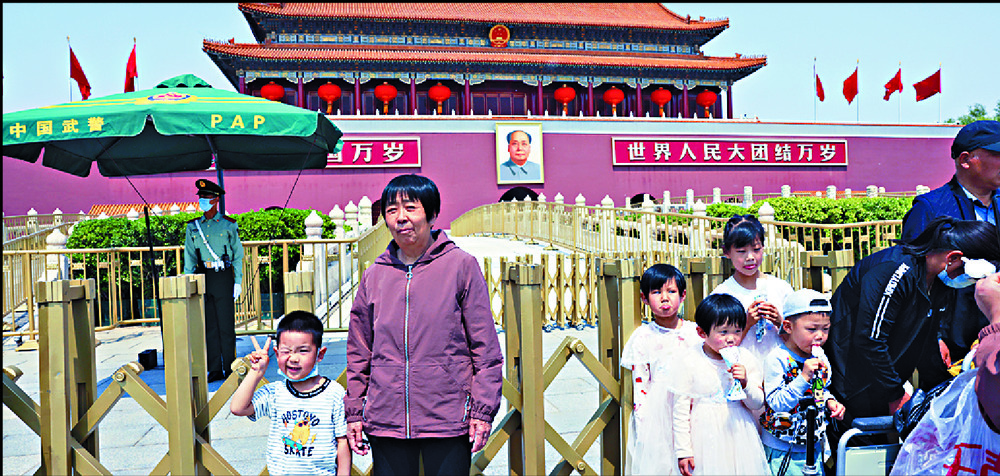
China's population grew at its slowest since the 1950s as births declined, sowing doubt over Beijing's ability to power its economy as it succumbs to aging trends.
With growth having ebbed since a one-child policy was introduced in the late 1970s, the 2020 results of the once-a-decade census yesterday showed the mainland population increased 5.38 percent to 1.41 billion - the least since modern census-taking began in 1953.
Data showed a fertility rate of 1.3 children per woman for 2020 - on par with aging societies such as Japan and Italy.
The worry for policymakers is that the nation may already be in irreversible population decline without accumulating the household wealth of G7 nations.
In 2016 China replaced its one-child policy with a two-child limit, without much effect.
The sharp deterioration in demographics will fuel pressure on Beijing to ramp up incentives for couples to have more children.
Analysts said that with substantial aging now in view the census give ammunition to policymakers arguing for raising the retirement age sooner than later.
"From the trend of population development in recent years, the population growth will continue to slow," said Ning Jizhe, head of the National Bureau of Statistics. "It's estimated China's total population will remain at more than 1.4 billion in the near future."
One bright spot in the data was an unexpected increase in the proportion of young people: 17.9 percent of the population was 14 or younger in 2020 compared with 16.6 percent in 2010.
From 2016 to 2019 the annual birth rate mostly declined with the exception of 2016. Last year, Ning said, China recorded 12 million births after 14.6 million in 2019.
As well as adding pressure on China's working-age population and weighing on productivity, fewer working adults will test the country's ability to pay and care for a nation aging faster overall.
Citizens aged 65 and older accounted for 13.5 percent of the population in 2020 against 8.87 percent in 2010.