






Read More


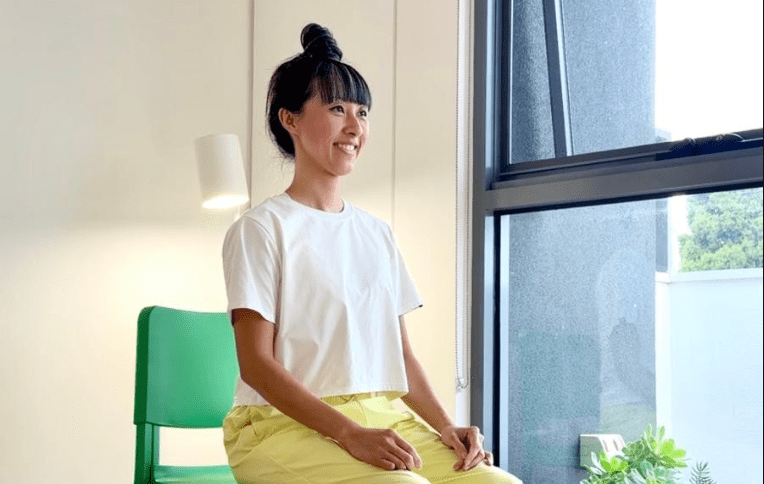
Many people think stretching is just about moving limbs, but they overlook the most crucial part—the abdomen. True relaxation only happens when the belly is truly relaxed. There's an interesting phenomenon behind this. Stretch therapy instructor Czon Wong shares 3 simple exercises to release abdominal tension and help your breathing become deeper and more natural.
In Stretch Therapy, exhalation is used to help muscles relax. When facing stress or perceived threats, the abdominal muscles instinctively tighten—a protective mechanism encoded in our genes to safeguard our internal organs.
Notice this: when you feel stressed, tense, or scared, does your body tend to curl inward, lean forward, and even breathe more shallowly? Conversely, when you consciously relax your belly and slow your breathing, the "fight or flight" state can't be sustained, and the body naturally returns to a calmer state.
Here's a fun little test you can try:
First, let your belly relax completely and breathe naturally. Then, try to feel angry, or think about something you've been wanting to complain about recently.
You'll notice that the emotion seems to have no place to land—it doesn't feel quite real. It's surprisingly difficult to maintain that anger or tension.
Once you understand the connection between breath, physical tension, and emotion, these three exercises can help relax your abdomen and make breathing more natural. They work best when combined with the "exhale to relax" technique introduced earlier.
If the area around your ribs stays tight, your chest expansion during breathing becomes limited. This exercise helps release tension around the ribs, giving your breath more space.
Steps:
Sit or lie comfortably. Take a few natural breaths.
Place your fingers under the lower edge of your ribs. Starting from the bottom of your chest, gently press inward and upward.
When you find a tighter or more sensitive spot, pause there—no need to press hard.
Keep your fingers in place, inhale slowly, then exhale slowly.
With each exhale, try to relax your abdomen. Notice if the area under your fingers slowly softens.
After a few deep breaths, move slowly to the next spot along the lower rib margin.
The scalene muscles, located on both sides of the neck, assist with inhalation. When these areas stay tight for long periods, breathing becomes shallow and feels more effortful.
Steps:
Sit or stand, letting your shoulders relax naturally.
Place one hand by your side and gently lower your shoulder.
Slowly tilt your head to the opposite side until you feel a gentle stretch along the side of your neck.
To explore different angles, gently turn your head to find the tightest direction.
Hold this position and inhale slowly.
As you exhale, relax your shoulders, neck, and abdomen. Notice if your body is willing to release a little more.
Hold for a few slow breaths, then switch sides.
Long periods of sitting, forward bending, or being in a tense state can make the body habitually curl inward. This exercise uses gentle backbending to open the chest and abdomen.
Steps:
Find a comfortable position—standing, kneeling, or using a chair back or yoga mat for support.
Start by lengthening your spine upward, rather than immediately bending backward.
Slowly open your chest, gradually lengthening the front of your body.
Only go as far as you can while still breathing naturally and keeping your abdomen relaxed.
Inhale slowly, feeling your chest and abdomen expand.
Exhale, relaxing your belly.
Hold for a few deep breaths. With each exhale, notice if your body can open a little more.
You don't need to force your breathing. Sometimes, the real practice is simply stopping the gripping and letting your breath happen naturally. The next article will explore how to connect breath with heart rate and emotions.
Author: Czon Wong, Stretch Therapy Instructor
