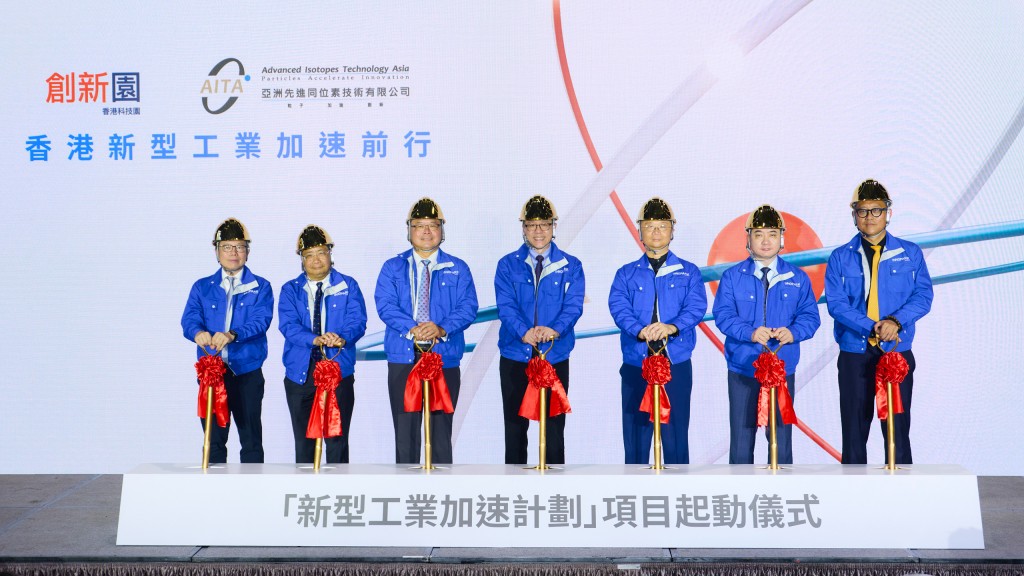
Hong Kong is set to host Asia’s first production facility for the rare cancer therapy isotope Actinium-225, which represents a major move in the city’s ambition to strengthen its life-and-health technology sector and expand into advanced manufacturing.
Located in Tai Po InnoPark, the plant will feature a superconducting cyclotron and radionuclide-drug production lines, with operations expected to begin in 2027.
The facility is backed by a HK$600mn investment from Advanced Isotopes Technology Asia Ltd (AITA) under the government’s New Industrialisation Acceleration Scheme (NIAS), which supports enterprises developing high-value, tech-intensive production in Hong Kong.
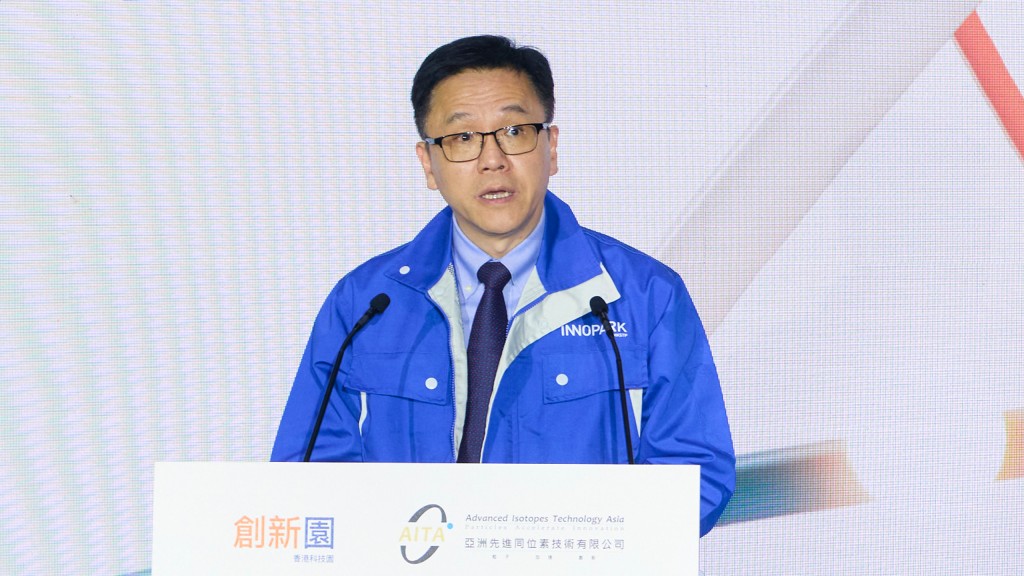
Speaking at the launch ceremony, Prof Sun Dong, Secretary for Innovation, Technology and Industry, recognised the project as an exemplary showcase of how Hong Kong can attract innovative companies and turn their ideas into local industry.
Prof Sun Dong, Secretary for Innovation, Technology and Industry.
Sun said the government’s goal was to use technological innovation to drive industrial upgrading. The NIAS programme, launched last year, supports companies that build smart manufacturing facilities in Hong Kong.
He noted that the government had recently lowered the minimum investment threshold from HK$300mn to HK$150mn and introduced matching subsidies for technical staff.
The changes, he said, were made to better support businesses and encourage more advanced manufacturing in Hong Kong.
The AITA investment, one of the few projects approved under NIAS so far, embodies Hong Kong’s vision of attracting cutting-edge technologies from abroad and developing them locally for regional and global markets.
Speaking with reporters after the ceremony, Sun revealed that more than ten projects had been reviewed under NIAS, with three approved and several under evaluation.
Accordingly, around HK$1.7bn in government funding has already been allocated, covering roughly one third of total investment across approved ventures.
“Our goal is to support about 50 projects in the next few years. As Hong Kong continues to expand its innovation infrastructure, especially in the Northern Metropolis, we will attract more international companies with high-tech, high-value projects that fit our development strategy.”
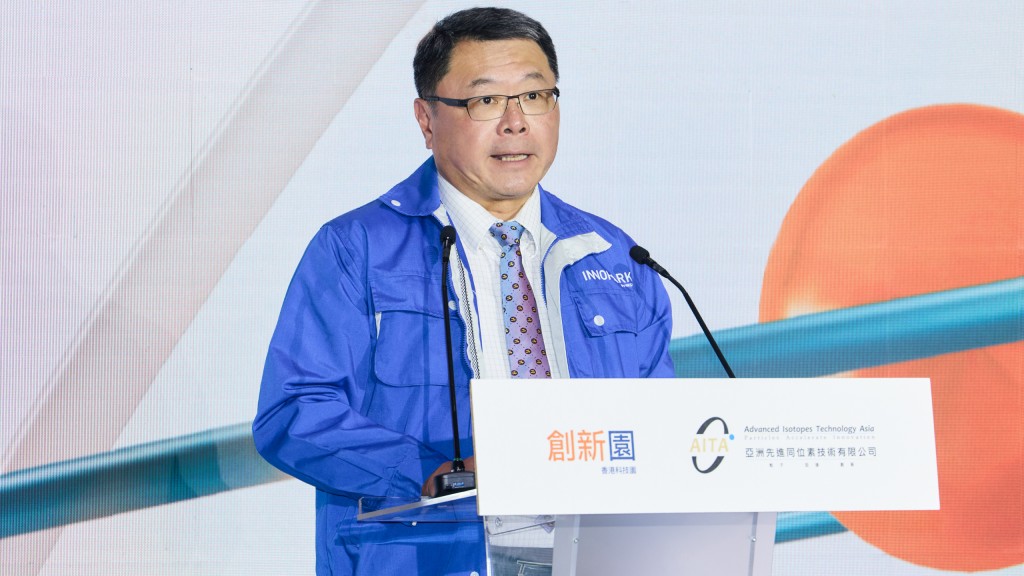
Dr Sunny Chai, Chairman of the Hong Kong Science and Technology Parks Corporation (HKSTP), called the AITA investment “a strong vote of confidence in Hong Kong’s innovation ecosystem”.
Dr Sunny Chai, Chairman of the Hong Kong Science and Technology Parks Corporation.
“AITA’s decision to establish its first Asian base here enriches our biotechnology landscape,” he said. “It brings world-class expertise, high-end manufacturing and new employment opportunities that will benefit patients and the wider economy.”
Chai said HKSTP’s InnoPark model was designed to revitalise local manufacturing through next-generation industries such as medical technology, green energy and advanced materials.
“We will continue to attract promising enterprises and talent to strengthen Hong Kong’s innovation ecosystem,” he added.
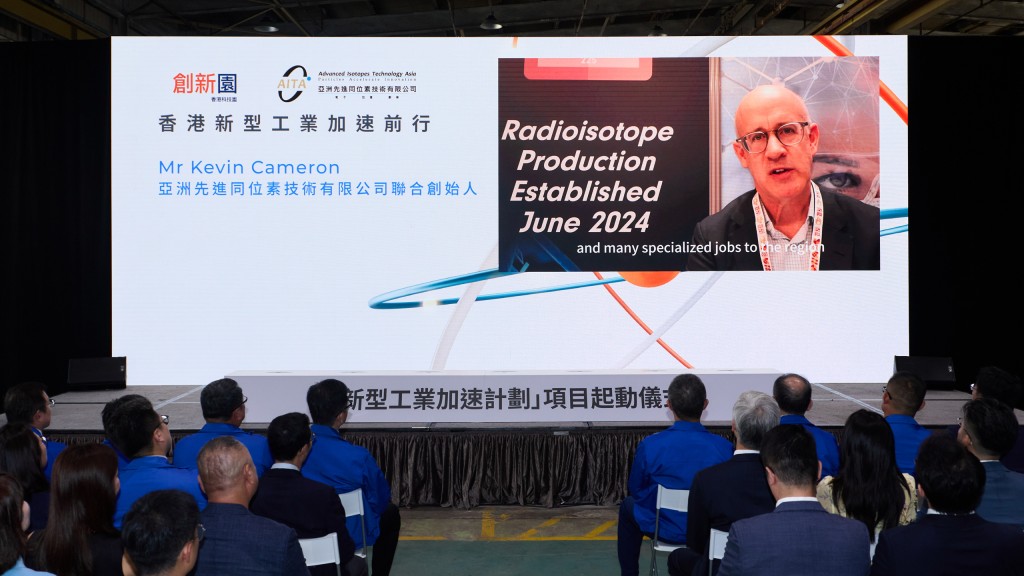
Kevin Cameron, Co-Founder of AITA, described the company’s technology as “unique and globally rare”. He said: “Our superconducting cyclotron will produce therapeutic isotopes that are currently in global shortage, such as Actinium-225.”
Kevin Cameron, Co-Founder of AITA.
These isotopes play a vital role in treating metastatic cancers such as prostate, pancreatic and neuroendocrine tumours, which still have few effective treatment options, he added.
Cameron, who also leads the US-based isotope firm Ionetix, said AITA’s Hong Kong operation would bring together a team of physicists, pharmacists, mechanical and electrical engineers.
The company expects its first clinical approvals in the late 2020s, starting with targeted alpha-therapy products. He said the project will not only bring cutting-edge science to Hong Kong but also help build a specialised workforce in radiopharmaceuticals.
According to Cameron, the Tai Po facility will be equipped to produce both diagnostic and therapeutic isotopes, including those used in PET scans and cancer radiotherapy.
AITA plans to work closely with local hospitals and universities to develop talent and accelerate clinical applications.
Sun said such collaborations are vital to Hong Kong’s industrial future and demonstrate how innovation and manufacturing can come together to improve healthcare.