Read More










Morning Recap - August 24, 2026
11 hours ago


IT manager sentenced to 22 months for stealing $1.2m in Deloitte laptops
21-08-2026 21:49 HKT



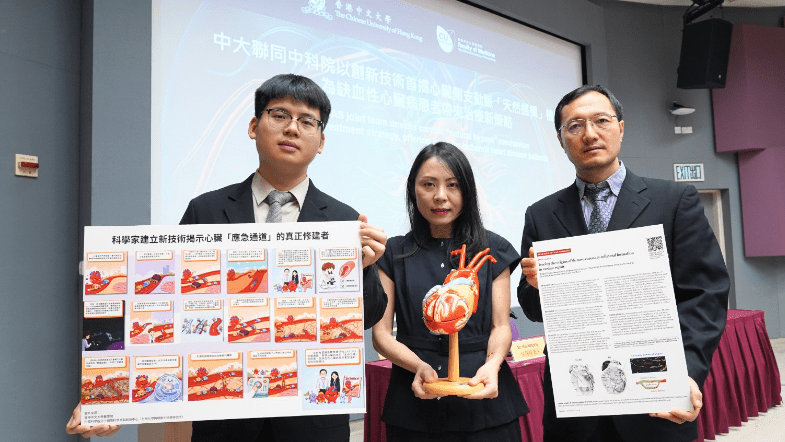
A joint research team from the Chinese University of Hong Kong and the Chinese Academy of Sciences has discovered that capillaries can transform into coronary collateral arteries after a heart injury, revealing a potential new therapeutic strategy for ischemic heart disease.
Using genetically engineered mouse models and advanced lineage-tracing techniques, researchers found that capillary endothelial cells, rather than cells from existing arteries, were the main source of newly formed collateral arteries following myocardial infarction.
Coronary collateral arteries act as a natural bypass system, creating alternative pathways around blocked vessels to restore blood supply to areas of heart muscle affected by ischemia.
The researchers noted that conventional treatments such as coronary stenting and bypass surgery can restore blood flow but are invasive, carry risks and may not be suitable for all patients.
The study found that the conversion of capillaries into collateral arteries was important for cardiac repair. When researchers selectively removed capillary-derived arteries in the animal models, myocardial fibrosis increased and infarct areas became larger.
The team also identified vascular endothelial growth factor A, or VEGF-A, as a key driver of the process. VEGF-A activates a molecular pathway involving the transcription factor YY1 and other regulators, prompting capillary endothelial cells to acquire arterial characteristics.
Researchers further found that transient delivery of VEGF-A through modified messenger RNA, or modRNA, significantly promoted the formation of functional collateral arteries and improved cardiac repair in the animal models.
The findings could provide a basis for developing less invasive treatments that harness the heart’s own capacity to regenerate blood vessels, although further research will be needed before the approach can be applied clinically.
The study, titled “Tracing the origins of de novo coronary collateral formation in cardiac repair,” was published in the international journal Science on Aug 20.