
Read More
ADVERTISEMENT
SCROLL TO CONTINUE WITH CONTENT
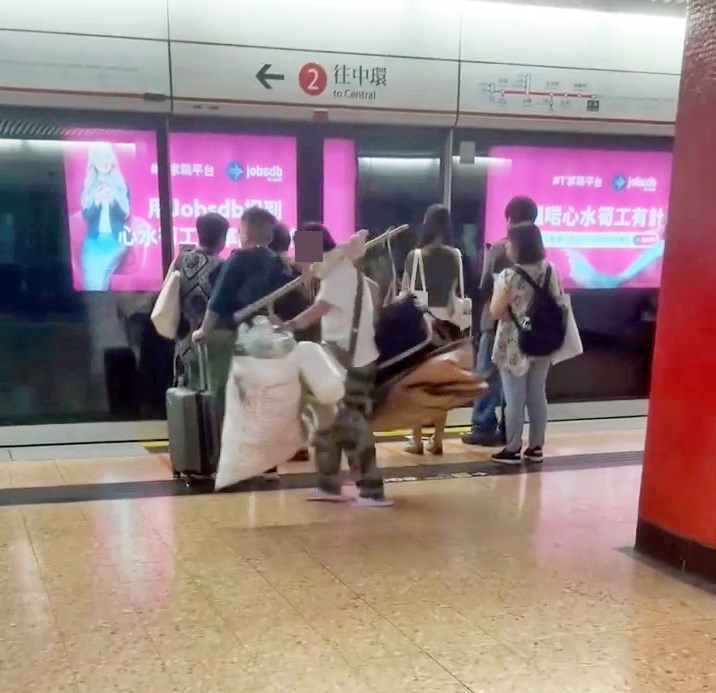
A commuter at Mong Kok MTR station recently stunned onlookers and ignited a wave of nostalgia online after being spotted transporting their belongings using a traditional wooden shoulder pole, a transport method that has all but vanished from modern Hong Kong.
In viral video footage circulating on social media, the passenger, clad in camouflage trousers and slippers, was seen balancing a heavy load on the platform while heading toward the Central-bound line.
On one end of the pole hung a massive white nylon sack, while the other end balanced a folded chair and various household items.
The sight of this archaic transport technique against the backdrop of a sleek, modern subway station left many internet users astonished.
Some joked that they felt transported back to a mid-century village or a rural province, with a few even playfully asking if the train had space for live chickens or traditional wedding gifts.
However, amid the initial amusement, several viewers took a closer look at the passenger's cargo, which included a large number of empty plastic bottles.
This detail quickly shifted the tone of the conversation from humor to deep sympathy.
Many social media users pointed out that the commuter was clearly working hard to gather materials for recycling, with several expressing their respect for those who quietly endure such intense physical labor to make a living in the city.
Addressing the unusual luggage, the MTR Corporation highlighted its standard safety regulations regarding oversized items.
Under the transit network's bylaws, urban line passengers are generally permitted to carry only one piece of luggage, with total combined dimensions not exceeding one hundred and seventy centimeters and no single side exceeding one hundred and thirty centimeters.
The transit authority noted that exceptions are only granted to passengers holding valid permits for oversized musical instruments or athletic gear, which allow for slightly larger dimensions under strict conditions.