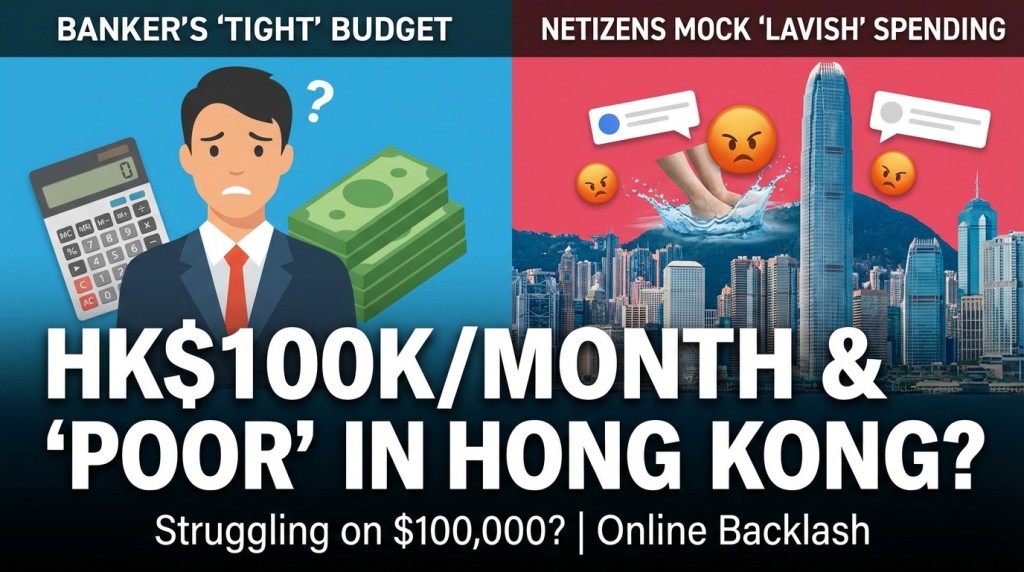
A monthly income of HK$100,000 is widely seen as a marker of financial success in Hong Kong, but a recent social media post by a banking professional has reignited debate over the city’s cost of living and the pressures facing middle-income earners.
The post set out a detailed account of household expenses and questioned whether such an income could still be considered “poor” by local standards. According to the breakdown, after major monthly expenditures were deducted, only about HK$10,000 remained, leaving limited room for savings.
Housing costs were estimated at between HK$25,000 and HK$35,000 for a two-bedroom flat near the workplace, while children’s education expenses were put at around HK$15,000. Spending on a domestic helper amounted to approximately HK$6,500 per month. Provisional tax payments were estimated at HK$10,000, while household, medical and insurance expenses — including coverage for elderly parents and pets — totaled about HK$8,000. Daily spending on meals and social activities came to roughly HK$10,000, with transport, utilities and other miscellaneous costs adding another HK$5,000. Fitness-related expenses, including gym memberships and yoga or Pilates classes, ranged from HK$500 to HK$1,500.
The poster remarked that the remaining HK$10,000 would quickly be exhausted in months involving clothing purchases, electronics upgrades or short trips. They added that high earners are excluded from public housing and welfare benefits, while facing heavy tax burdens.
The post quickly drew widespread attention online, with many netizens questioning the banker’s financial management and lifestyle choices. Some argued that the issue lay not with income level but with expectations, while others pointed out that many of the listed expenses were discretionary rather than essential, suggesting savings would be possible with tighter budgeting.
However, some commenters expressed sympathy, describing the situation as emblematic of Hong Kong’s “sandwich class” — earners who are neither wealthy enough to feel financially secure nor eligible for government support. They said rising housing, education and living costs have placed even relatively high-income families under growing financial strain.