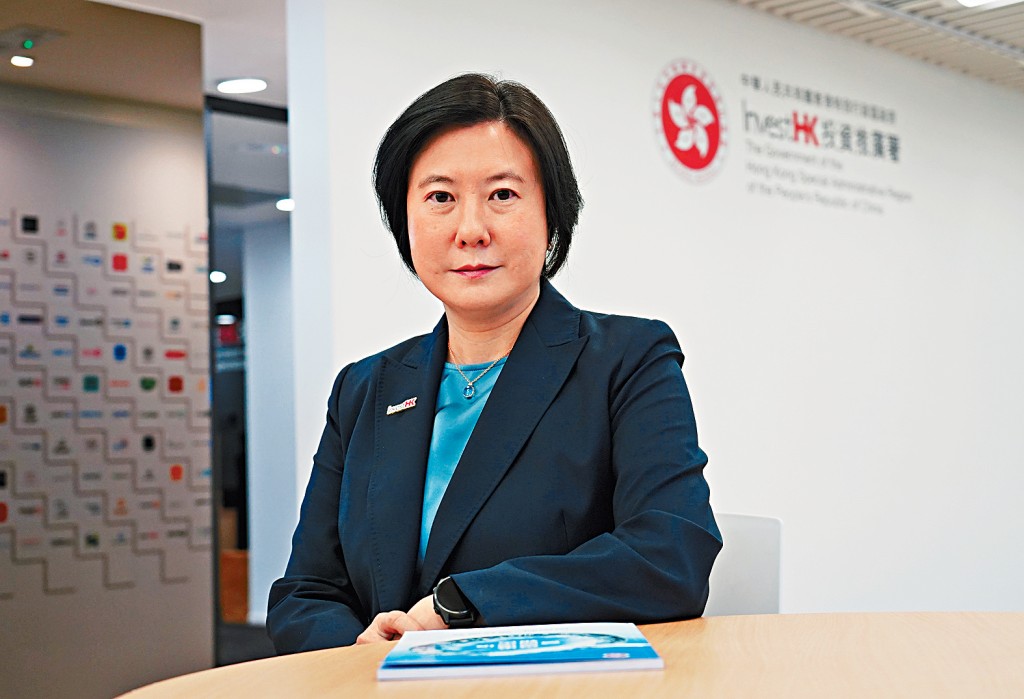
Despite ongoing US-China trade tensions, Hong Kong has recorded a six percent year-on-year growth in American companies establishing operations during the first seven months of this year, according to Alpha Lau Hai-suen, Director-General of Investment Promotion of Invest Hong Kong.
In an interview with Sing Tao Daily, the sister publication of The Standard, Lau said global business is driven by pragmatism in response to the shifting trade policies in the United States. "Business is about making profit and the fastest-growing region now is undoubtedly the Asia-Pacific," she said.
Lau revealed that many US investors express uncertainty about policies and the geopolitical climate in Europe, driving a significant amount of capital to Asia, with Hong Kong emerging as a popular investment destination.
Citing a survey from the American Chamber of Commerce in Hong Kong earlier this year, Lau said over 60 percent of US companies in the city believe their businesses will not be affected by US-China relations. Notably, these businesses intend to continue utilizing Hong Kong as a gateway to China and the Asia-Pacific region.
Biotechnology enterprises eye mainland market
Regarding the recent influx of US tech companies, particularly in the life and health technology sector, Lau explained that the city has been acting as a hub for global and mainland capital, critical for research and development.
Lau attributed the growing presence of American businesses in Hong Kong to uncertainty surrounding US tariffs and trade policies.
"Companies prioritize stability, as too many unknowns make it difficult to focus on business growth," she explained.
In contrast, Hong Kong's commitment to serving as a free trade port with no trade barriers makes it an appealing site for foreign firms looking for investment or a platform to expand their business.
The Invest Hong Kong head highlighted that the surge of biotechnology enterprises in the city is largely due to their focus on the mainland market, where consumers are increasingly willing to spend on health and wellness products.
With Hong Kong's research and advanced manufacturing capabilities meeting international standards, Lau noted drugs recognized in Hong Kong can be sold in hospitals across the Greater Bay Area without additional approval from health authorities, simplifying market entry for foreign firms.
Meanwhile, she added that European AI and robotics firms are establishing a presence in Hong Kong to leverage the Greater Bay Area's advantages for cost-effective production while maintaining international-standard R&D in the city.
InvestHK as a navigation guide
From 2023 to September of this year, Invest Hong Kong has assisted over 1,300 overseas and mainland enterprises -- with mainland firms comprising over half -- confirming the city's role as the preferred gateway for Chinese companies expanding globally.
Lau described Invest Hong Kong as a GPS navigator for these businesses, with five offices across the mainland to engage larger corporations and expose them to professional services like investment banks and the Hong Kong Exchanges and Clearing (HKEX).
She added that Invest Hong Kong has already surpassed its targets stated in the 2022 policy address, helping to generate over HK$190 billion in direct investment and create more than 20,000 jobs.
With a new target to attract 1,200 companies over the next two years, Lau confirmed that the agency will continue to attract advanced industries from regions like Europe, the US, Japan, and South Korea, while expanding into the Middle Eastern market, with a focus on sectors like green agriculture.
CIES applications surpass 2,200 cases
As for the New Capital Investment Entrant Scheme, Lau said InvestHK is responsible for reviewing the financial assets and investments of applicants and monitoring the continued compliance of approved applicants with investment and investment management requirements.
As of the end of September, the CIES had received over 2,200 applications, with approximately 1,000 formally approved.
She added that as all are approved, it is expected to bring approximately HK$70 billion in investment to Hong Kong.