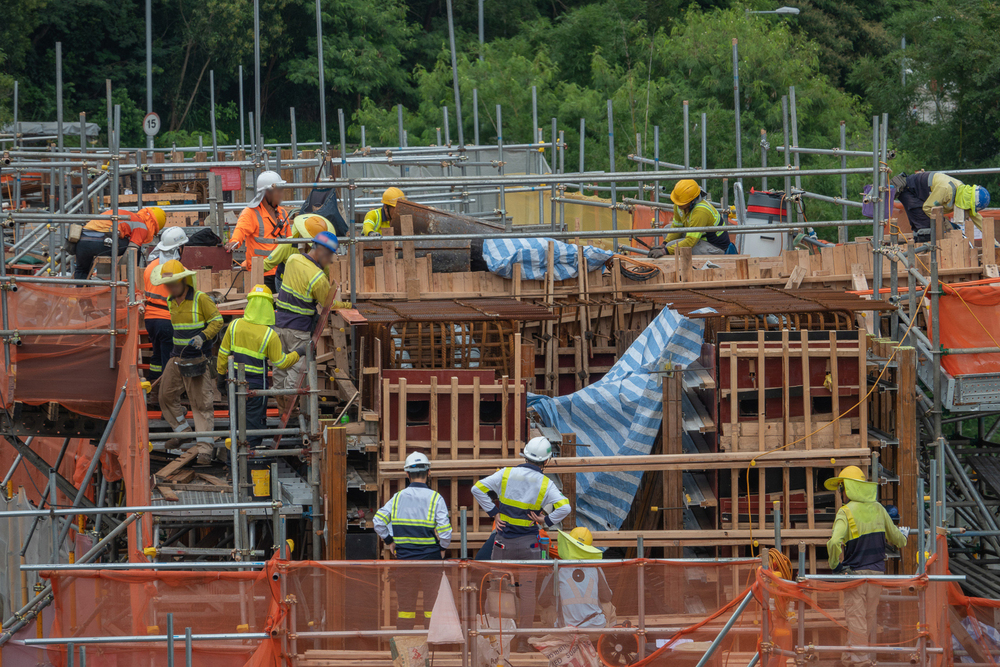
The Labour Department should enhance monitoring of unprofessional and fraudulent conduct in construction works, introducing random checks and developing electronic platforms for inspection records storage, said the Ombudsman on Wednesday.
This came after the government watchdog finished a sweeping investigation into occupational safety and health regulations in Hong Kong’s construction industry, issuing 40 major recommendations to improve oversight and reduce fatal accidents.
Ombudsman Jack Chan Jick-chi described alarming cases where "competent persons" -- professionals legally responsible for certifying equipment safety -- routinely falsified inspection records.
In several cases, inspectors signed off on scaffolding and lifting gear without proper checks, including one instance where a safety form was dated two days after inspectors visited the site.
Another competent person approved a scaffold before construction was even finished.
In a separate fatal accident involving a lifting appliance, two registered engineers falsely certified the machinery as safe after a storm without conducting the required tests.
“Such reckless acts pose serious risks to workers and the public," Chan said.
"These persons must face legal consequences."
The probe examined over 90,000 pages of documents and 70 case files spanning 2018 to 2023, during which construction accidents accounted for over 80 percent of Hong Kong’s industrial fatalities.
While acknowledging recent government safety improvements, Chan stressed that one life lost is one too many, demanding stronger action.
To combat fraud, the Ombudsman recommended LD to develop standardized digital checklists for high-risk operations, requiring inspectors to maintain verifiable records, and implementing surprise inspections.
The Buildings Department also faced criticism for taking disciplinary action against just one contractor in a decade from 2011 to 2021.
Delays were rampant, with one case taking six years to resolve.
The department blamed miscommunication with the Labour Department but has since introduced time-bound processing targets.
The investigation found that in 12 public works linked to fatalities from 2020 to 2023, winning bidders often had poor safety records, with some scoring lowest among competitors but securing contracts due to cheaper bids or technical points.
The Development Bureau has since revised tender evaluations to weigh safety performance more heavily but Chan urged ongoing reviews to ensure only qualified firms win bids.
All 40 recommendations, spanning high-risk operations, prosecutions, contractor regulation, and public awareness, were accepted by the Labour Department, Buildings Department, and Development Bureau.
Chan emphasized that while the government must lead reforms, contractors, workers, unions, and property stakeholders must also prioritize safety.
(Ayra Wang)