A NASA spacecraft rammed an asteroid at blistering speed in an unprecedented dress rehearsal for the day a killer rock menaces Earth.
The slam occurred at a harmless asteroid 11.3 million kilometers away, with the spacecraft named Dart plowing into the space rock at 22,500 km/h.
Scientists expected the impact to carve out a crater, hurl streams of rocks and dirt into space and alter the asteroid's orbit.
"We have impact!" Mission Control's Elena Adams announced, jumping up and down and thrusting her arms skyward.
Telescopes around the world and in space aimed at the same point in the sky to capture the spectacle. Though the impact was immediately obvious - Dart's radio signal abruptly ceased - it will take a couple of months to determine how much the asteroid's path was changed. The US$325 million (HK$2.53 billion) mission was the first attempt to shift the position of an asteroid or any other natural object in space.
"As far as we can tell, our first planetary defense test was a success," Adams told a news conference, the room filling with applause. "I think Earthlings should sleep better. Definitely, I will."
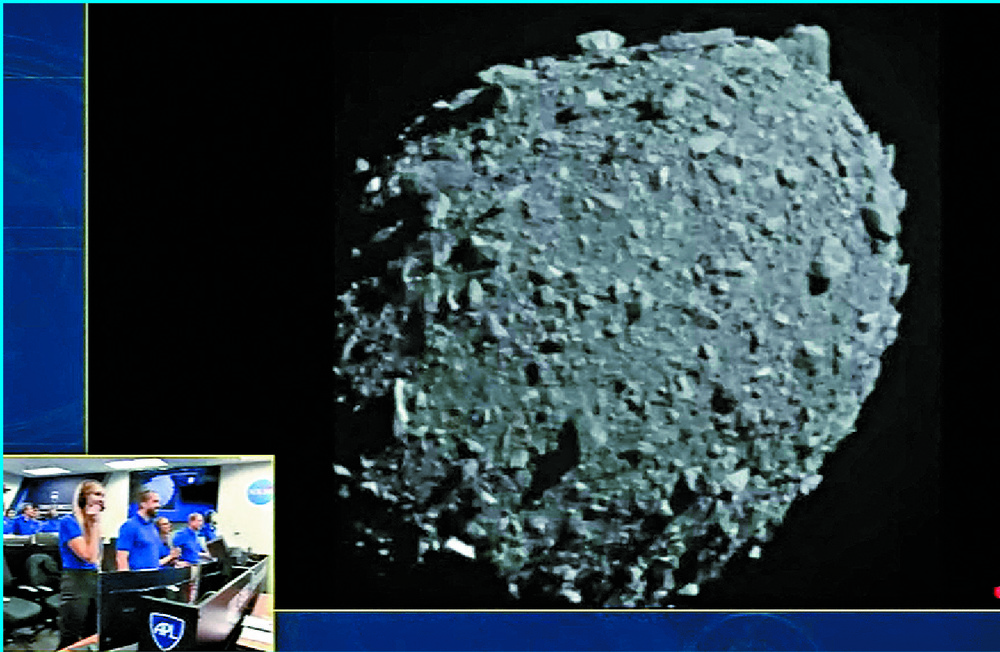
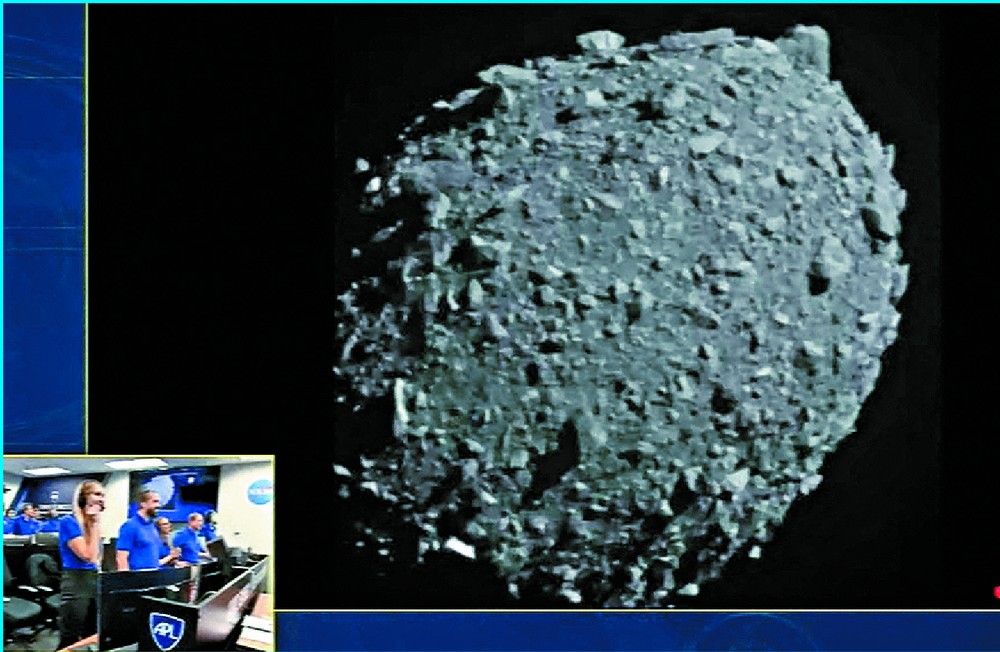
The target was a 160-meter asteroid named Dimorphos. It's a moonlet of Didymos, Greek for twin, a fast-spinning asteroid five times bigger. The pair have been orbiting the sun for eons without threatening Earth, making them ideal save-the-world test candidates.
The vending machine-sized Dart navigated to its target using new technology developed by Johns Hopkins University.
Dimorphos' anticipated orbital shift of one percent would amount to a significant change over years.
A television screen at NASA shows an image from Dart just before it smashes into Dimorphos. AFP