The Democratic-run House of Representatives on Wednesday passed a bill that could bar many Chinese companies from listing shares on U.S. exchanges or otherwise raising money from American investors.
The measure, known as the Holding Foreign Companies Accountable Act, could get signed into law quickly by President Donald Trump, as it was approved by the Republican-controlled Senate in May.
The legislation won bipartisan support in the House after easily clearing the U.S. Senate in May. It’s passage now sends the bill to President Donald Trump, who is expected to sign it, in his administration’s latest parting shot at Beijing.
While the legislation provides a phase-in period -- penalties only kick in after three straight years of failure to comply -- it represents intensifying scrutiny in Washington of ties with China. Chinese firms for years have relied on access to American capital markets, and more broadly to dollar-based finance, as a key funding component.
“U.S. policy is letting China flout rules that American companies play by, and it’s dangerous,” said Senator John Kennedy, one of the bill’s lead sponsors, in a statement. “Today, the House joined the Senate in rejecting a toxic status quo, and I’m glad to see this bill head to the president’s desk.”
In addition to requiring companies to allow U.S. inspectors to review their financial audits, the measure -- introduced by Kennedy, a Louisiana Republican; and Senator Chris Van Hollen, a Maryland Democrat -- requires firms to disclose whether they are under government control.
When asked about the legislation on Wednesday, Chinese Foreign Ministry spokeswoman Hua Chunying told reporters Beijing “firmly opposes politicizing securities regulation,” and called for enhancing dialogue and cooperation.
The ministry didn’t immediately reply to a request for comment Thursday on the House’s passage of the bill.
In another hit to China, the U.S. Department of Homeland Security said Wednesday that customs officers at American ports would impound “shipments containing cotton and cotton products originating from” the Xinjiang Production and Construction Corps., a military-affiliated entity that’s one of China’s largest producers.
This follows U.S. sanctions announced against the company in August that bar if from making any transaction with American companies and citizens.
Van Hollen said in a statement that the delisting bill would protect people who “have been cheated out of their money after investing in seemingly legitimate Chinese companies that are not held to the same standards” as other public companies.
“This bill rights that wrong, ensuring that all companies on the U.S. exchanges abide by the same rules,” he said.
The measure represents a watershed moment in a long-running dispute between Washington and Beijing.
At issue is China’s refusal to let the Public Company Accounting Oversight Board examine audits of firms whose shares trade in the U.S.
The requirement for the inspections by the agency, which was created in the wake of the Enron Corp. accounting scandal, is meant to prevent fraud and wrongdoing that could wipe out shareholders. Investors have mostly shrugged off the anticipated legislative move.
Alibaba, the largest U.S.-listed Chinese company, was steady in after-hours trading, following a 1 percent drop on Wednesday.
The offshore yuan was little changed. The move may even boost Hong Kong’s role as a financing center for mainland firms.
Fang Xinghai, the vice chairman of the China Securities Regulatory Commission, last month expressed optimism that the clash could be resolved with President-elect Joe Biden’s arrival in the White House next month.
“It’s not an intractable problem,” Fang said, adding that it’s important to ensure that Chinese companies have access to international capital markets.
Regulators in the two countries have been engaged in on-again, off-again negotiations amid the standoff for more than a decade. Over the years there have been moments of optimism that the two sides were closing in on a deal, but ultimately it always fell through -- with China citing strict confidentiality laws.
More than 50 other foreign jurisdictions now permit the PCAOB inspections.
Despite the inability of American inspectors to review audits of Chinese firms, they’ve been allowed to continue to trade in the U.S., as the dynamic has been profitable to American stock exchanges, investment banks and asset managers.
According to the Securities and Exchange Commission, more than 150 of the country’s companies, with a combined value of US$1.2 trillion, traded on U.S. exchanges as of 2019 and there have been a spate of initial public offerings this year.
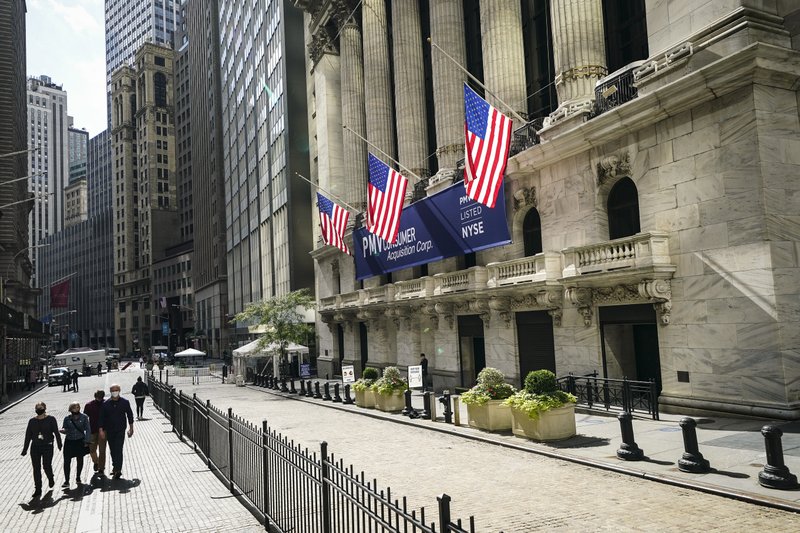
Major companies such as Vanguard Group Inc., the New York Stock Exchange, and Nasdaq have all expressed concern that the trend could reverse, with a crackdown causing Chinese companies to move their listings to Hong Kong or countries where investor protections are weaker than in the U.S. American investors would still be able to purchase the stock.
Alibaba Chief Financial Officer Maggie Wu said during a May 22 earnings call that the company “will endeavor to comply” with legislation that seeks to bring transparency to investors buying stocks on U.S. exchanges.
Her comments were directed specifically at the Kennedy-Van Hollen legislation, which at that point had just passed the Senate.
The bill would prohibit foreign companies from trading in the U.S. if PCAOB inspectors aren’t allowed to review their auditors’ work for three consecutive years. The businesses would also have to disclose whether they’re controlled by the Chinese Communist Party, or any other foreign government.
The bill aims to make foreign companies let the Public Company Accounting Oversight Board oversee the auditing of their financial records if they want to raise money by selling stocks or bonds to the U.S. public. All U.S. companies and most foreign companies already work with the PCAOB in this way, but Chinese ones do not.
The measure is “viewed as an ‘appropriate policy response’ and something the Public Company Accounting Oversight Board has sought for several years now on well-substantiated policy grounds,” said Henrietta Treyz, director of economic policy at Veda Partners, in a note on Wednesday ahead of the House’s vote.
“It is the expectation amongst lawmakers and trade policy watchers that the move will not be considered problematically escalatory and is not likely to trigger a robust or problematic response from China in retaliation for passage of this bill,” she added. “The expectation there is that President Xi will abstain from making any further moves where the U.S. is concerned (or at least material moves) until President-elect Joe Biden is sworn into office.”
Wednesday’s House approval happened by voice vote and under “suspension of rules,” a common procedure that helps the chamber move more quickly.-MarketWatch/Bloomberg
The Holding Foreign Companies Accountable Act requires Chinese companies to allow U.S. inspectors to review their financial audits and they would also have to disclose whether they are controlled by the Chinese Communist Party.