Read More











HK movie producer Raymond Wong Pak-ming convicted of insider dealing
22-05-2026 17:10 HKT

Swire Properties wins compulsory auction for $2.02b Quarry Bay property
22-05-2026 20:36 HKT
Hong Kong should allow transgender residents to change their gender marker on ID cards without needing to undergo gender-affirming surgery, LGBT+ doctors say.
For transgender residents wanting to change their gender marker on ID cards, the law currently requires them to produce medical evidence to show they have undergone genitalia reconstruction.
To change one's gender from female to male, removal of the uterus and ovaries, as well as the construction of a penis or some form of a penis, is required.
For a change in the reverse direction, removal of the penis and testes and construction of a vagina are required.
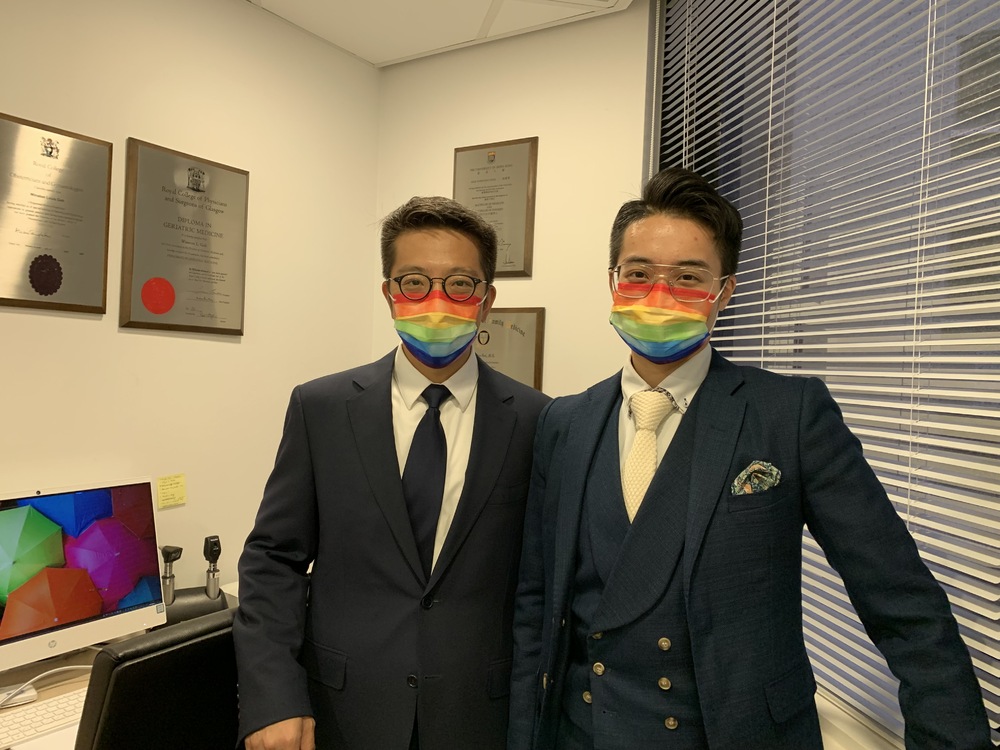
A 26-year-old transgender man who is now a surgical resident in public hospitals, said the existing requirement for surgeries to be mandated is a negative state of affairs for transgender people.
"The government's measure only recognizes a person's sexual characteristics but not a person's gender identity," Zephyrus Tsang ling-yin said.
A Chinese University of Hong Kong survey released in May shows that more than half of the 234 transgender people who responded stated that they were not sure or do not want to undergo gender-affirming surgery on their genitals.
Tsang added gender-affirming surgical procedures could be time-consuming and costly as they consist of multiple procedures.
Tsang said Hong Kong people would usually opt to undergo such surgical procedures in southeast Asia.
For surgical procedures conducted in Thailand, for example, removal of the uterus or ovaries could cost around HK$30,000 to HK$40,000.
Penis construction procedures could cost about HK$300,000 and consists of several surgeries, which could take more than a year to complete.
Tsang said he had considered undergoing gender-affirming top surgery, specifically a mastectomy to remove both breasts.
However, he had no plans for more extensive surgeries beyond that at the moment due to time considerations.
"I am already living as a male and I am quite satisfied with my current life," he added.
Winston Goh, a 43-year-old family physician at OT&P Healthcare who is openly gay, said that on top of concerns over the risk of infection and scarring, transgender people would not be able to reproduce if their sex organs were removed.
"Not everyone has the chance to undergo such surgery to be considered as a transgender person," Goh said.
"As long as, mentally, the individual recognizes that they are of a different gender identity, even if the physical characteristics are different, that doesn't mean that they are not a transgender person."
Tsang said self-declarations should be accepted as part of the process for changing one's gender marker on ID cards by allowing people to declare their gender status in court and filling out an application form.
Ireland and Norway are among countries that allow people to change their legal gender by completing a self-declaration application form.
Tsang said local transgender people would want to change their gender marker on ID cards as they might have to come out in public against their will and suffer mistreatment when their ID card does not reflect their gender identity.
For example, it is illegal for one to enter a washroom that is not aligned with the gender indicated on one's ID card.
In the past three years, the Immigration Department has on average approved 19 applications for gender changes on ID cards.
Last year, 20 out of 24 applications were approved. Fourteen were for changing from male to female and 10 were for changing from female to male.