Read More



HK movie producer Raymond Wong Pak-ming convicted of insider dealing
22-05-2026 17:10 HKT
Swire Properties wins compulsory auction for $2.02b Quarry Bay property
22-05-2026 20:36 HKT
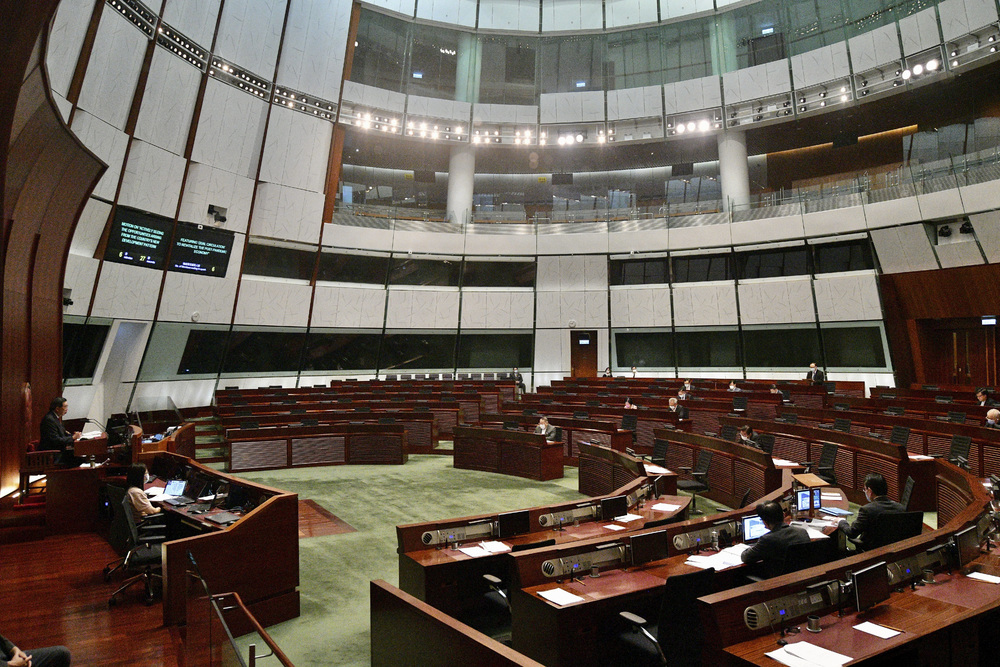
Lawmakers who are absent from Legislative Council meetings, causing an adjournment of sessions, will be fined a day's salary under an amendment bill to the rules of procedure passed yesterday.
The move will eliminate any form of filibustering as the now-gone pan-democratic lawmakers had often used quorum calls as a tool to delay meetings.
Lawmakers are also subjected to a string of stringent rules, including a ban on interrupting meetings, and face more limitations in joining panels and subcommittees.
The resolution, moved by Paul Tse Wai-chun, was passed with 39 pro-establishment lawmakers supporting it and only Civic Passion lawmaker Cheng Chung-tai voting against the resolution. Two other lawmakers abstained.
The rule change will see "unreasonably" absent lawmakers being fined HK$3,427 when a meeting is adjourned due to lack of a quorum. The amount is equivalent to a day's salary of a lawmaker who is not an Executive Council member and is paid HK$102,820 a month.
Tse believed the revisions can boost Legco's efficiency in the next term when the number of seats increases from the current 70 to 90. The Legco election will be held on December 19.
Another change will ban lawmakers from interrupting meetings by requesting quorum calls and raising procedural issues, unless they are called by the Legco president or chairman of panels and committees.
If the president or chairman finds a lawmaker's interruption to be an abuse of procedure, they can order him to stop speaking.
In 2019/2020, eight Legco meetings and three in the current year until last week were adjourned due to lack of a quorum.
All of this year's adjournments were triggered by pan-democrat lawmakers in the first three months, before all 15 pan-dems - except for Cheng - resigned en masse in November over the disqualification of four of their colleagues.
A more controversial amendment is to ban lawmakers from joining more than six panels. Previously, they were allowed to join as many of the 18 panels as they wished.
At the same time, each panel is also limited to not more than 20 members, and 15 for subcommittees.
Roundtable lawmaker Michael Tien Puk-sun had reservations about capping lawmakers taking part in panels.
"If we can only express our opinions and can't vote in the panels, what's the point of having legislative councilors? An ordinary citizen can also express their opinions," he said.
But lawmaker Gary Chan Hak-kan, of the Democratic Alliance for the Betterment and Progress of Hong Kong, disagreed, citing the security panel as an example, which used to have 40 members before the pan-dems' mass resignation.
He said: "Every time we had to wait for more than 10 minutes so we could begin the meeting in the presence of at least one third of the members. It's a waste of time.
"When we have 90 lawmakers next year, a panel may see 60 to 70 members if we don't put a cap on it. Then we'll definitely have to wait longer every time."
Lawmakers will also be required to "dress and behave in business attire" for the Legco sessions and the house and finance committee meetings.
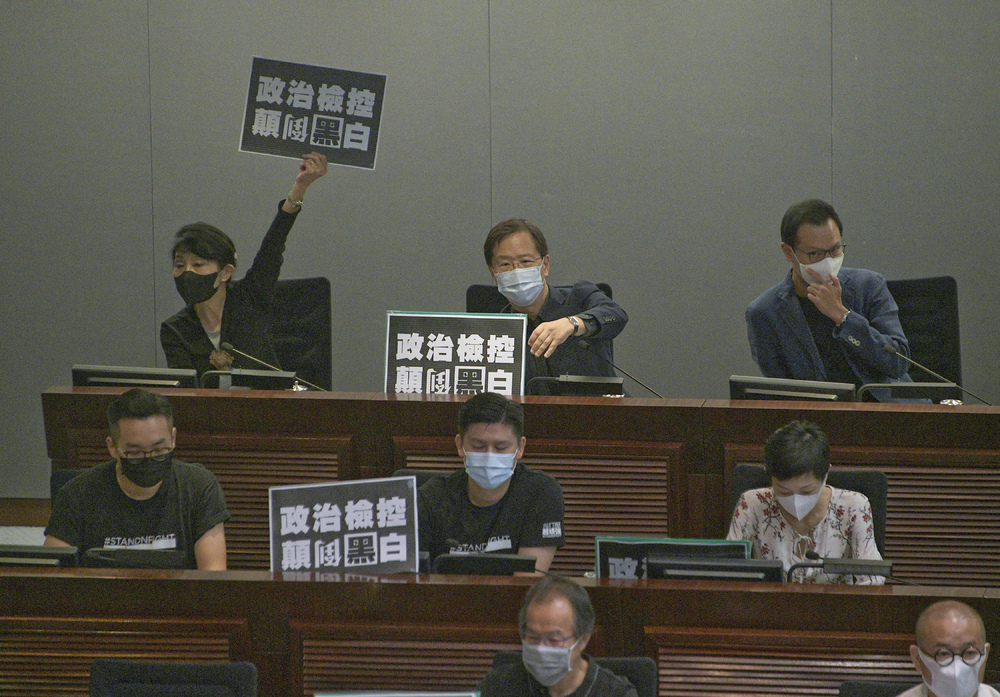
They will only be allowed to display props, signs and graphics during their own speeches and the items must be relevant to the content of their speeches.
Lawmaker Kwok Wai-keung, of the Hong Kong Federation of Trade Unions, said the amendments are necessary to "prevent history repeating itself."
He added: "Even without the opposition camp in the chamber now, we have to think a step ahead to prevent anyone from using the rules of procedures as weapons."
Insurance-sector lawmaker Chan Kin-por said the rules used to be not as strict because lawmakers should be self-disciplined.
"The opposition camp had gone too far in using the rules to achieve its political interests," he said.
"When some people do not know how to respect themselves, the only thing we can do is to amend the rules as if they are school rules."
The only non-establishment member Cheng worried the amendments would silence the voices of lawmakers from smaller political parties.