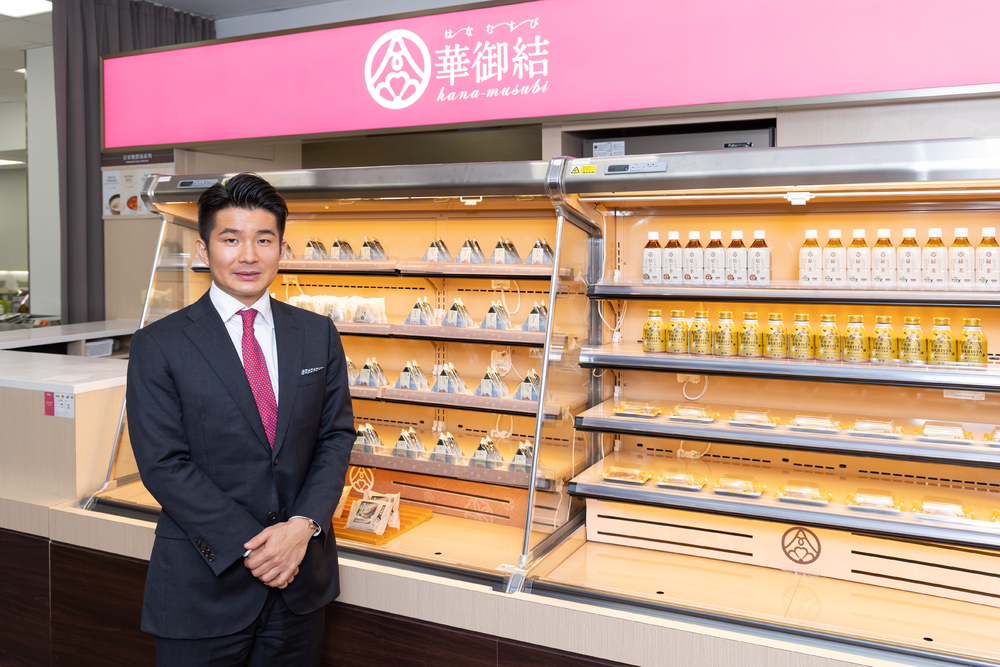
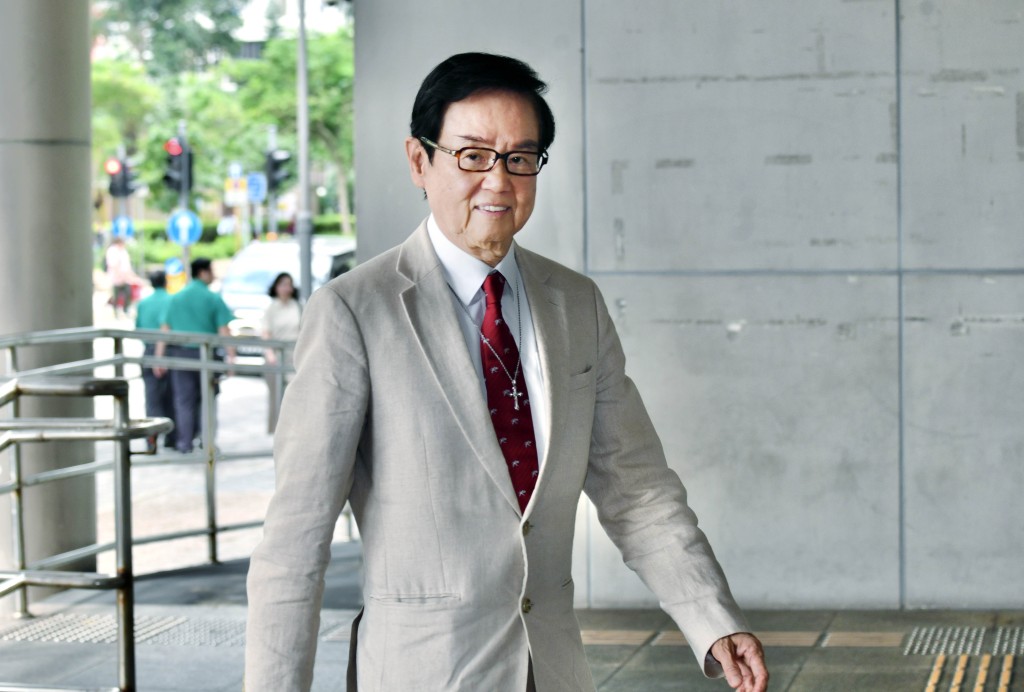
Omusubi rice balls have become an easy pick-me- up snack in Hong Kong nowadays – and it is all thanks to the efforts of Muneo Nishida, the mastermind behind hana-musubi stores.
“To me, omusubi is from my mom,” he said. “Since I was young, my mom made omusubi for me as breakfast or as a snack. One of the most special points about omusubi is that it can exaggerate the original taste of the rice.
“Of course, there is seaweed and filling inside, but the main part is the rice.”
While the omusubi made by his mom often consisted of just rice and salt, his favorite was her plum omusubi.
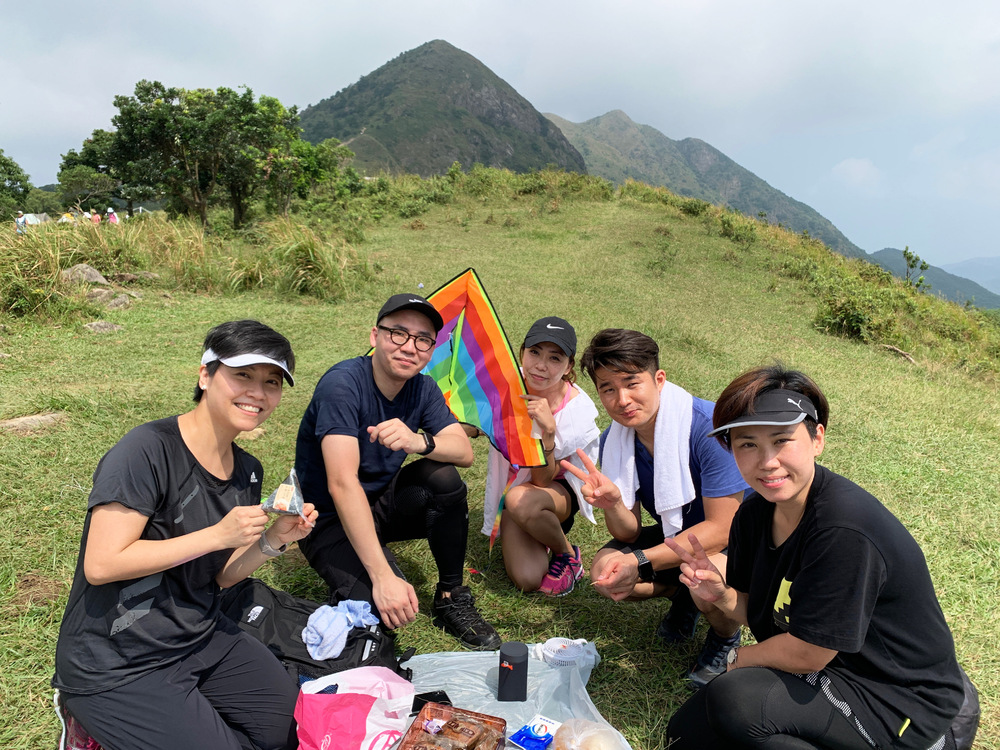
She would also make Nishida the rice balls for athletic meets, and this habit of eating omusubi after exercise follows him to this day. “I eat omusubi every day, especially after my morning run,” he said.
Following in the footsteps of his father, who is also an entrepreneur, Nishida started his fi rst business – an online menswear shop – when he was a senior in high school.
He started his second business, an IT firm, at the age of 19.
But Nishida wanted his ventures to be meaningful as well. His interest in social issues stemmed from a debating society that he joined at university.
“Soon after I started this firm, I wrote 400 letters to different entrepreneurs and top officials of famous companies in Japan. In those 400 letters, I asked them how to address social issues with the company and how their companies can help with those issues.”
Only 40 people replied, and Nishida met all of them. One in particular told him: “You choose your mountain to climb.”
The businessman also asked him to choose on the spot one of the main industries in Japan to concentrate on.
Nishida chose agriculture.
“My grandfather on my mother’s side was a farmer, but farming could not sustain his life,” he explained.
“Even though it is a very important business that supports people’s lives, agriculture in Japan is dying slowly. The businessman was in his 70s or 80s and it was an issue that he could not solve in his generation. So he gave me the mission to try to do something in my generation.”
Nishida spent five years in Japan visiting local farmers, where he understood that “the foundation of agriculture in Japan is rice making,” even though it was shrinking due to the aging population.
“For Japanese rice is not just food that gives us calories. Rice is actually fundamental to Japanese people – it is our hearts and foundation.”
So he visited Hong Kong, the biggest importer of Japanese rice. To understand the market, Nishida would stand at the supermarket rice aisle to interview Japanese rice buyers. He finally decided the way to go was omusubi.
“I thought about the omusubi that my mom made for me. With the simple seasoning of salt, it is the simplest and tastiest way to enjoy Japanese rice.”
His first step in realizing his business plan was to set up a booth at the Hong Kong Food Expo in 2010 despite people advising him that Hong Kong people dislike cold rice. He ended up selling over 10,000 omusubi over the five-day event.
He particularly remembered the surprise he felt when a young girl who bought from him on two separate days told him that she could taste the difference between the two rice types that he used. “I reckoned it could be a business in Hong Kong and I wanted to provide fresh omusubi – even if it was only to this little girl – every day.”
Having seen the potential, he founded Hyakunousha International in 2010 and opened his first hana-musubi store in 2011. “It has been over 10 years since I met the little girl but I still think of her face when
I do the quality assessment for the rice every day.”
To keep things fresh for the ever-changing taste of Hong Kong customers, hana-musubi would host new flavors monthly according to the opinions of staff and also the general public. One of the brand’s latest creations uses XO sauce – something that “is never going to appear in Japan” – made possible by customer reviews.
Hana-musubi also celebrated its 100th store opening in December – putting it halfway to Nishida’s goal of operating 200 shops in the city. The founder, relentless in his endeavor to take the omusubi culture worldwide, also launched a global brand Omusubi with a first opening in IFC this week.
He said: “I have climbed only 10 percent of my mountain. Mount Fuji has 9.5 stations to the top. I am only at the first station.”
After developing the brand for over a decade, Nishida believes that he has been slowly working toward the traditional Japanese triple-win philosophy: a win for the rice seller in Japan, the Hong Kong omusubi buyer and now the Hyakunousha team.
Indeed, he implemented a 2.2 times increase in medical insurance investment for his full-time employees in June 2021. Part-time staff with notable working hours can also enroll for medical insurance, which includes full check-ups.
Nishida hopes that could be an example for other local companies to follow.
“To me, omusubi is about the love from my mom,” said the founder. “But it could be anything that connects people and omusubi. There is an unseen power within the omusubi – it is someone’s thoughts toward another.”