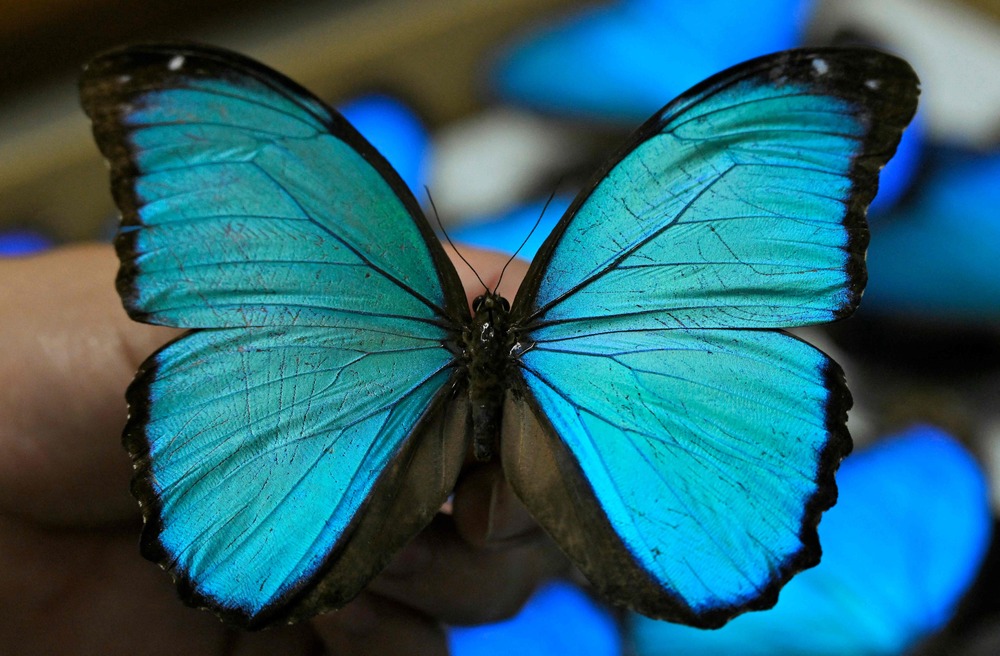
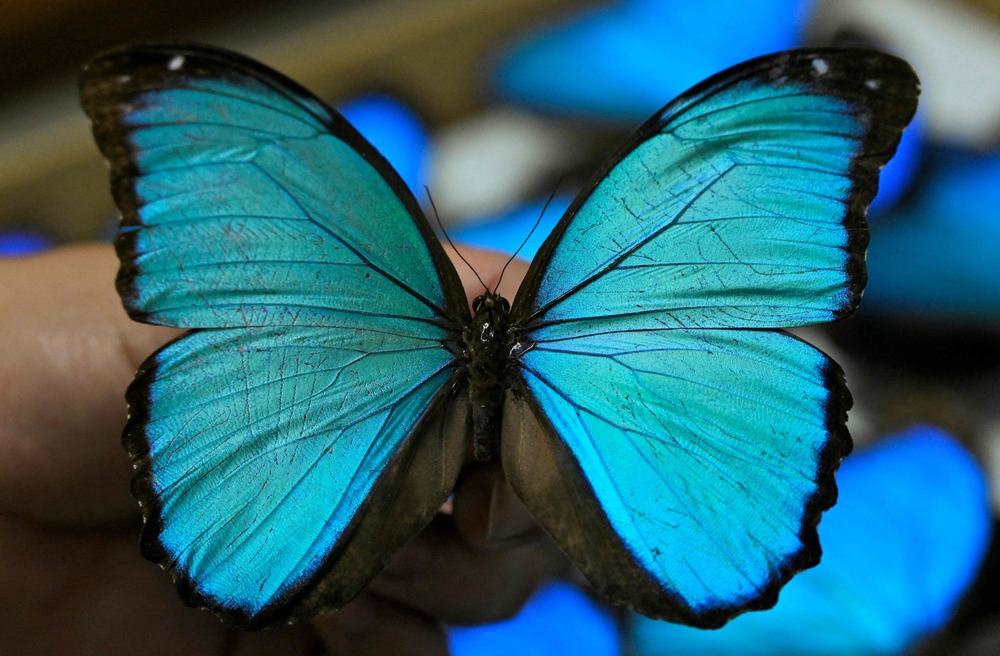
Biologists on a trail in the Ecuadoran Amazon hold their breath as they distribute a foul-smelling delicacy to lure butterflies, critical pollinators increasingly threatened by climate change.
They have hung 32 green net traps, each baited with rotting fish and fermented bananas. They are meant to blend in with the forest canopy. Their pungent odor clearly does not.
Since August, a team of biologists and park rangers has been monitoring butterfly numbers in Cuyabeno Wildlife Reserve, a park famed for its abundant flora and fauna.
They catch and document the insects, releasing most with an identifying mark on wings. Some of them, possibly from unknown species, are kept for further study.
The results of the team's work, however, have been discouraging.
Butterflies are "bioindicators" whose well-being provides a measure of the health of the ecosystem, and their numbers are decreasing, biologist Maria Fernanda Checa said. While the number of species may not have declined by more than 10 percent, in terms of absolute numbers "the decrease is very significant maybe 40/50 percent," she said. "It is something that alarms us."
Under expedition leader Elisa Levy, a team checks the nets for snared butterflies.
They hold the insects delicately by their abdomens and manipulate their legs and wings with tweezers.
Some are bright red and blue, others have what resemble zebra stripes. Some are see-through, like glass.
About three quarters of fruit- or seed-producing crops for human consumption depend on pollinators, which provide a free service worth billions of dollars.
The UN has warned that 40 percent of invertebrate pollinators - particularly bees and butterflies - risk global extinction, posing certain risks to humanity itself.
Butterflies, said Checa, are "very sensitive, even to small changes in the ecosystem" throughout their short lifespan from egg to caterpillar to reproductive adult.
Levy said tropical plants - unlike ones in regions with distinct seasons - are not accustomed to extreme weather variations.
If they do not adapt to a fast-changing climate, these plants could be lost, along with the butterfly larvae that feed on them.
Ecuador, relatively small but extremely biodiverse, hosts about 4,000 butterfly species - nearly as many as its much larger neighbors Peru and Colombia.
Yet in places like the Yasuni National Park, which neighbors Cuyabeno, "the rate of species discovery is slower than the rate of extinction," said Checa.
A biology student and two rangers set a trap for the myriad butterflies that populate the Cuyabeno Wildlife Reserve.