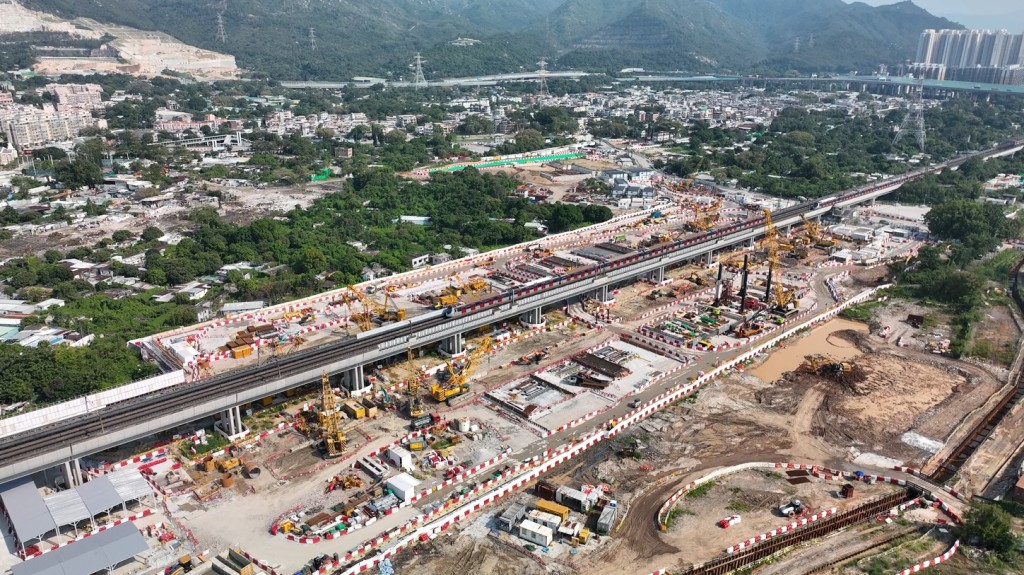
In my article a fortnight back, I tried to explain the principles of construction for a new station in an operating railway – the Hung Shui Kiu Station on the Tuen Ma Line.
With new development in the north New Territories, there is a need for a station between Tin Shui Wai and Siu Hong stations to serve the community living and working in that location.
But the challenge of doing construction work on a running railway is serious. MTR, the railway operator, must ensure total safety to passengers throughout the construction and testing activities while allowing the new station to be built and connected to the running railway.
Previously, such work can only be performed in the “golden two hours” at night when railway operation ceases, as preparation to ensure total safety takes time. This is necessary to ensure construction personnel and equipment can only access the site after operation has completely shut down, and that safety inspections are performed before operation can resume. The installation of platform screen doors for the East Rail required many many months to complete due to these restrictions.
For this station, preparative works included the removal of parapets and relocation of the overhead line overlaps over the future station location on the viaduct. These have been conducted section by section, for more than 200 nights during the golden two-hour periods, before the main work commenced.
MTR has devised a way to construct this new station by doing the bulk of construction activities offsite before moving it en bloc to the final location, minimizing time required to interact with the running railway. The sequence is as follows:
Construction commences with the installation of the piles and foundations that support the station structure at ground level. Leveraging modern construction equipment and techniques, the works can be executed safely and efficiently without disrupting railway operations on the viaducts.
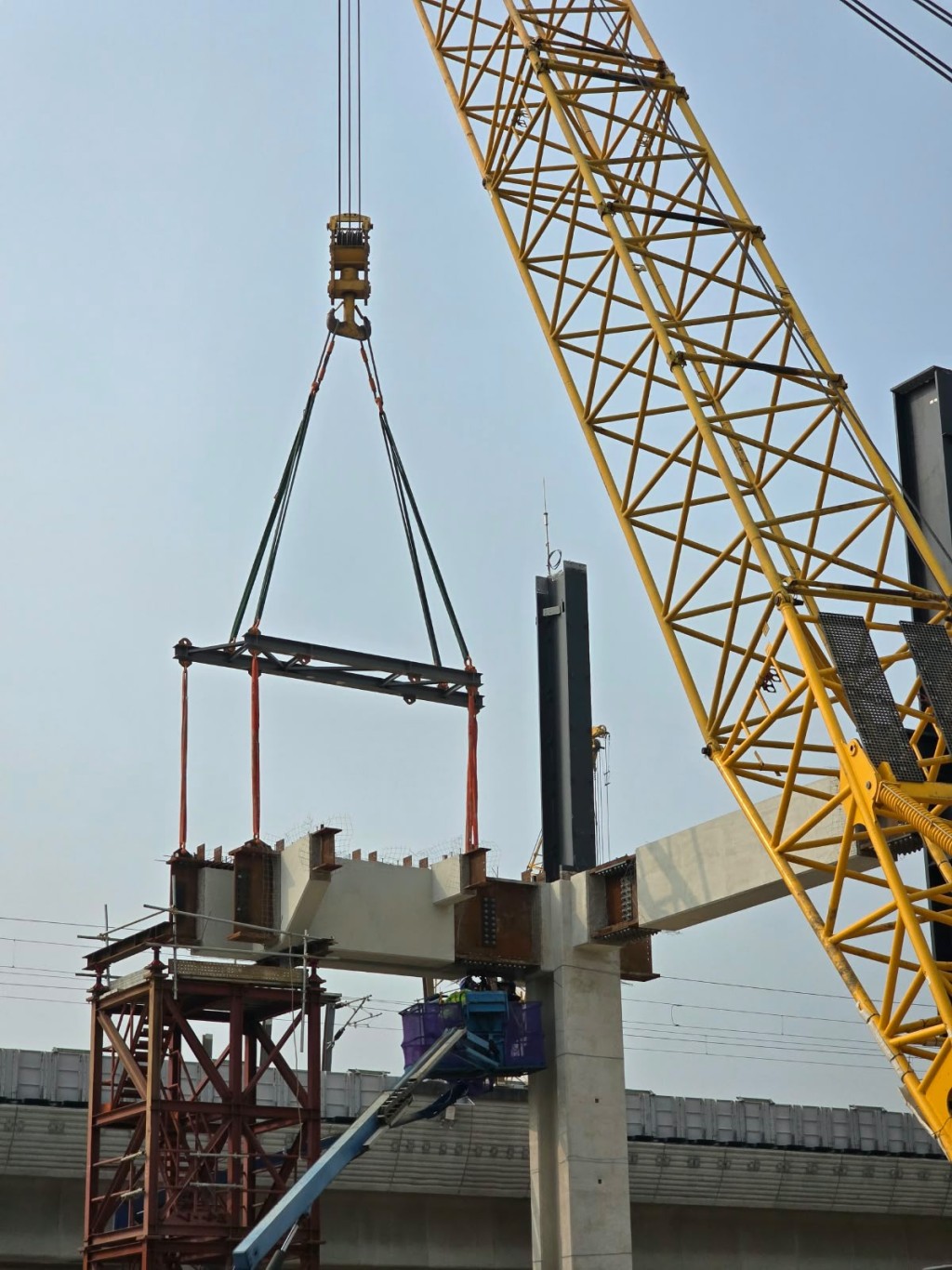
The main station box is designed to be constructed in two major halves as a prefabricated structure. Each half-station box comprises massive steel structures of 210 meters long, 15 meters wide, and weighs 10,000 tonnes.
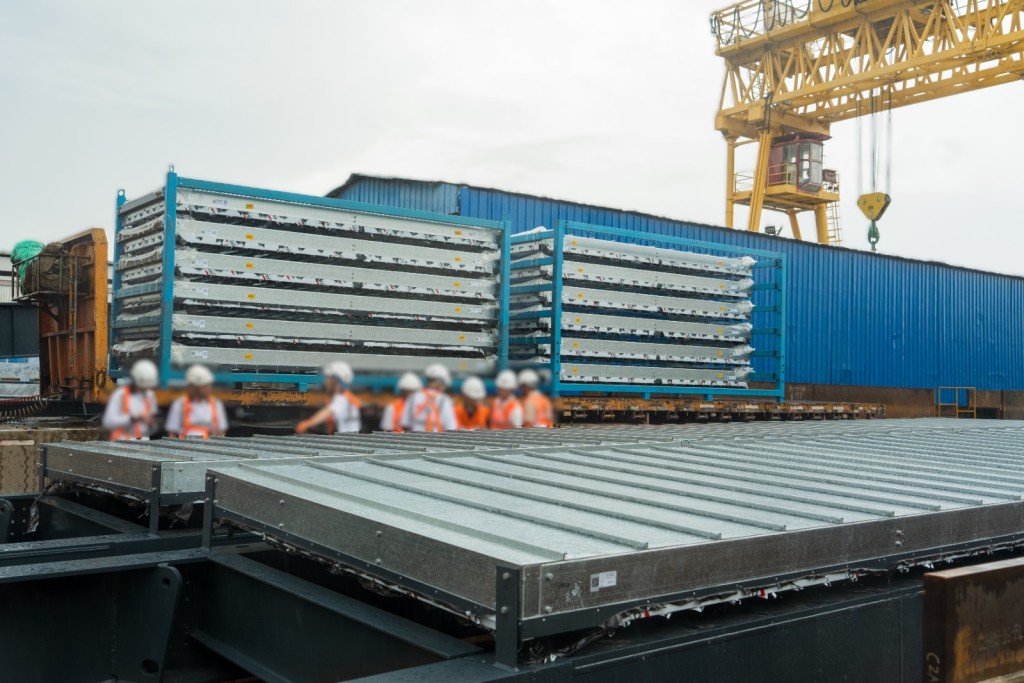
To ease transportation, these are fabricated offsite in smaller components and assembled in yards some 30 meters away from the viaduct. When ready, they will be carefully skidded to the final position at the railway viaduct using the hydraulic jacks system.
Most of the final architectural finishes, building service, the E&M system, MiMEP & Automatic Platform Gate can then be installed in situ during normal working hours, since hoardings will be erected to segregate the operating railway envelope from the new station box in construction, necessary testing, and commissioning activities that encroach on the operating system can also be conducted in daytime, breaking through the limitation of the golden two hours.
With meticulous planning and careful control, station box construction can be gradually completed, and the requisite testing and commissioning activities performed, again to ensure total safety, before they are handed over to the operation team.
This high level of precision in planning and testing activities ensures that there is minimal interruption to railway operation throughout the process, enhancing construction efficiency while minimizing the restrictions imposed by the two-hour window. It also reduces risks as the interface is clearly defined and observed.
Ever-improving methods now move the boundary from in-situ construction to modular assembly of components on site. Civil engineering work can now be performed almost like the assembly of machine components in factories. This is only made possible by engineers continually testing new construction methods, using innovative materials and out-of-the-box thinking.
Veteran engineer Edmund Leung Kwong-ho casts an expert eye over features of modern life