Rana Moussaoqi
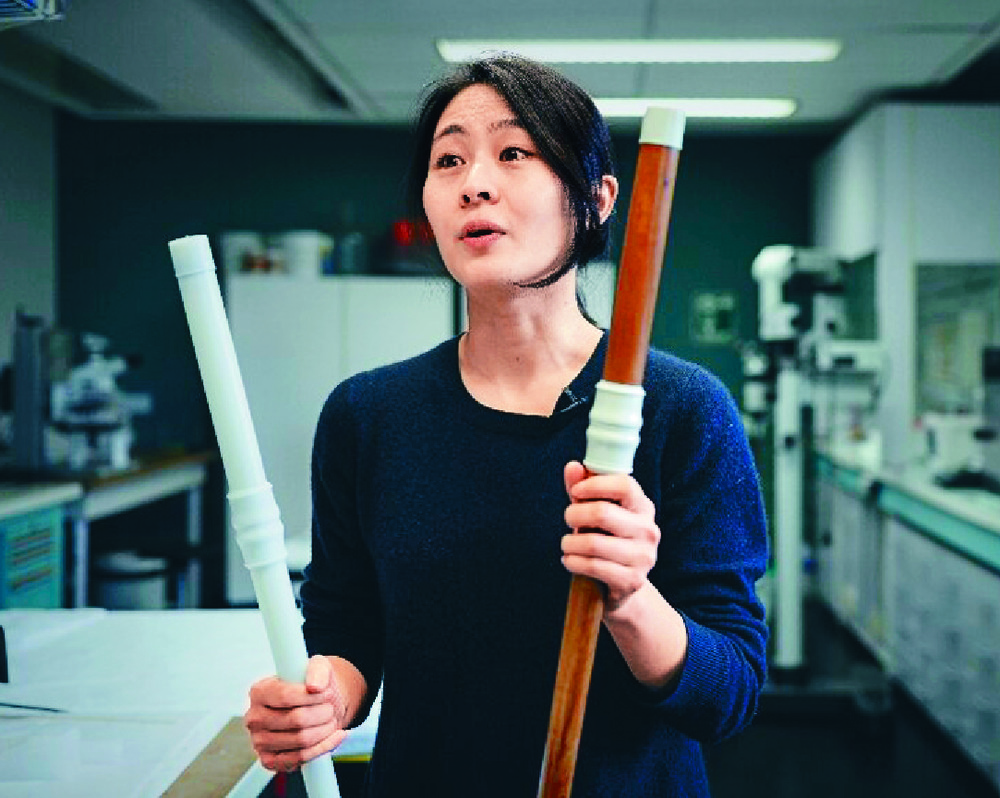
When Mina Jang played the same melodious tune on two different flutes behind a screen, she said the examiners grading her couldn't tell the difference.
Yet the two instruments were made in dramatically different ways.
One was a handmade version of an original early 18th-century flute crafted in 2001, while the other was made of white plastic and "cloned" using a 3D printer.
The Museum of Music in Paris, whose collection includes a 2,500-year-old flute made of a vulture bone, has recently begun experimenting with the technique in an effort to better preserve period instruments.
"The idea was to find out how to rapidly obtain a copy of an instrument whilst respecting the original flute," says the 35-year-old professional flutist and researcher in baroque music, who initiated the idea.
Before being printed, the carefully copied 18th-century flute was X-rayed to identify its precise characteristics.
The original it was based on was made by celebrated French composer and instrument maker Jacques-Martin Hotteterre and is today behind glass at the museum.
It's certainly true that 3D printing has advantages over handmade instruments, taking 24 hours to make compared to a month in a workshop and costing hundreds instead of thousands of euros.
But Stephane Vaiedelich, in charge of the museum's laboratory which works with partners on the project, says the move is purely about conserving musical heritage as "3D printing isn't about replacing instrument makers. The idea is to recreate a historical instrument so people can appreciate its sound and revive an important heritage.
"It's an extraordinary way of traveling through time and recapturing old repertoires," he adds.
While 3D printing has become increasingly popular in different sectors over the last 20 years, including reproducing instruments, Vaiedelich says the museum believes it was the first to experiment with the 3D reproduction of old instruments, using a scientific approach.
A few orchestras play using original instruments from the period, such as French group Les Siecles (The Centuries), but wind instruments struggle to withstand humidity. "It expands wood and can break [the instruments]," Vaiedelich explains.
The museum chose to copy a transverse flute precisely because - unlike an oboe - most of the musician's breath passes outside the instrument. "The material has less of an impact on the timbre," he says.
Using plastic for the 3D reproduced instruments also raises environmental issues: Vaiedelich says the ideal would be to print using recycled materials.
Fanny Reyre Menard, vice-president of the trade union grouping together makers and repairers of instruments, says the material used is the downside.
"For craftsmen, plastic cannot be compared to wood," she says. "A wooden soundbox is fundamental for a violin."
On the whole, though, Menard says 3D printing presents an opportunity as "it's not a danger but rather a very good tool for sharing information and prototypes between craftsmen."
Instruments sometimes need to be customized for musicians with different needs.
"Some parts are improved when adapted - for example, chin rests for violins or mouthpieces on wind instruments," says Menard. "If I find a form that interests me, I send a file to a colleague and he prints it. It's great."
AGENCE FRANCE-PRESSE
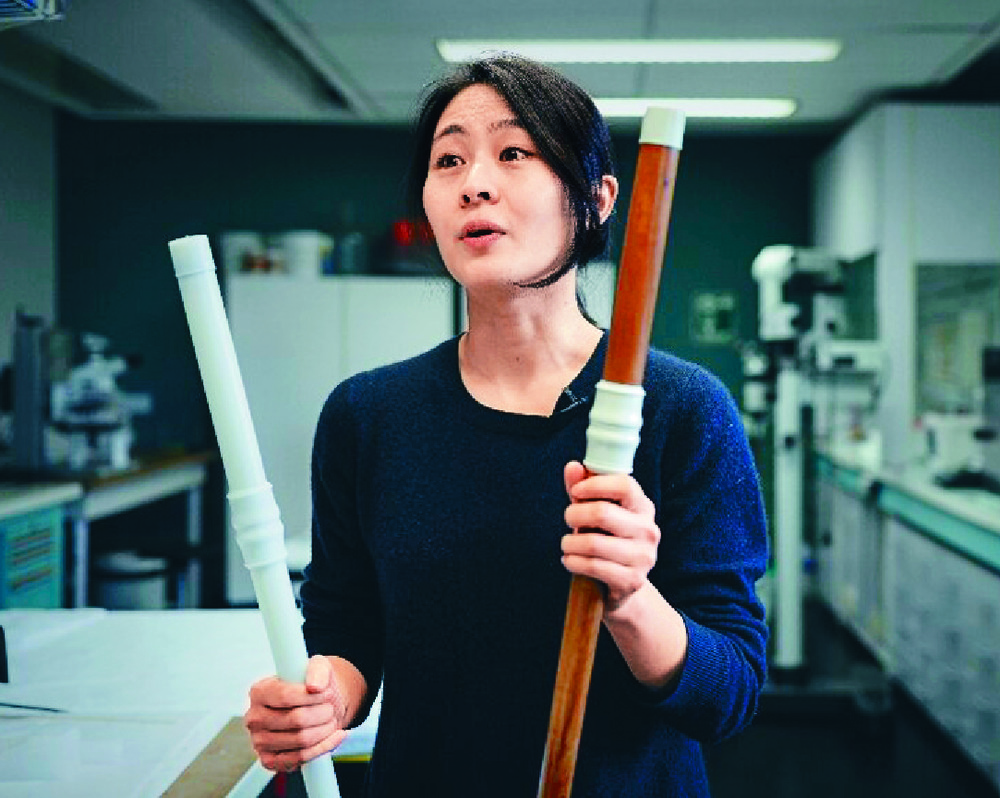
Mina Jang compares the plastic 3D printed flute, left, with the original 18th-century flute. afp/philippe lopez