Drought and deluge in China, record heatwaves in Europe, floods in Pakistan and famine in rain-parched Somalia... recent extreme weather across the world has once again brought climate change into sharp focus and the need for companies to step up their game in the drive for a carbon-free future.
But while watchdogs are pushing companies for better environmental, social and governance disclosures, a lack of clear guidelines and universal standards may stem their efforts and feed concerns about greenwashing - a term critics of ESG investing use to describe exaggerated claims by the industry about their efforts to choose companies that support clean energy.
It also includes firms which do things that are harmful to the environment while saying they care about climate change, and those that say their products are eco-friendly even though they do not help the environment.
And as the world moves toward a greener future, ESG experts and courses are in high demand. New World Development (0017) was reportedly seeking to hire ESG strategists last year with a monthly salary of as much as HK$100,000 while more than 12,000 people have registered for a US$675 (HK$5,265)certificate in ESG investing from the CFA Institute since its launch last year.
CLIMATE RISK
In August, the Securities and Futures Commission in Hong Kong ushered in a new rule that required fund managers to disclose climate risks. They have to define the board's role in overseeing climate-related considerations in their investment and risk management processes and identify physical and transition risks for each strategy and fund.
The rules also require large asset managers to provide investors with greenhouse gas emissions associated with their underlying investments starting November. If managers believe climate risks are irrelevant to their strategies and choose not to incorporate them, they must disclose those exceptions.
There are challenges for fund managers in meeting these requirements, says Loretta Ng, an asset and wealth management partner at PwC Hong Kong.
"This is because there is often a lack of consensus on the best qualitative and quantitative tools for measuring climate-related risk," she says. "It can be difficult to assess the potential impact of a climate-related event on a diverse portfolio of assets, for example."
Even the regulator's chief executive Ashley Alder himself admits "the current fragmented sustainability reporting landscape deprives investors of consistent, comparable data and this contributed hugely to greenwashing risks."
One of the major challenges to informing meaningful disclosures is the unavailability of data such as Scope 3 emissions which are not associated with companies themselves but organizations in the value chain, Alder notes.
These emissions, which may be generated from purchased raw material, business travels or even from their sold products when consumers use them, often take up more than 70 percent of the total.
Things are not looking much better in developed economies like the European Union and the United States, even with more advanced rule books.
EUROPEAN INITIATIVE
A review by market researcher Morningstar shows that almost a quarter of funds that claim to promote sustainability under European regulations don't deserve an ESG label.
The EU's rule book for ESG investing - Sustainable Finance Disclosure Regulation - was designed to root out asset managers' inflated sustainability claims. It requires firms to classify their investment products under one of three categories: Article 6, which only addresses ESG risks; Article 8, which "promotes" ESG characteristics (light green); and Article 9, which sets measurable ESG "objectives" (dark green).
Arguably the vaguest of the three categories, light green has become a magnet for fund managers. The latest Morningstar data reveals that asset managers have reclassified well over 600 funds previously listed as Article 6 to Article 8. A number of dark green funds were also downgraded to light green.
The current use of "sustainability disclosures" in the EU's disclosure regime can be "misleading," says Verena Ross, chair of the European Securities and Markets Authority, the region's markets watchdog, who wants the development of simple and clear ways to help investors make informed decisions.
In the US, the Securities and Exchange Commission may soon start requiring managers to disclose additional information about how ESG principles fit into their investment strategies.
But BlackRock, the world's largest asset manager, feels the SEC's proposal to require new disclosures for funds that just consider ESG criteria among many other factors may further confuse the situation. It could end up overstating the significance of ESG considerations for some funds, it says.
While much of the regulatory crackdown on greenwashing has centered on asset managers, the finance industry has itself repeatedly raised concerns around the risks for ESG debt.
"We tend to call it a greenwash when it comes to the market with everything 100 percent aligned and everything is the greenest it can possibly be," says Isobel Edwards, a green bond analyst at Goldman Sachs' NN Investment Partners.
COMPANIES CALLED OUT
Chanel - best known for its No. 5 perfume and iconic tweed suits - was recently called out for missing an interim renewable energy target for 2021 on a sustainability-linked bond. And last year it emerged that an ESG bond issued by Tesco, the UK's biggest grocery chain, was based on targets that covered only 2 percent of its annual emissions.
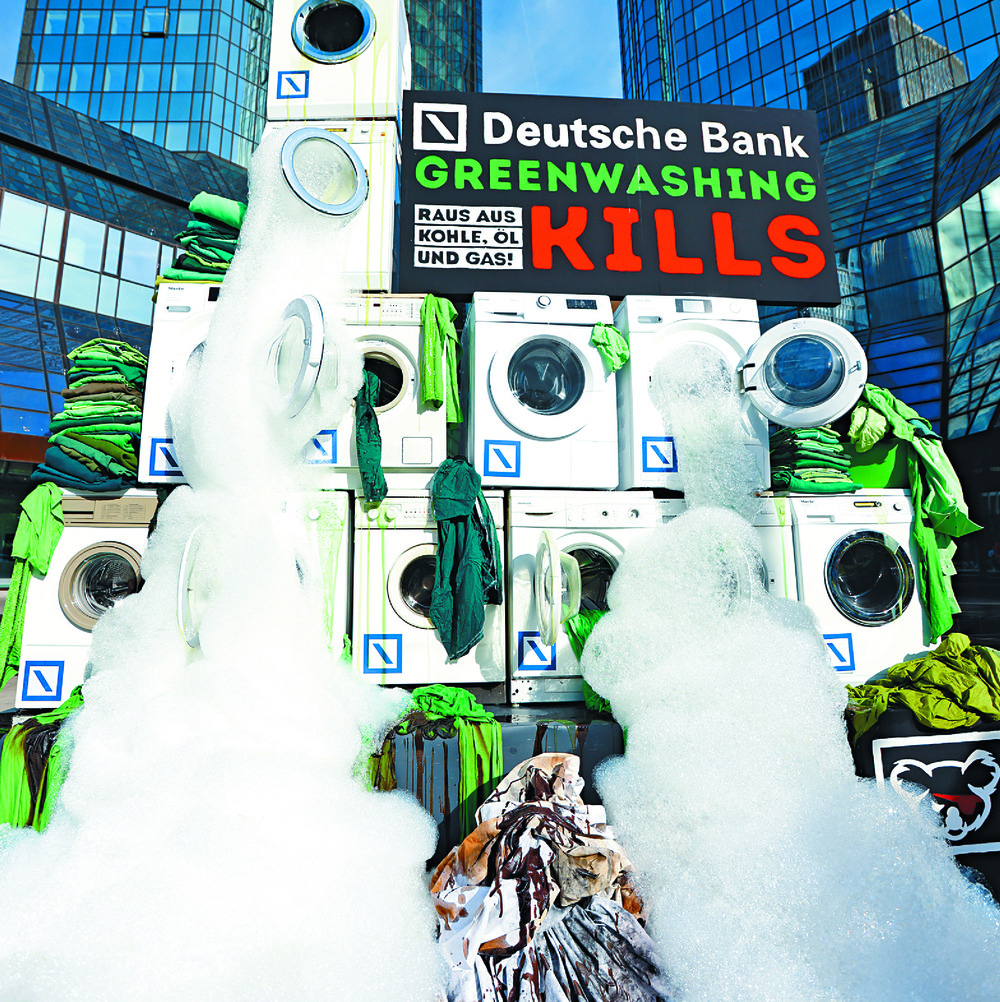
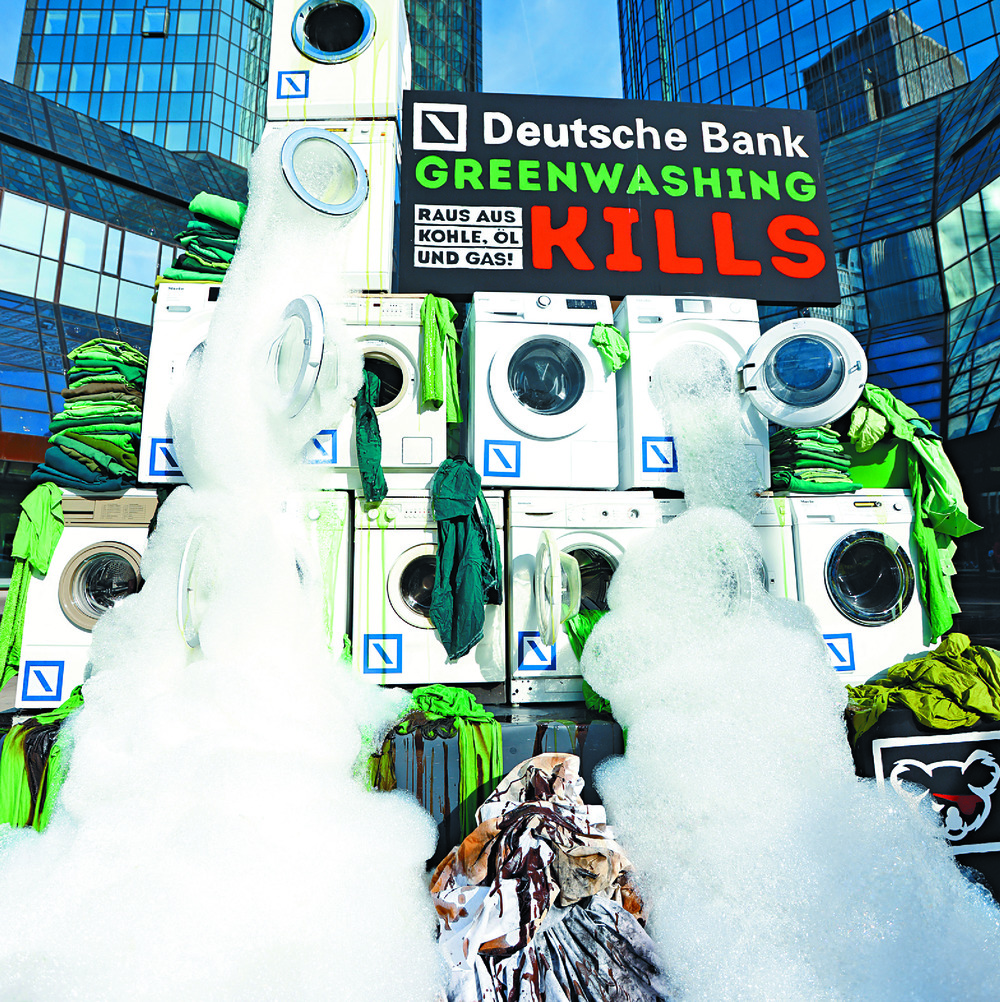
More recently, the chief executive of top German asset manager DWS stepped down in June after raids by prosecutors over allegations that the company, which is owned by Deutsche Bank, had misled investors about "green" investments.
But sometimes, the business nature of some firms makes them the very antithesis of green borrowers, some green groups say.
For instance, the Airport Authority Hong Kong's US$4 billion (HK$31.2 billion) bond sales earlier this year, which included a US$1 billion 5-year green tranche, was accused of greenwashing, even though the authority said the proceeds would be earmarked for green projects rather than the airport expansion - a plan that environmentalists claim will raise serious climate- and biodiversity-related risks such as increasing carbon emissions.
Meanwhile, more market participants are calling for a clear, comprehensive and comparable standard for the disclosure of sustainability-related information.
In a joint statement in August, some 65 companies including the big four accounting firms Deloitte, EY, KPMG and PwC, Swedish furniture giant IKEA's stores' owner Ingka and DBS, asked regulators for a coordinated approach to provide a global baseline of sustainability disclosures needed by capital markets.
INTERNATIONAL STANDARDS
Their wish may come true soon as the International Organization of Securities Commissions, which groups securities regulators from the US, Europe and Asia, is expected to endorse the International Sustainability Standards Board standards later this year or early in 2023.
The endorsement could pave the way for it to become another international rule book like the International Financial Reporting Standards which are followed in 140 jurisdiction.
The ISSB standards should be open standards that allow jurisdictions to build on the baseline to accommodate their own sustainability needs and circumstances, but not allow such a degree of divergence that would undermine the project's intent, Alder, who also chairs the IOSCO, has said.
Ultimately, Alder wants the rules to be mandatory, which will allow regulators to hold corporates accountable.
And Hong Kong is not far away from this. The SFC and the stock exchange are evaluating a climate-first approach to implement the standards for Hong Kong-listed companies and are looking into the readiness of public firms to report under the proposed draft disclosure requirements and the challenges they face.
IN A SPIN: Deutsche Bank faced the ire of activists earlier this year over the news that asset manager DWS had misled investors.