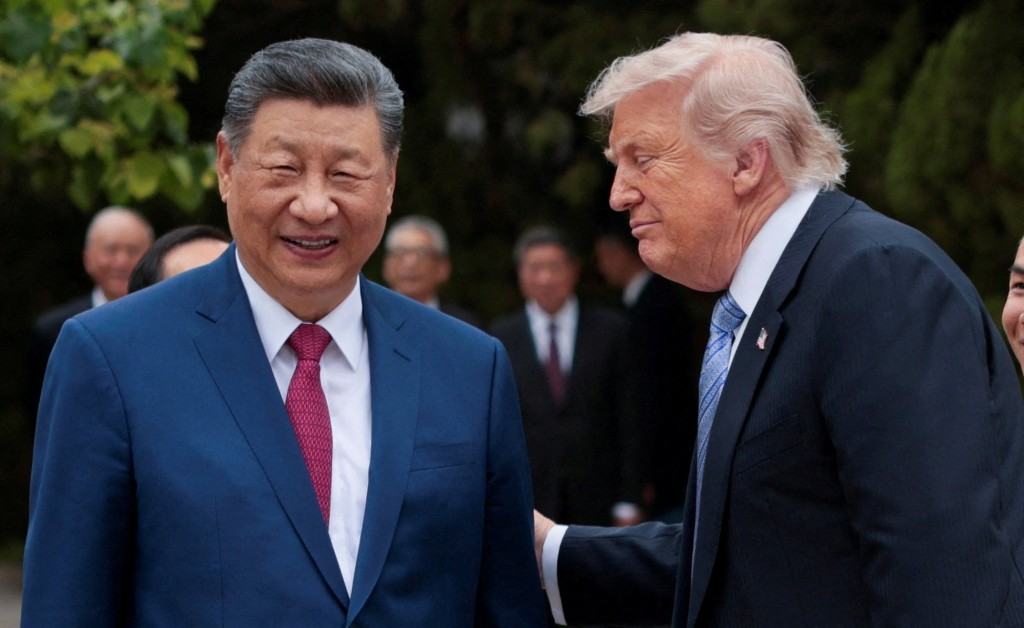
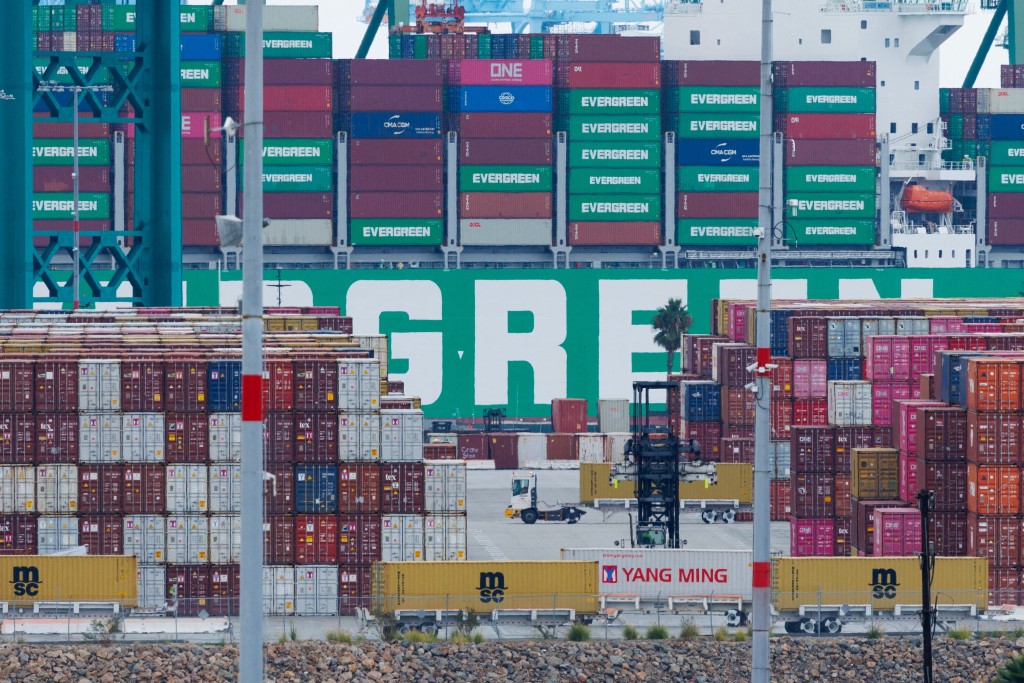
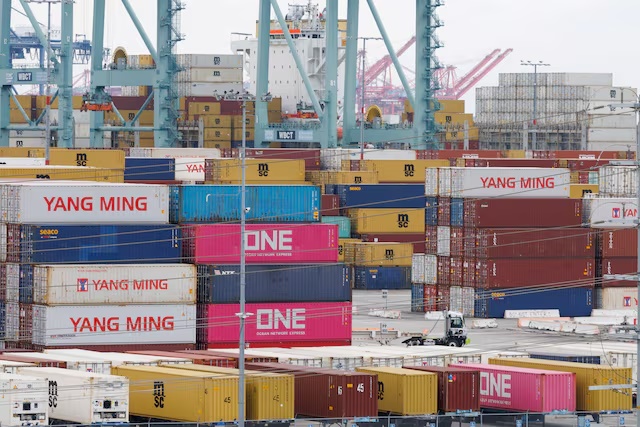
China’s commerce ministry yesterday accused Washington of “typical double standards” after US President Donald Trump said he would impose a 100 percent tariff on Chinese goods starting November 1 in retaliation for Beijing’s tightened export curbs on rare earth materials.
A ministry spokesperson said Beijing’s October 9 decision to include rare earths and related items under export control was a legitimate and routine move to improve its regulatory framework.
The ministry criticized Washington for “overstretching the concept of national security” and abusing export control measures against China, saying the United States has imposed unilateral restrictions on more than 3,000 products, compared with about 900 items on China’s own control list. It said the US has long applied a “de minimis” rule with thresholds as low as zero percent, a practice that “seriously harms companies’ legitimate rights and disrupts global supply chain stability.”
The ministry also noted any rare earth export applications for civilian use that comply with regulations will be approved and relevant enterprises need not to worry.
The comments come amid heightened trade tensions between the world’s two largest economies. Since mid-September, following the China-US trade consultations in Madrid, Washington has added a series of restrictions targeting Chinese entities in the maritime, logistics, and shipbuilding sectors, and expanded its export control list to include more mainland firms.
Beijing warned that such moves “seriously undermine the atmosphere for economic and trade talks” and urged Washington to “correct its mistakes” in line with the consensus reached by the two leaders. “China does not want a tariff war, but it is not afraid of one,” the ministry said, adding that it would take “resolute countermeasures” if the US proceeds with the tariff hikes.
Earlier, Trump said his administration was also considering export restrictions on all critical software to China.
China said it remains willing to enhance dialogue on export controls “with all countries” to help safeguard global industrial and supply chain security.
In related news, China has sharply criticized the US Treasury Secretary Scott Bessent's comments about preventing Chinese dominance in Latin America, labeling the statement as reflective of a "Cold War and confrontation mentality."
The response came after the official openly expressed Washington's opposition to seeing any Latin American country fall under Chinese influence, following a newly established currency swap agreement between the US and Argentina's central bank.