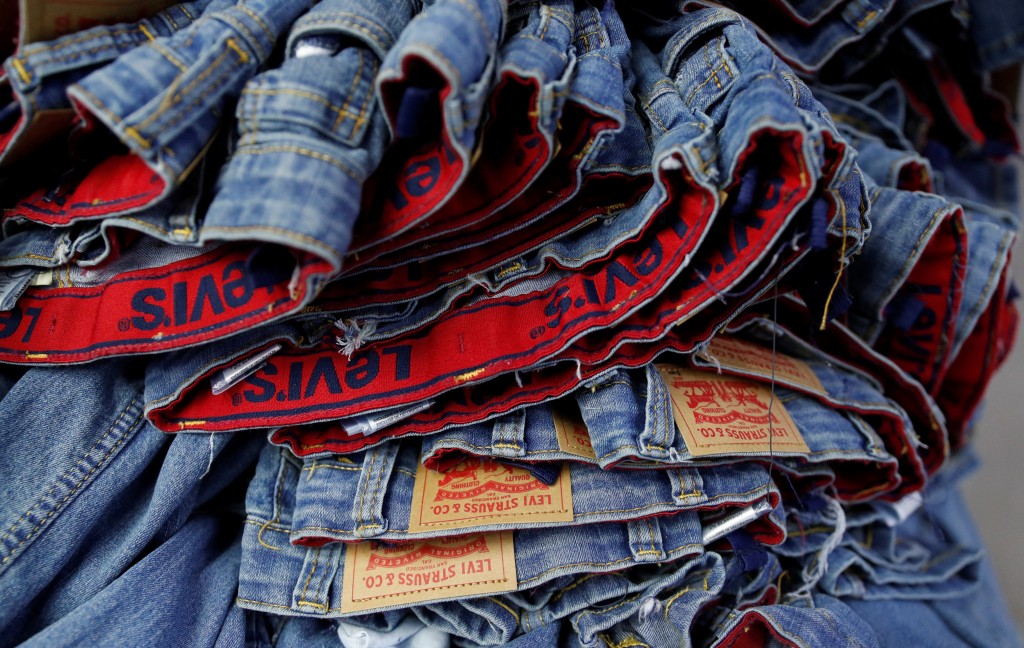
Levi Strauss raised its annual revenue and profit forecasts after beating quarterly estimates on Thursday, betting on strong demand for its denims in regions such as Europe in the face of tariff uncertainty.
Levi's is leaning on a diverse supply chain that includes Bangladesh and Cambodia, and getting rid of less-enticing merchandise to weather tariffs at a time when other apparel brands are feeling the pinch of higher costs on duties.
The company increased its inventory by 15 percent by the end of the second-quarter because of strong demand and tariffs as well, said Levi Strauss & Co. Chief Financial and Growth Officer Harmit Singh.
"Our view is that the health of the inventory is good. It's in a better spot today than it was a year ago, definitely better than two years ago," Singh said.
Looking ahead, Singh said the company has brought in 60 percent of the inventory needed in the U.S. to get through the second half of the year, which includes major sales events like Amazon Prime Day, back-to-school and the holiday shopping seasons.
The company's shares rose about 8 percent in extended trading.
The denim maker's efforts to introduce new styles and collections including dresses, skirts and wide-legged jeans have helped it navigate a challenging market and subdued consumer spending, which continues to weigh on the retail industry.
Newer styles are also helping Levi Strauss with inventory management and reducing the number of product types, Singh said.
"We are taking a hard look at productivity in our assortments," Singh said. The company is removing products from its assortment that do not perform well with customers, and is replacing them with newer, trendier merchandise.
In Europe, its net revenue rose 14 percent on a reported basis for the quarter ended June 1, compared with a 2 percent decline a year earlier.
Revenue in its direct-to-consumer segment increased 11 percent on a reported basis after rising 8 percent a year ago.
The Trump administration's unpredictable trade policies with countries such as China and Vietnam have disrupted supply chains for apparel and footwear makers. However, Levi has been leveraging its diverse sourcing network to mitigate the impact from tariffs.
Levi, which sources about 1 percent of its U.S. imports from China and in mid-to-high single digits from Vietnam, told Reuters it is largely sourcing from countries such as Bangladesh, Cambodia and Indonesia.
REUTERS