At least five tech-related mergers and acquisitions in mainland China ended as improving sentiment in initial public offering markets and valuation disputes reshape corporate strategies, which may boost more pre-listing investments.
During the two months ending on April 4, the proposals of buying Fremont Micro Devices (Shenzhen), Aura Semiconductor, Viewtrix Technology, AllyNav Technology, MEMSonics were halted, according to exchange filings released by the bidders.
The five bidders cited the disagreements over the costs of the deal or valuation of the target company to the suspensions.
FMD’s acquisition was estimated at 2 billion yuan (HK$2.13 billion), based on its 2023 valuation of 4.2 billion yuan, while Viewtrix’s deal ranged between 900 million and 1.5 billion yuan.
Aura Semi and AllyNav had earlier valuations of 10 billion yuan and 1.43 billion yuan, respectively, in 2021. MEMSonics was said to be valued at 3 billion yuan.
At the same time, a number of companies took less than 10 days to go from submitting a listing application to being approved, mainland media reported.
It comes after the China Securities Regulatory Commission softened its tone in February to support enterprises in strategic technologies, even before breaking even, to go public in mainland China, and approved the application of GoPro-rival Insta360 to list in the Shanghai Stock Exchange STAR Market, the first in 2025.
Under the tightened scrutiny, only 100 companies went public in A shares markets last year, 68 percent fewer than one year ago and 81 percent lower than in 2021, data from Wind showed. Many firms thus turned to M&As with listed companies or shifted to Hong Kong.
Meanwhile, tech companies in semiconductors, artificial intelligence and robotics became investment darlings after Chinese startup DeepSeek’s low-cost large-language model amazed the market and even triggered a sell-off of US chip giant Nvidia’s shares.
The bullish outlook about China’s tech sector, together with the optimism on Beijing’s commitment to boost the economy, sent the Hang Seng Tech Index to as high as 6,105 on March 18, the highest after mid-December 2021.
Moreover, the hyper new share subscription of non-tech companies also elevated the market confidence, with freshly-made tea drink chain Mixue Group (2097) freezing HK$1.82 trillion of margin financing, the new record high among Hong Kong’s IPOs.
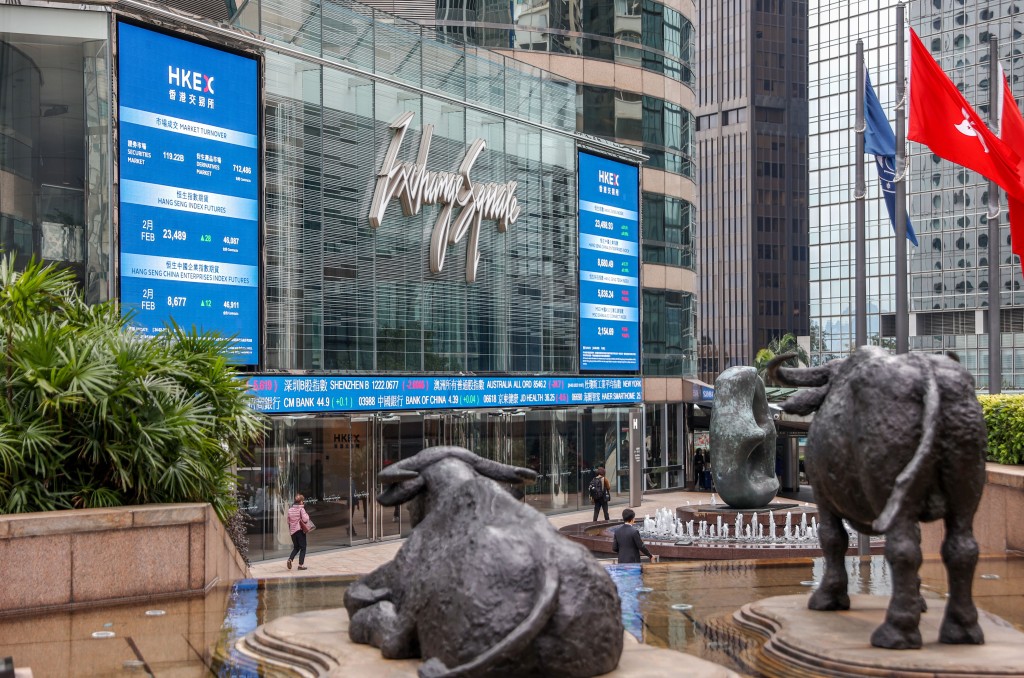
While the mainland IPO market is expected to recover slowly under regulations, Hong Kong is projected to rank among the top three across the world by fundraising this year and embrace a jumbo deal as early as this quarter, according to Deloitte.
Notably, some pre-IPO investments targeting semiconductor leaders emerged amid the improved sentiment. For instance, Shanghai Biren Intelligent Technology recorded a new round of fundraising led by a state-backed fund of Shanghai government.
Duane Kuang Ziqing, founding managing partner of Qiming Venture Partners, had earlier called for a predictable and relatively stable exit path.
Foo Jixun, managing partner at GGV Capital, also said that the increase in IPOs, no matter in domestic market or overseas, will enhance liquidity and to some extent allow more funds to flow back to projects that need more financial support.
Compared with the private sector, the integration among Chinese SOEs continues. Dongfeng Motor Corporation and Changan Automobile — two carmakers in restructuring — reportedly held merger talks, as Beijing expected the state-backed auto firms could operate more efficiently to keep up with their private peers including BYD (1211).
From 2024 to 15 February 2025, 200 SOEs issued notices about asset restructuring, accounting for 41 percent of total listed state-owned entities.
On the other hand, the state asset managers of local governments are actively making equity investments in public companies and setting up M&A funds, including Shanghai’s totaling over 50 billion yuan.
In 2024, state-backed investors contributed eight out of 18 mega-deals with private equity involved, according to PwC China.
PwC projects the M&A deals in China to post double-digit growth this year compared with 2024, driven by the positive signs of economic recovery, the backlog of PE exits and the expectation that global interest rates would drop further.
THEMIS QI