Given the traditional Asian culture of studying hard and playing never, playgrounds are usually the first thing to go.
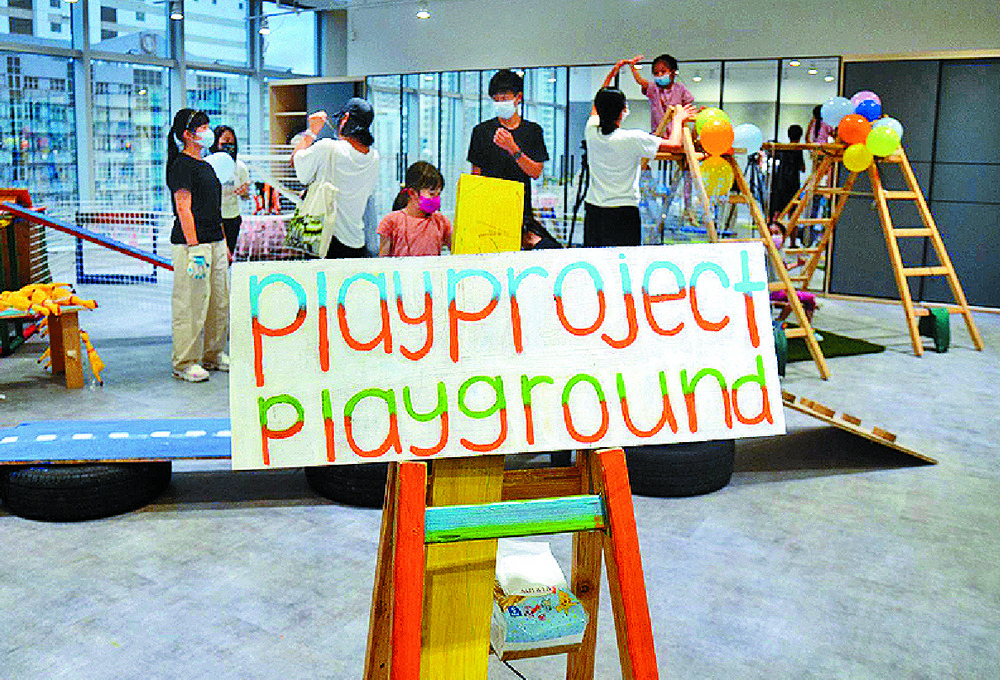
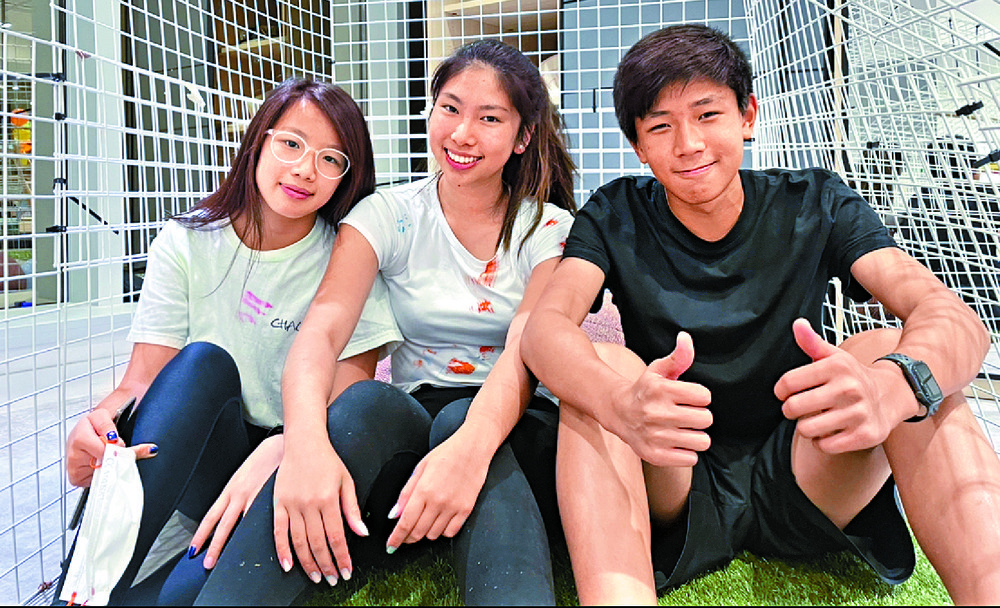
But Playproject is hoping to change that mindset. Started by highschoolers Alicia Tong, Evelyn Kwan and Daniel Yang, it stresses the importance of play.
The trio filmed an experiment ion which they recruited 10 kids aged from four to 10 from different social-economic backgrounds in Hong Kong and gave them space and material to design their dream playground and build it themselves.
"The question just came to our minds one day: if playgrounds are meant for children, how come children are not the ones that design them?" they said.
Their doubts about the adult-designed playgrounds initially came from a trip to a rural school in Hangzhou.
Tong said: "Though they didn't have a well-built playground, they had a freer form of play, where they're just running around the field with less restrictions."
On their return, they paid extra attention to local playgrounds, and noticed how they were always in very limited space, had the same facilities and strict safety rules.
They could see why this was the case. "In Asian culture, parents always focus more on studying and underestimate the importance of playing. Plus, they're always more concerned about their children's safety when playing," said Tong.
What parents are missing, though, is how playing can have many benefits to children. Studies show that play can help kids improve their soft skills, including creativity, communication and problem-solving.
And Playproject also wants to argue for the advantages of risky play.
Specialists say risks instill confidence, independent thinking, motor skills and perception into children, allowing them to assess potential risks and make their own decisions on whether to take them.
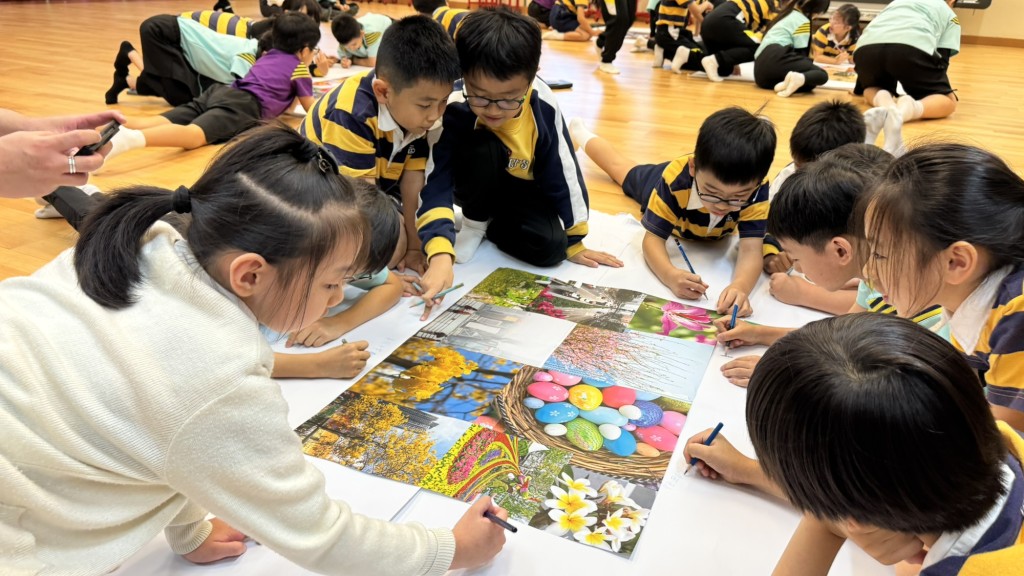
In the experiment, the 10 children were first given pens and paper to design their own dream playgrounds.
The organizers then chose one structure from each of their drawings and put together a plan. After gathering the materials needed for their design, the kids were given space and equipment to make their dream playground come into reality.
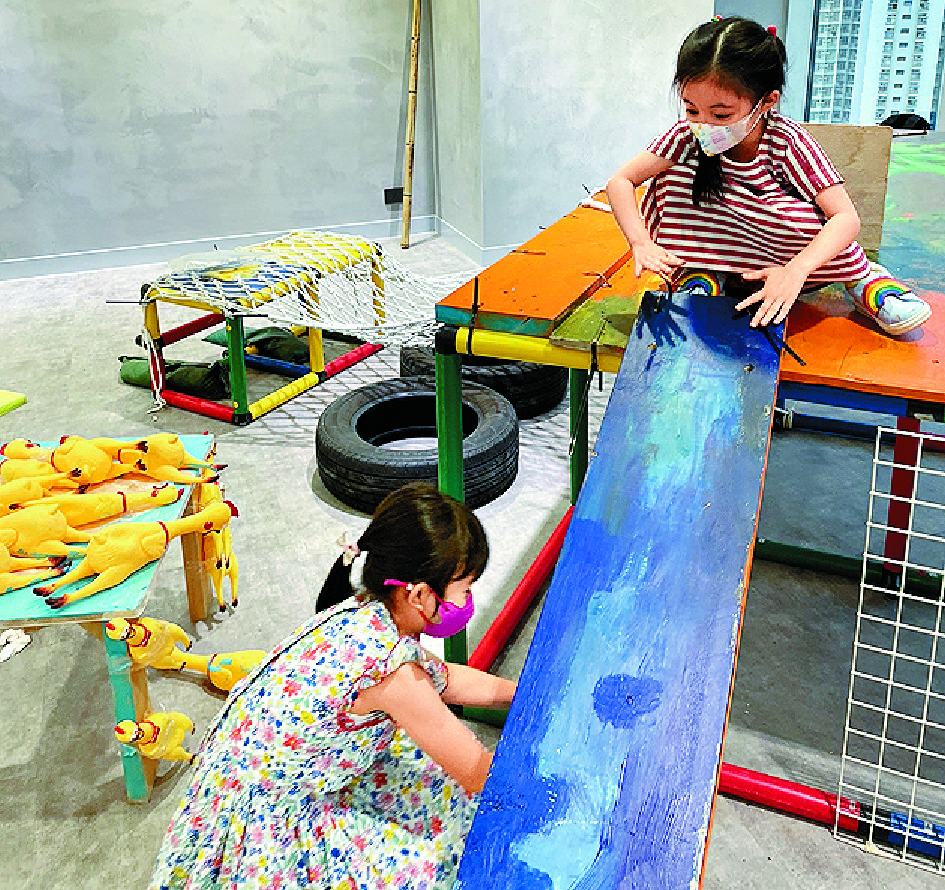
While using wooden plates, zip ties and tires to build a seesaw, a maze and a swing, the children were given nails, screwdrivers and drills - and showed they were perfectly capable of working with risky equipment.
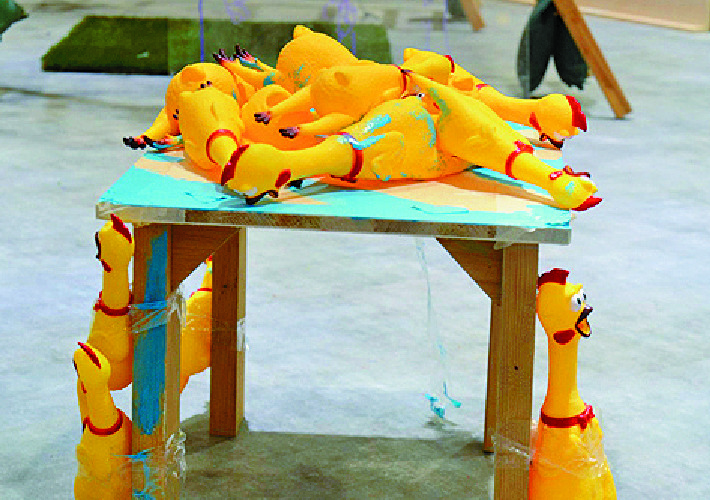
They also showed their unique way of thinking by creating something outside the box. One example is the "chicken chair." By taping squeaky rubber chickens to an unstable chair, they made a playful toy that will release loud noises whenever someone sits on it.
In the process, the children made remarkable progress as they grew in confidence and showed more critical thinking and problem solving.
"The most notable transformation was a girl named Michelle. She came in shy and anxious on Day One but by Day Three, she took the lead in building the play structures, using a hammer and taking risks that she would not have done before," said Yang.
The process also showed the children's growth in communication skills.
"They came from different backgrounds, so there was a language barrier, and seeing them turn into best friends was unexpected," said Kwan.
"Another major improvement we found was perseverance. As the children had to try again and again to find a way and make the structures work, they learned to be resilient in the face of failure."
Planning to launch a documentary which recorded the process of the experiment, Playproject hopes to bring the issue of better playgrounds into the public eye and discuss the benefits of playing with fewer restrictions and more risks.
The hour-long documentary is in pre-production and will be released soon.
disu.dang@singtaonewscorp.com