Julie Curtiss' works. are a mix of the sensuous - and humorous. The French artist will take you on a surrealistic journey through Bitter Apples, where you will glimpse scenes filled with innocent temptations and sharp imagining of modern world.
"My focus is the relationship between nature and culture, the balance between our wild side and our tamed side; and, the quirkiness of it all," said Curtiss.
In the exhibition, showcasing oil, acrylic and gouache painting, as well as sculptures, you can clearly sense that the artist depicted her observation of both genders and more specifically leaning toward the feminine perspective.
Naked men and women chill on a tropical beach or enjoy leisure time at a hotel, with details of apples, snakes, and alligators set as decorative elements.
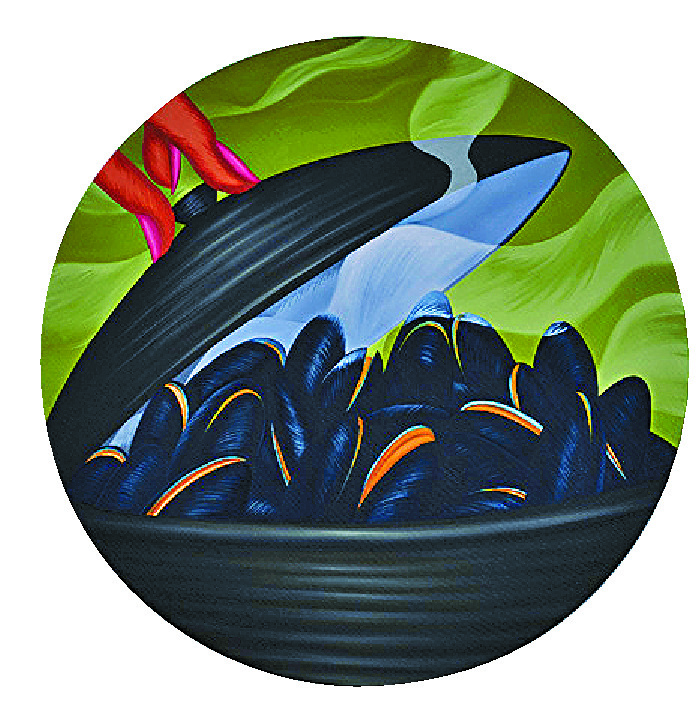
There are also seemingly figurative steamy mussels and a smoking gun, - but the meaning they carry is far from innocent.
In Curtiss' works, the colorful tones, subtle image compositions, fragmented details, and symbolic elements rich in gender characteristics all come together to present surrealism of its own kind.
This kind of style is considered "tricky niches" by the artist. Rather than raising provocative sexual feelings, the artist tends to let her work inspire viewers with thoughts of temptation, seduction, deception and even materialism.
"I am interested in nuances, in complexity, in the in-between, in complementarity," said Curtiss.
"In my images, I enjoy the complementarity of humor and darkness, the uncanny and the mundane, grotesque shapes and vivid colors."
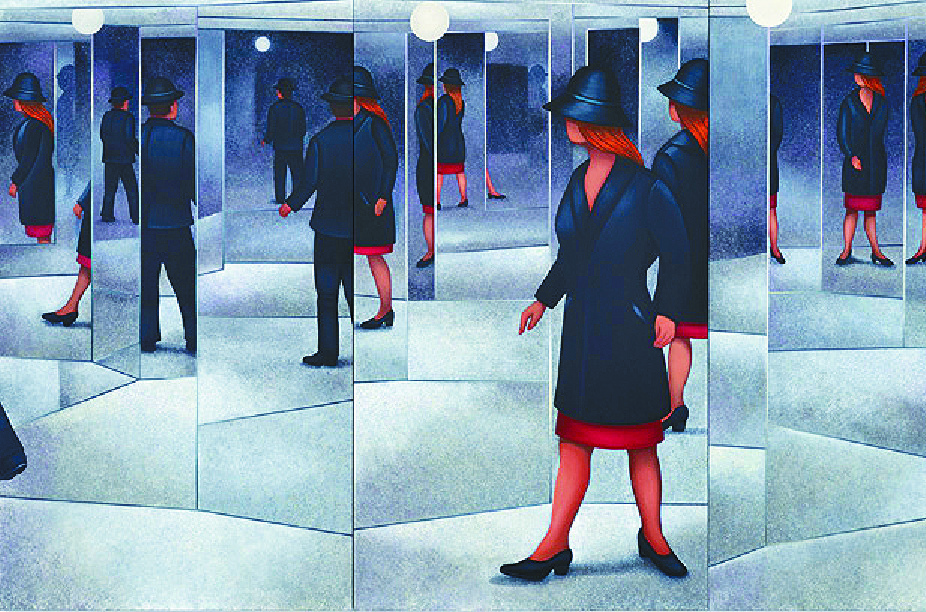
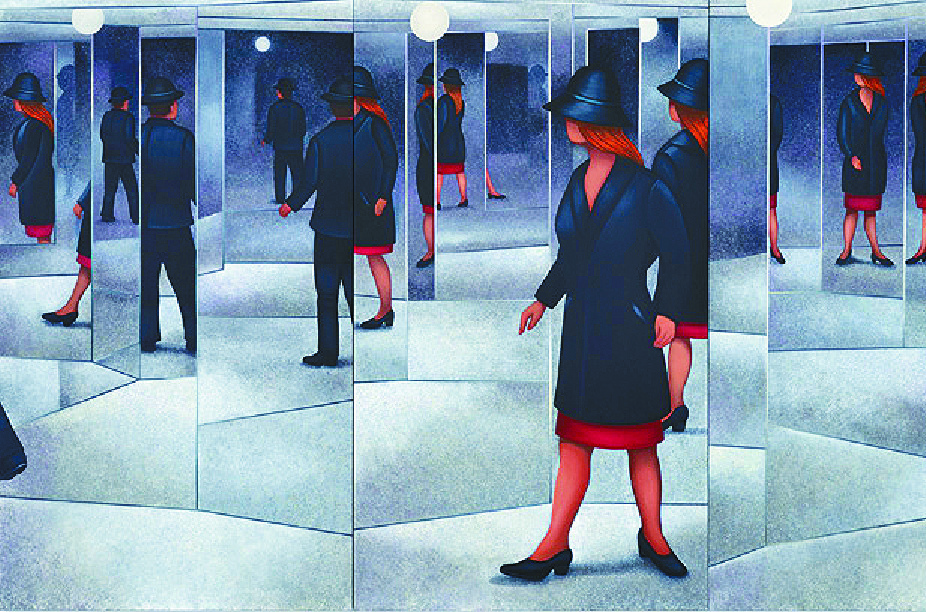
In House of Mirrors, one of the largest paintings in the exhibition, the artist replaces the main character in a still photo from Charlie Chaplin's 1928 film The Circus with that of a woman's silhouette.
The woman without a face stands in front of an expanding mirror array, reflecting her endless shadow - that also includes a male figure - in a way that is both disconcerting and unfamiliar to the eye. It invokes the viewer to think about their own identity and sexuality.
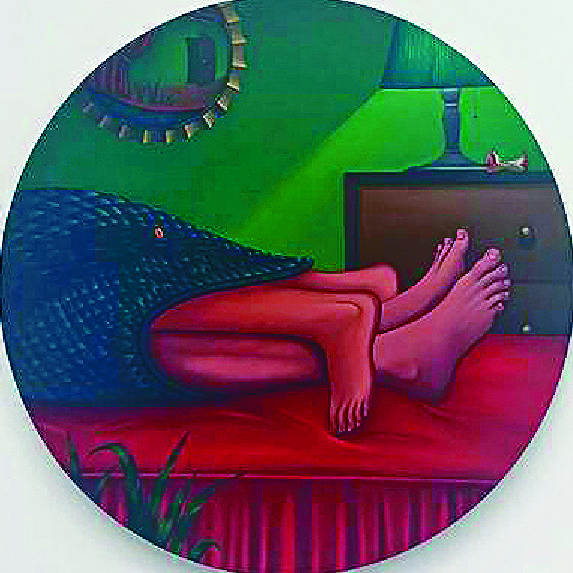
At first glance, Serpent shows a couple's intertwined legs on a bed. But when you look closer, you will notice that their legs are sticking out from the mouth of a snake. An apple, the source of temptation, has been eaten and placed on the bedside table.
South of Eden again looks like a depiction of everyday life: a man and brushing their teeth in front of a lavishly decorated mirror. The clue is in the name: it is actually showing a naked Adam and Eve living a mundane, ordinary life after the fall.
Curtiss was born and bred in Paris. Her experience residing in Japan and the United States enables her to draw on a history of figurative painting, including 18th- and 19th-century French painting, as well as the Chicago Imagists and the pop imagery of comic books, manga and illustration.
As a half-French half Vietnamese, the artist embraces oriental hues in her works, such as in mini pond and a goldfish in Japanese wabi-sabi style, a lady in traditional Chinese qipao or holding a paper umbrella.
Her recent experience of living in Florida enriched the artist's creative imagination with nature.
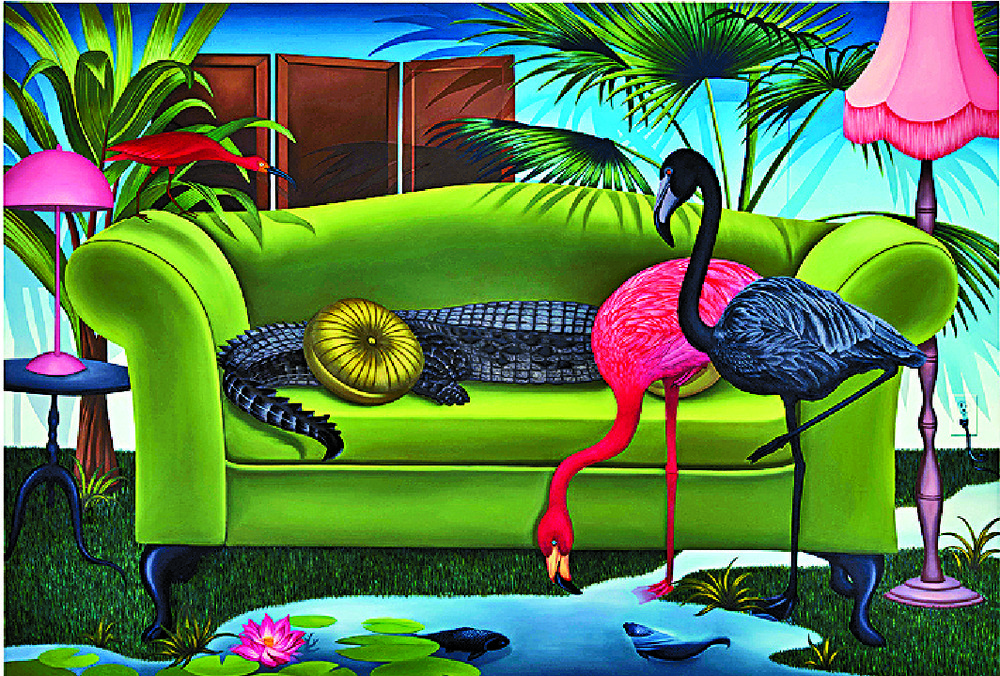
In Eden, for example, lush green plants and tropical birds intrude upon human domestic life. No matter artificial or natural, all the colorful brush strokes are vibrant and kaleidoscopic.
Notably, all the faces - especially the female ones - are mostly invisible in Curtiss' work. However, all the gender-related symbols - the breasts depicted in the shape of cones, the fish hidden in the bra, and t Eve's bikini tan - are all demonstrated vividly and in detail.
"The female figures are neither designated nor symbolic," but rather, as the artist put it, "tools for communication and seduction" to draw more attention to the fact of female objectification.
The group work The Nonexistent Knight and Nautilus - a diptych - depicts a male character hidden under a medieval helmet in an outdated business suit, and a female figure whose face is also concealed with hair that is styled in the shape of a shell.
The armed yet captivating man and the faceless woman who has distinctive sexual characteristics are also the subjects on which the artist wants to provoke viewers' imagination.
On the other hand, Curtiss said: "I don't present faces. But the animals - which are food or pets - often have faces."
"For me, I see transposition of the gaze from the character in my work to the animal. I talk about human's relationship with nature."
Julie Curtiss: Bitter Apple is up at White Cube until November 11.